

This Colorado Distillery Is Turning Heirloom Wheat and Prickly Pear Cactus into Spirits
In Longmont, Colorado, Dry Land Distillers crafts heirloom wheat whiskeys and cactus spirits that showcase the terroir of the American West
March 31, 2026 –––––– Pete O’Connell
The typical playbook for starting a whiskey distillery in the U.S. often involves sourcing whiskey to bottle while waiting for the own-make distillate to age. But Longmont, Colorado’s Dry Land Distillers has taken anything but the beaten path. After leaving the coffee business in the early 2010s, founder and master distiller Nels Wroe dove headfirst into the world of distilled spirits with no formal training. The mission? To produce spirits using unique ingredients from the American West, showcasing the land’s terroir.
“I'm from Colorado, Wyoming, and Montana, so I felt strongly that if we were to tackle something in this craft space, we’d have to find crops that are appropriate to the place and are very true to Colorado and the American West,” Wroe says. “That sent us down the grain path because it gave us an opportunity to create spirits that mimic the wine world in terms of (using and reflecting the) terroir.”
Very Dry Land Indeed
Dry Land Distillers’ first two—and arguably boldest—pursuits were in heirloom wheat whiskey and prickly pear cactus spirits. Wroe describes the climate of Longmont as semi-arid, meaning low rainfall and minimal humidity. In other words, only the hardiest crops thrive. “Corn and barley can grow here, but we were looking at how we can find grains or ingredients that are both native and far more sustainable,” says Wroe. “Wheat and rye, on the other hand, grow well here, and you don’t really have to do anything to them—no fertilizer or anything like that, just add water.”
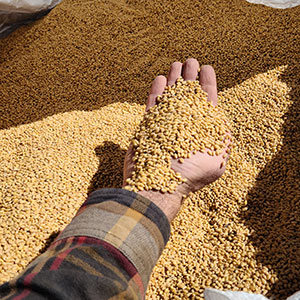
Dry Land took the pursuit a step further by homing in on heirloom grains, to stay true to the history of the American West. This ultimately led Wroe to look into White Sonora wheat. With the help of non-profit Colorado Grain Chain, he learned that White Sonora was one of the original wheats of North America, and likely made its way from Spain and up through Mexico roughly 2,500 years ago. It’s the original tortilla wheat, and very resilient to heat and dry climates. On top of all that, Wroe says, there’s evidence that most of the wheat in North America today has genetic ties to White Sonora.
DIY Distillation and “The Closest Thing to Japanese Single Malts”
Wroe found only one grower who harvested the seed from wild wheat growing in the Sonoran Desert, but he didn’t have anyone to malt it, so he took matters into his own hands. “I turned my basement floor into a malting floor,” he says. “I wound up converting my daughter’s toy chest into a home malting kiln, and she’s still annoyed by that.” It wasn’t until he walked local malt houses through his processes that they agreed to take on the work. Even then, the struggles were far from over.
“Wheat, especially heirloom, has a very strong protein structure that loves to stick together, so if you think about adding water to wheat flour, it turns into dough,” he says. “We had to learn how to keep the grains from sticking together and creating what we call stuck mash, which is a giant vat of sticky wheat porridge.”
While most producers would add a small amount of malted barley or enzymes to prevent this, Wroe wanted to ensure his whiskey was 100% wheat with no added enzymes. So he and his team had to employ a complex temperature control system to manage the wheat’s protein breaks and activate the grain’s enzymes responsible for converting starches into sugars. Additionally, he had to propagate a new yeast strain that would convert those sugars into alcohol by crossing a local yeast with a commercially available strain, as White Sonora wheat wasn’t reacting to modern yeasts alone. But after all is said and done, the question remains: What does Sonora achieve from a flavor perspective?
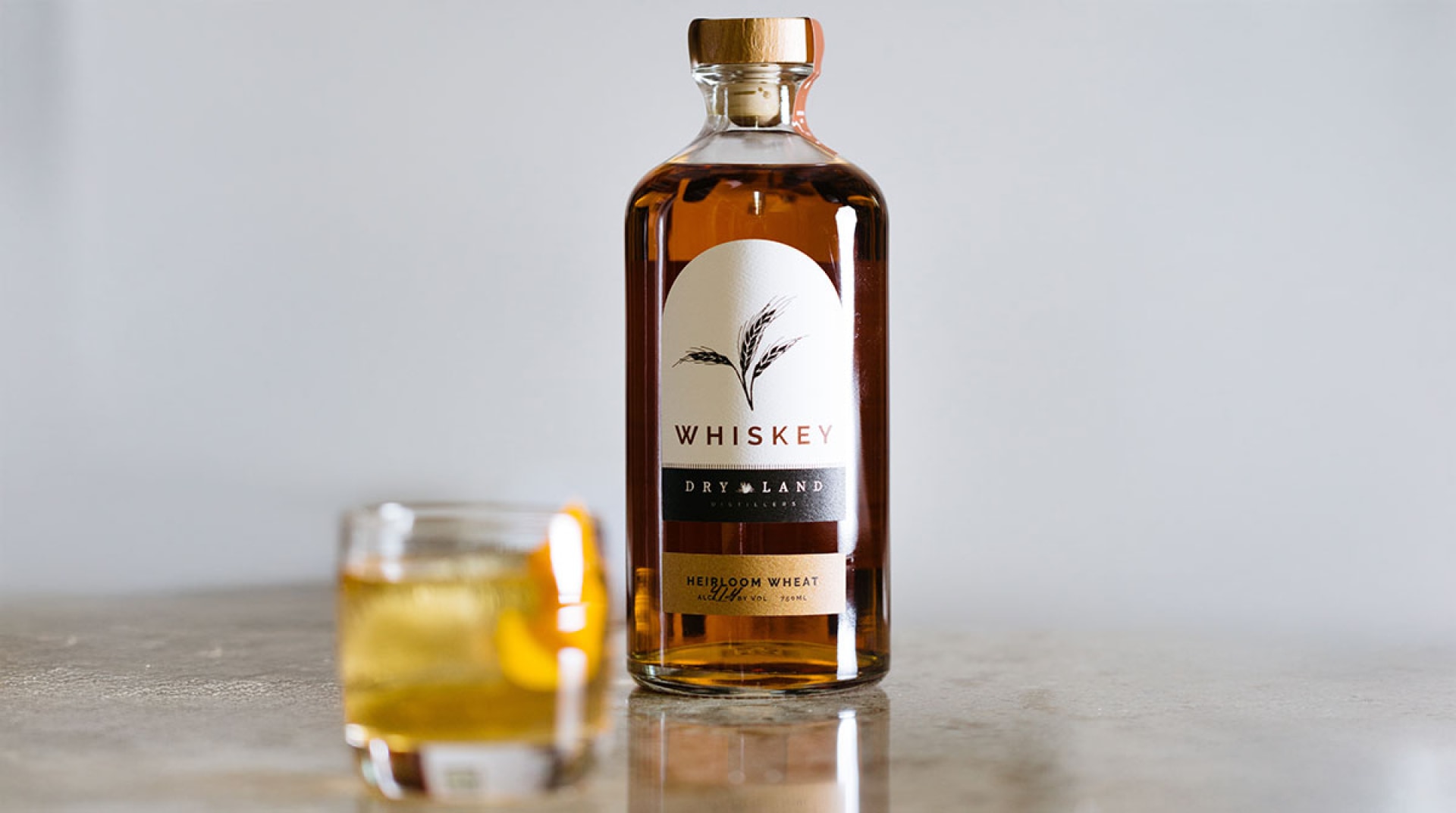
“Time and time again, the feedback we receive about our White Sonora whiskey, they’re like, ‘Oh my gosh. This is the closest thing to a Japanese single malt I’ve found in the U.S.,” Wroe says. Heirloom Wheat whiskey (42%, $85) is Dry Land Distillers’ flagship spirit. It’s aged for under 2 years to keep barrel influence to a minimum.”
Cacti-Like Agave
The other spirit the brand launched with was its prickly pear cactus spirit. Wroe initially thought that there could be a chance he could either grow or find agave in Colorado, but quickly found out that it wasn’t commercially grown anywhere nearby. Shortly after, he got hit with an a-ha moment out of the blue. “I had a puppy at the time. We were hiking, and she got prickly pear cactus thorns in her paws,” says Wroe. “I’m sitting there pulling them out, and that’s when I thought, ‘man, these cacti are everywhere. Why can’t we do something with this?"
Although the plant thrives in Colorado, as it grows in poor soils with virtually no water, Wroe couldn’t find a local farmer willing to grow it at scale; the second issue was figuring out how to distill it.
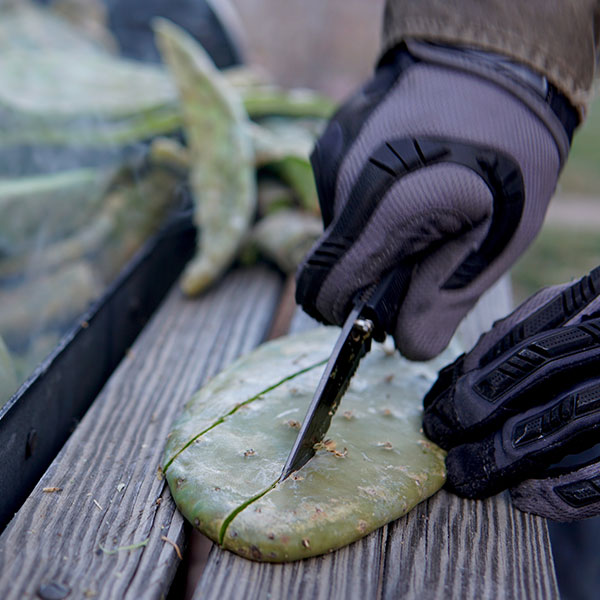
His thinking was that we could use the flat green stems or pads of prickly pear cacti to make a spirit similar to bacanora or mezcal. After harvesting a batch of wild cacti on his own, Wroe ran a few experiments in his backyard with a few smokers until he found a method that worked. “We use a similar process to making bacanora where we do a low-temperature smoke over mesquite, which helps to break down the carbohydrates, cellulose, and starch in the cactus pads. Then we shred them with a wood chipper, mash, ferment, and distill,” he says. “It creates a gorgeous original spirit that is very similar to mezcal, but there’s no agave in it.”
While a few other brands have made spirits with the fruit of the prickly pear cactus, Dry Land is the first to make one with the plant’s pads instead, and Cactus (41%, $79) is currently the brand’s most popular product. It’s also sustainable, as harvesting the pads doesn’t kill the plants. After the first few test batches, the distillery began sourcing cactus from commercial growers across the American Southwest (in California, Arizona, New Mexico, and Texas) who predominantly sell the plant to Latin restaurants. “They have to harvest and prune the plants, but they would normally just discard the trimmings,” Wroe says. “But we buy them. So we’re paying for a product that they would otherwise get no money for.”
The cactus is relatively low in sugar, so Dry Land has to add sugar cane to the spirit during fermentation to produce a liquid with a minimum strength of 40% ABV, while retaining a smoky, vegetal profile akin to mezcal or similar agave spirits. The distillery also offers reposado and añejo versions, both aged in whiskey barrels.
Distribution and What Lies Ahead
Since its founding in 2018, Dry Land has been scaling up slowly; the distillery is expanding, and its distribution footprint is set to grow in the coming months. Currently, Dry Land products are available in select markets throughout Colorado, and their spirits are available for shipping nationwide (where shipping spirits is legal) through the Dry Land website. According to Wroe, the brand is confirmed to arrive in the Arizona and California markets by the end of 2026 and hopes to secure distribution on the East Coast shortly after.
.png?resize=410x0)
