
Planteray's New Naval-Style Rum Mixes Liquid from Five Countries
Mister Fogg Sail No. 2 blends stocks from Barbados, Trinidad, Guyana, Mauritius, and Jamaica
January 14, 2026 –––––– Danny Brandon
Situated on the beautiful white sands of Brighton Beach overlooking the Caribbean Ocean from Barbados’s capital city of Bridgeport is Stade’s Rum Distillery—best known for its Planteray label. Stade likes to blend different styles of rum from different sources, and in July 2024, it introduced Mister Fogg, a limited edition rum that blended stocks from Barbados, Trinidad, Guyana, and Jamaica. After the blending was done, the rum was shipped to France for finishing in cognac barrels. Last April, Stade followed that expression with Sealander, a permanent and more widely available blend that combines rums from Barbados, Mauritius, and Fiji. Now it has released a sequel to the original Mister Fogg, this one being a slightly different blend that includes liquid from distilleries across five countries.
Across The Ocean
The new batch, called Sail No. 2, is a blend of molasses and cane juice rums, distilled in pot and column stills and fermented for periods ranging from two days to three weeks. The largest component of the blend (35%) comes from Trinidad Distillers Limited (TDL), a distillery owned by House of Angostura—best known for its aromatic bitters in addition to its eponymous rum brand. A 34% slice of the blend is Barbadian, coming from Planteray rum stocks. A 20% share of the volume, the third-largest, is sourced from an undisclosed producer in Guyana. (It’s very likely Demerara Distillers LTD, producer of the popular El Dorado label and the last of Guyana’s big rum estates still standing.) The blend is rounded out with 6% coming from the Mauritius-based Saint Aubin and 5% from National Rums of Jamaica (NRJ) which produces labels including Monymusk, Clarendon, and Long Pond.
All these stocks were matured in their countries of origin in bourbon barrels before being loaded onto ships and sent on their transcontinental voyage to Cognac Ferrand in southwestern France. There, the rums were transferred into refill casks to finish for an undisclosed length of time, before being moved into open-air wooden vats to promote oxygenation. The final product was dosed with 4.8 grams of sugar per liter, and it carries no age statement.
The Mister Fogg series is the fruit of a years-long research project conducted by master blender Alexandre Gabriel and rum historian Matt Pietrek, diving into the rums produced for the British Royal Navy centuries ago. Drinking water was very hard to keep pure back in those days, so every sailor was instead given a pint of rum—known as a “tot”—with their daily rations while out on voyages. That tradition remained in place until 1970, when the Navy did away with it in the hope of keeping its crews sober.
As enlistment numbers swelled, England needed to get creative in order to ensure there was enough liquid to go around. It did so by importing rum in bulk from several locations around the Caribbean, which were primarily stored in the Rum Quay—an enclosed area of London’s West India Dock with a vault that reportedly contained tens of thousands of rum casks. The blending was carried out in large open-air vats at the Deptford Victualling Yard just a few kilometers south along the Thames, which was also responsible for distribution.
Over time, those rums gained a reputation for quality—spawning a style that has far outlived its attachment to the Royal Navy. There are still a few labels around today that produce so-called naval rum using similar methods, including Pusser’s and Black Tot. For history lovers, the latter brand has a very intriguing expression named Last Consignment, which was blended from some of the last remaining stocks of rum originally earmarked for Royal Navy use that were transferred into stone flagons once the daily rum ration was done away with in 1970.
How Does It Taste?
Each step of Mister Fogg’s production—from blending rums made in different regions and aging the barrels at sea, to using open-air vats for oxygenation—is meant to echo the processes used to make those historic rums. Gabriel’s mission wasn’t to give drinkers a precise snapshot of how naval rum from a particular time period would’ve tasted, but rather to capture the essence of the style as a whole.
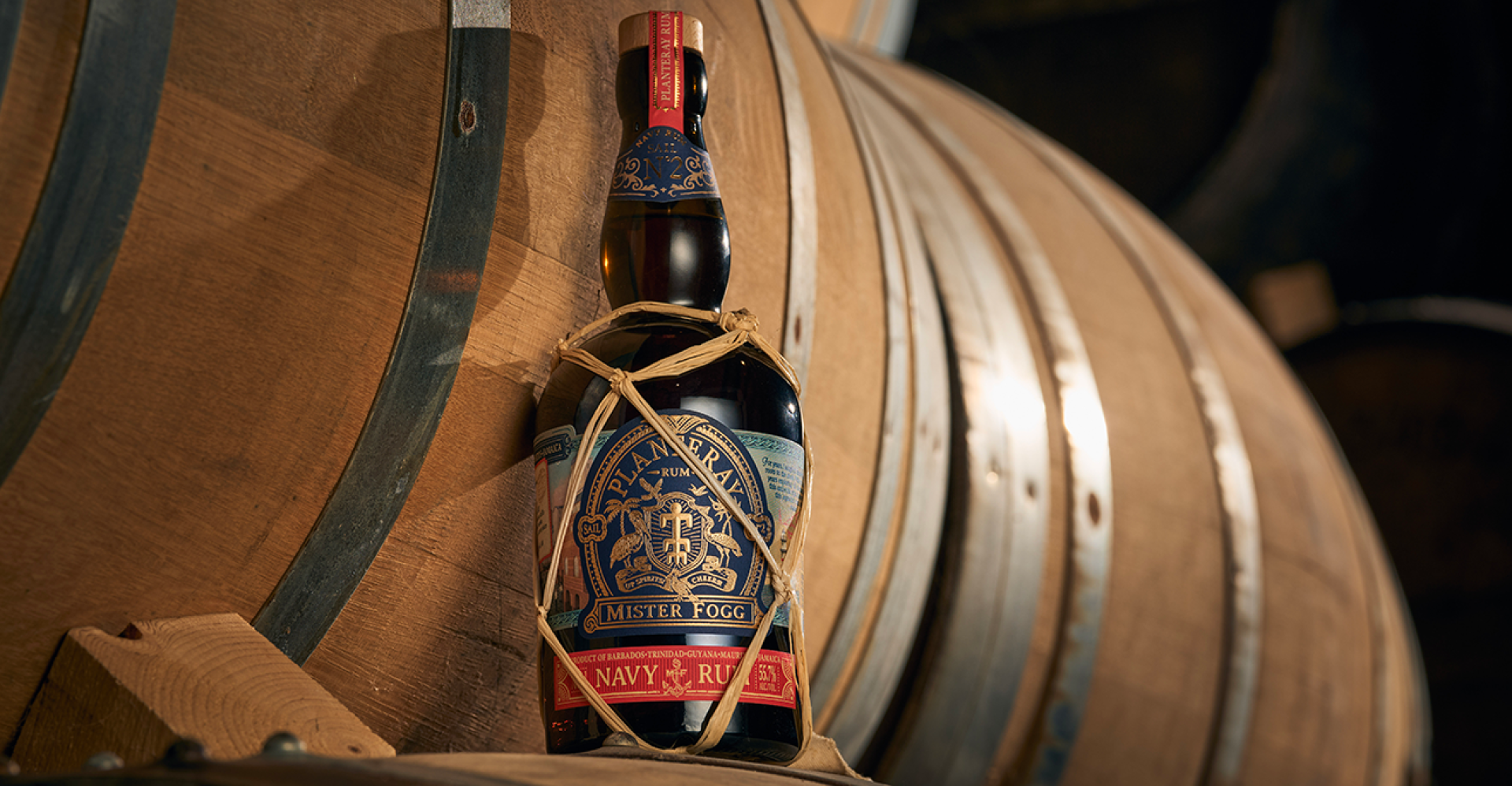
Planteray Mister Fogg Navy Rum (Sail No. 2)
ABV: 55.7%
SRP: $38
Availability: Nationwide in limited quantities
It kicks things off with a sweet and darkly fruity nose of vanilla, cherrywood, blueberry pie, cinnamon bun, banana pudding, and sugared berries. It’s a bit drier on the palate, with oak, barrel char, more cherries, cocoa nibs, and just a bit of overripe fruits. The fruits return in force for a generally brighter and more vibrant finish, including orangeade, lime zest, vanilla, cherry, and soft spices.