
Whisky Advocate Exclusive: We Tasted Shortbarrel's Latest Honey Cask Rye
Afterswarm II Meadowfoam is finished in rare honey barrels
March 20, 2026 –––––– Danny Brandon
Though it has only been around a few years, Atlanta-based blending house Shortbarrel has already made a name for itself among American whiskey drinkers. It was established in 2020 by friends Adam Dorfman, Clinton Dugan, and Patrick Lemmond, who initially picked single barrels as a hobby before making the leap to creating their own brand. The brand has significantly expanded since then, acquiring Old Fourth Distillery and its labels in 2023, opening a kitchen, bar, and retail outlet in Atlanta’s Hartsfield-Jackson Atlanta International Airport last year, and taking its flagship bourbon nationwide last month.
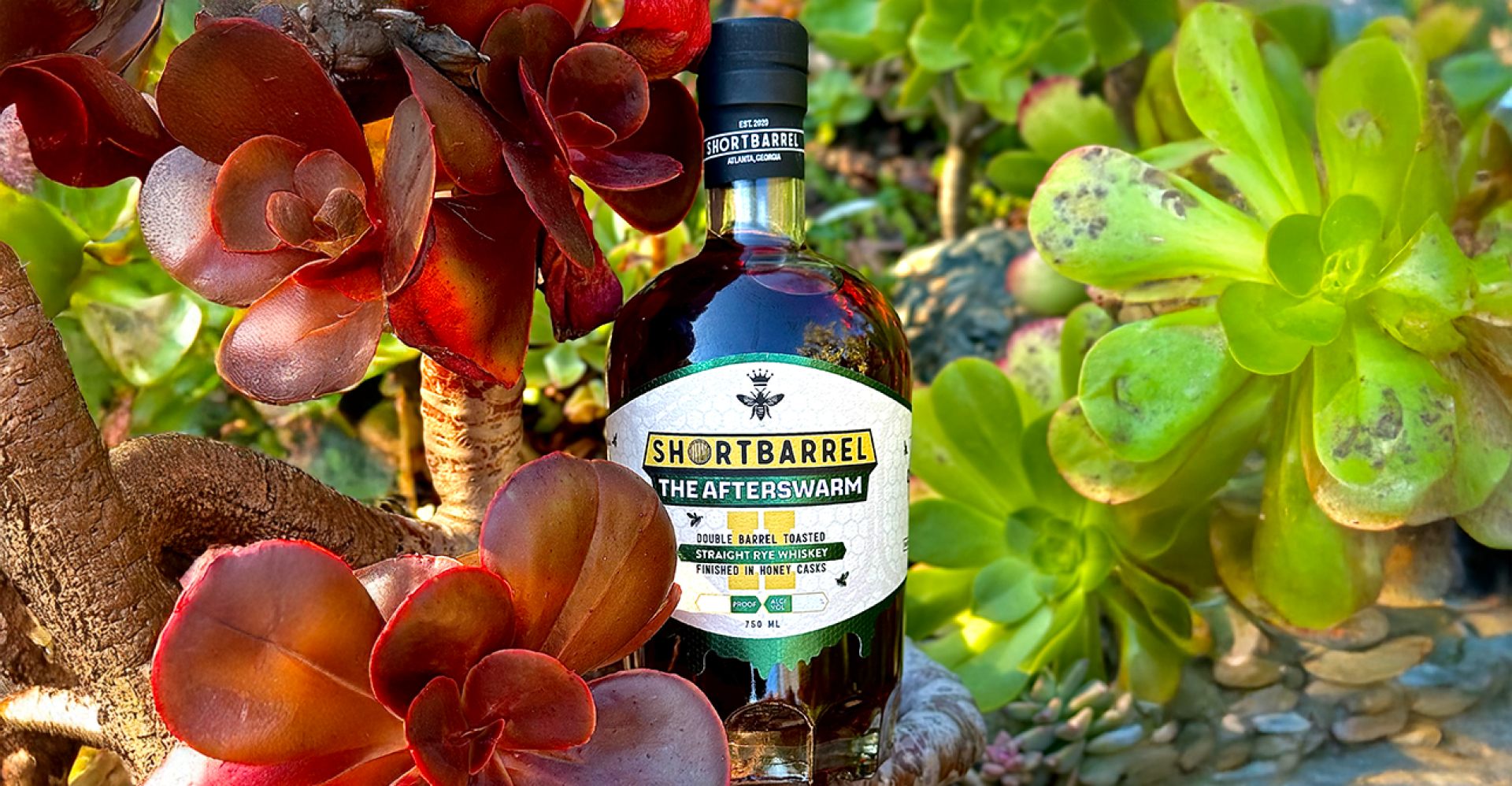
Considering how the brand got started, it seems natural that most of the excitement around Shortbarrel comes from its single barrel store picks—often featuring high-proof, double-digit aged bourbons and ryes from MGP or undisclosed Kentucky distilleries—which have gained traction among whiskey fans. But looking beyond those single barrel releases, Shortbarrel also creates its own blends, most of which feature a cask finish of one kind or another. We got an exclusive early look at its latest blending project: The Afterswarm II Meadowfoam, a rye finished in special honey barrels.
Sweet Meets Spice
This whiskey is billed as 6 years old, but it’s actually much older than that. The lion’s share of the blend (around 65%) features 7–13 year old liquid from MGP in Indiana, while the remaining 35% is 6.4 year old rye from Green River in Owensboro, Kentucky. These barrels were blended in-house by Dugan, who is the master blender, and the resulting whiskey has a mashbill of 95% rye and 5% malted barley. After blending in steel tanks, the whiskey was transferred into toasted barrels from Kelvin Cooperage to marry for its final year of aging. Following that, it was finished for nearly 12 months in toasted and No.-3 char barrels from Kelvin Cooperage that were purchased new and then used to age meadowfoam honey for 30–60 days. The final product was bottled at 54.3% ABV.
Meadowfoam honey is a relatively uncommon variety, and it gets its name from a white flower that’s native to West Coast marshes and wetlands in the U.S. Meadowfoam produces an oil that’s sought-after in the wellness industry for its exfoliating properties, but the flower’s pollen is also a real treat for beekeepers—containing distinct marshmallow, vanilla, and sometimes custard flavors that carry over to the honey. It’s a relatively rare ingredient in the whiskey world, even among distillers who routinely work with honey cask finishes. A notable example is a club-exclusive Westward single malt finished in casks that previously held The Bad Apple, a hard cider from 2 Towns Ciderhouse that was brewed with meadowfoam honey. The honey used for Shortbarrel’s new whiskey comes from Flying Bee Ranch, a family-owned apiary in Salem, Oregon, that also produces a variety of meadowfoam honey influenced by Himalayan blackberry blossoms.
How Does Afterswarm II Meadowfoam Rye Taste?
In our experience, honey casks are some of the trickiest finishes to get right. The worst ones often taste closer to a flavored whiskey than to a finished expression, often having balance issues and a cloying texture. But the quality bottlings have interesting layers of sweetness that seem to naturally harmonize with the rest of the profile. We think Shortbarrel hit the mark, and Afterswarm II Meadowfoam firmly fits in that second camp.
Shortbarrel The Afterswarm II Meadowfoam Double Barrel Toasted Honey Barrel Finished Rye
Score: 92
ABV: 54.3%
SRP: $115
Availability: Online
The nose calls to mind an autumnal county fair, with brown sugar, caramel-dipped apples, freshly baked apple pie, cherry, and cinnamon. Spices take the wheel on the palate, offering cinnamon stick, allspice, ground nutmeg, pickled ginger, and hot pepper, all underscored by a pleasant honey-maple sweetness. Chocolate-covered chiles lead the finish, also joined by more honey, cinnamon, and very subtle florality. The flavors are well-balanced and integrated throughout: Despite its nearly year-long secondary maturation, it never comes across as over-finished.