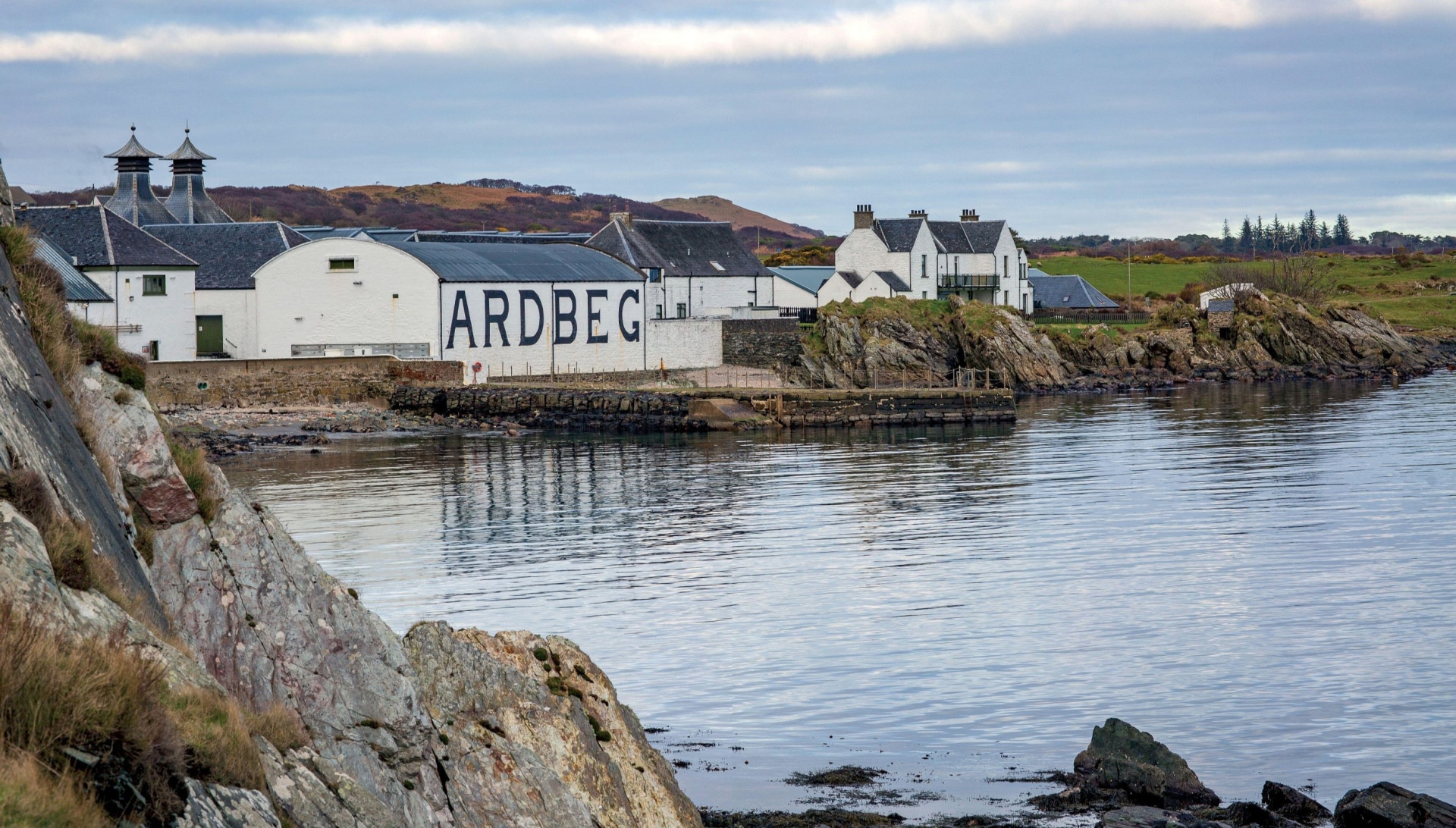
Islay’s rugged coastline is home to world-renowned distilleries that make crowd-pleasing scotch whiskies. HORST FRIEDRICHS / ALAMY STOCK PHOTO

Islay's Great Sea Change
The island’s 25 years of change, seen through the perspective of its two most transformed distilleries: Ardbeg and Bruichladdich
December 29, 2025 –––––– Jonny McCormick
Islay, the world’s most famous whisky island, best known for its smoky coastal whiskies, was battered by the industry’s global downturn of the late 20th century. By the mid-1990s, two of the island’s seven distilleries were completely shuttered, and ownerships were changing hands frequently. But as the millennium approached, new hope arose for the two hardest-hit distilleries, Ardbeg and Bruichladdich.

Ardbeg’s Revival
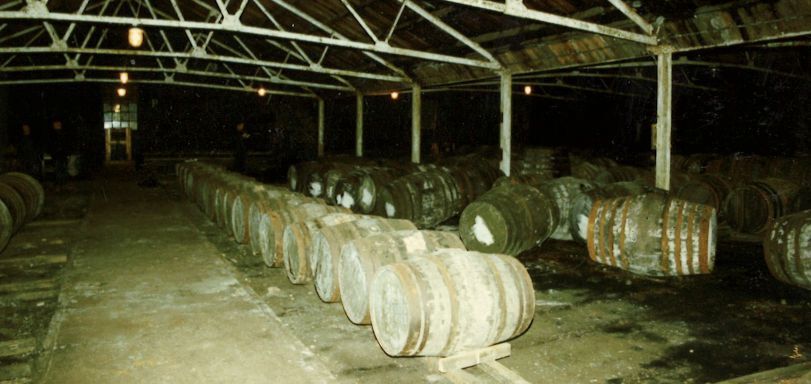
In 1997, the Glenmorangie Company emerged as the new owner of Ardbeg from a field that included four other bidders. But the distillery looked downtrodden and unloved. With little investment over the past two decades—it had been closed from 1981 to 1989, with low production volumes until closure again in 1996, the site and its tumbledown warehouses were now neglected and even a little hazardous. Nearly 80% of Glenmorangie’s $11.4 million purchase price was based on the stocks in the warehouses, not on the brand or the real estate. Ed Dodson, manager of Glenmorangie-owned Glen Moray Distillery, was tapped to get Ardbeg back into working order. The spirit began to run again on June 20, 1997, and a protracted silent season allowed time for work on the buildings, piping, electricity, and pot stills. A new stainless steel semi-lauter mash tun was installed, and the spirit still was replaced in 2001.
Stuart Thomson became Ardbeg’s distillery manager in 1997. One year later came the opening of Ardbeg’s Old Kiln Café and gift shop. A 17 year old was released from the distillery’s lightly peated era of the early 1980s. (Prior to that, only small quantities of Ardbeg had been bottled as single malt, because the spirit was mainly used as a component for then-owner Allied Distillers’ Ballantine’s and other blends.) Ardbeg 10 year old was introduced in 2000, providing a more heavily peated proposition than the 17 year old. The younger age statement was due to stock gaps that previously made releasing a 10 year old impossible. “In 1990, there was quite a large level of production,” says Dr. Bill Lumsden, director of distilling, whisky creation, and stocks. “But over 1991, 1992, and 1993, it gradually decreased, then there was a little bit in 1996, and that was that.”
On January 1, 2000, the Ardbeg Committee was formed, with Thomson as its first chairman. The idea was to promote the enjoyment of Ardbeg—members pledged to evangelize to friends and colleagues—while also working to ensure the distillery never closed its doors again. The Committee was a smash hit: Soon members were having their weddings at the distillery, getting Ardbeg tattoos, and traveling from around the world to visit the site. A particularly popular photo-op was with Shortie, the resident distillery Jack Russell terrier.
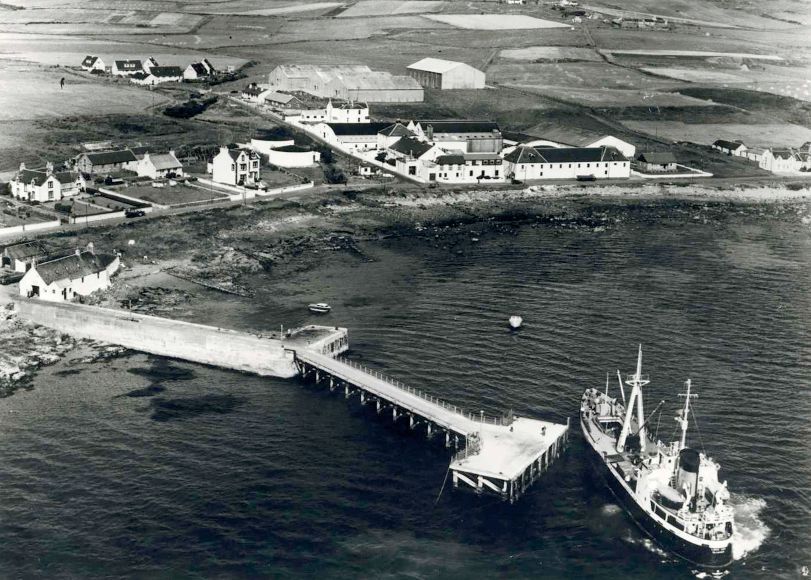
Ardbeg styled itself as the “Ultimate Islay Malt,” and the Committee published an irreverent newsletter, Momentous Minutes, with the first issue containing an Ardbeg flavor wheel. The newsletter was mailed in envelopes sealed with the phrase, “You are now entering Islay time.” Because many homes did not yet have internet access, early committee members would order their bottles by writing to the distillery and enclosing a check to cover the price and shipping costs.
This was all-new territory for Ardbeg, because it had never really been marketed as a single malt. Committee exclusives labeled “For Discussion” were declared “Committee Approved” if they went into general circulation. “We look back fondly on packing the bottles at the distillery, putting them in yeast bags, and taking them to the post office. Those were the days!” recalls visitor center manager Jackie Thomson. “There was a time when we could almost name all the committee members, and those original members are still in touch. Now we’ve got 220,000 members around the world. They’re still quite vocal and will tell you what they think.”
In 2004, Glenmorangie Company—including Glenmorangie, Ardbeg, and Glen Moray among other assets—was acquired by French luxury goods giant LVMH for $542 million. Ardbeg now had access to better distribution, higher-quality casks, and bigger marketing budgets. While Glenmorangie packaging got a luxury upgrade in 2007, Ardbeg’s had no need to change. Stuart Thomson left the island in 2008, and Mickey Heads, then Jura Distillery manager, was his replacement. Ardbeg opened a new stillhouse in 2021, which boosted capacity from 1.4 to 2.4 million liters of pure alcohol, and the original still-house was retired.
At Fèis Ìle, Islay’s annual whisky celebration, each distillery has a day where they open their doors to the public. At Fèis Ìle 2000, the Ardbeg Day celebration attracted 200 visitors. In 2024, 1,500 people turned up to join the circus for the release of Ardbeg Spectacular and enjoy the helter-skelter amusement park ride on-site. And this past January, the Ardbeg Committee marked its 25th anniversary with the release of Eureka!, a whisky that had been chosen with the participation of 100 committee members at a blind tasting called Operation Smokescreen that included five “extreme whiskies.”
Bruichladdich Returns
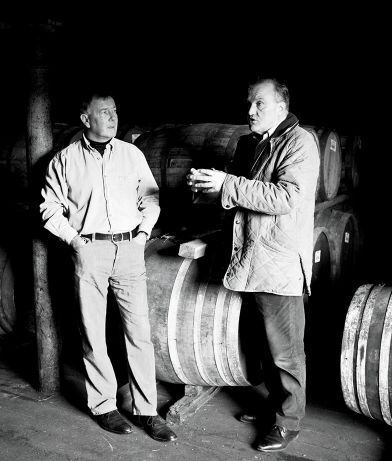
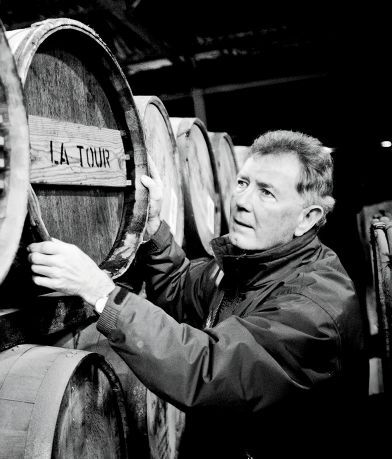
On the other side of the island is Bruichladdich, another Victorian-era distillery where production had ceased in 1994, except for a two-week period in 1998 under then-owner Whyte & Mackay. Mark Reynier, a London-based wine and spirits merchant, admired Bruichladdich through the whiskies he bottled for his Murray McDavid label. On vacation, he famously cycled past the locked distillery gates bearing the sign “No Visitors! Plant Closed” and after asking for an impromptu tour, was told-off in unprintable language by the security guard. Reynier thus became determined to buy the distillery. Backed by a small group of private equity investors, Reynier and business partner Simon Coughlin acquired Bruichladdich on December 19, 2000 for $9.5 million. Jim McEwan was recruited as master distiller, after working 38 years at Bowmore Distillery, to run the place. McEwan hired former Bruichladdich assistant distillery manager Duncan McGillivray, who set about fixing up the old equipment, servicing the mill and cast-iron mash tun that dated back to 1881. Meanwhile, McEwan began going through the 6,500 casks of inventory, undertaking a re-racking program after finding that much of the stock was in lower quality refill American oak hogsheads.
In May 2001, Bruichladdich came alive once more. A heavily peated new make spirit, destined to become Port Charlotte, was produced for the first time. “Peated whisky hadn’t been made here since the late 1950s to early 1960s, so there was nobody who knew what that spirit tasted like,” says Bruichladdich’s current head distiller Adam Hannett. The following year, the intensely peated Octomore was first distilled. The new releases then began to come thick and fast. McEwan utilized the old inventory—plentiful for some vintages, sparingly for others—to get creative. Initially there were age-stated whiskies labeled at 10, 15, and XVII years old, followed by limited-edition releases using the older stock: Legacy, Links, WMD, First Growth Cuvée, Blacker Still, vintages, and anniversary bottlings. In the distillery shop, visitors bottled their own single cask whisky from the Valinch Series. Those would double in value by the time you got them home.
Soon the new ownership’s production was mature enough to bottle. Port Charlotte Evolution PC5 Cask Strength debuted in 2006, and Octomore 5 year old 1.1 arrived in ’08. The releases championed farmers, sustainability, and terroir, with Bruichladdich Scottish barley, bere barley, organic, biodynamic, and Islay barley vintages. This maverick approach ruffled some feathers, but it endeared them to fans even more. By now, McEwan was traveling internationally to promote the distillery at whisky shows and dinners. Film crews made documentaries about Bruichladdich’s revival, with McEwan at the center of it.
Then in 2012, French spirts group Rémy Cointreau moved to acquire Bruichladdich, and a sale price of $88 million was agreed upon. Reynier didn’t want to sell, but was outvoted seven to one and departed, leaving Coughlin at the helm. McEwan stayed on for three years, celebrating his 50th anniversary in the industry, before Hannett became his successor in 2015. As its own production came of age, the number of new releases was consolidated compared to the heady days of the early 2000s.
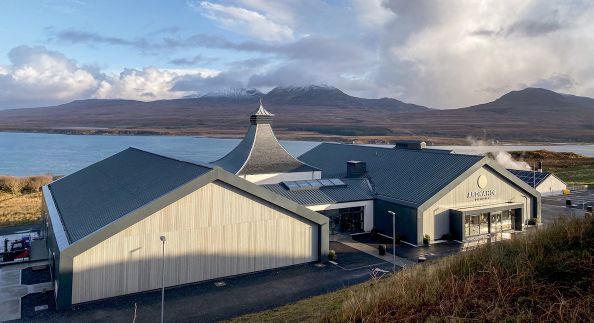
Today, this period on Islay is remembered by many whisky lovers as a glorious time. The number of working Islay distilleries has now grown to 10, with the addition of Kilchoman, Ardnahoe, and Port Ellen, while new distilleries from Elixir Distillers, Ian Macleod, and Chivas Brothers are in various stages of development. The parallel revivals of Ardbeg and Bruichladdich helped ignite a passion for Islay whiskies.
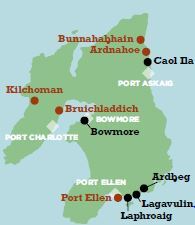
Islay Then and Now
In 2000, Islay was home to five functioning distilleries (shown in black). Today there are five more (in red), with several others in development.
Islay’s Whiskies Today
94 Ardnahoe 5 year old Inaugural Release, 50%, $88
Marmalade, heather honey, dark fruit, sooty smoke, sherry trifle, and cinnamon sugar
95 Ardbeg Corryvreckan, 57.1%, $125
Sweet and savory, with lively spice, woodsmoke, phenols, and licorice
92 Bowmore 15 year old, 43%, $125
Dark chocolate, cherries, malt, peat smoke, and a hint of dry oak
94 Bruichladdich Eighteen, 50%, $180
Honey, crème brûlée, coconut cream, tropical fruits, red berries, and pepper spice
92 Bunnahabhain 18 year old, 46.3%, $299
Sherry, dried fruits, nutmeg, and dark chocolate
93 Caol Ila 11 year old Ambrosial Feast (Diageo Special Releases 2024), 57.3%, $110
Star fruit, apple, pear, pepper, anise, vanilla, cashew, and peanut
93 Kilchoman 10 year old Loch Gorm, 46%, $110
Chocolate orange, raspberry sauce, clove, pepper, lemon curd, vanilla, and candied orange
94 Lagavulin 12 year old Ink of Legends, 56.4%, $170
Lime zest, smoked lemon, cooked agave, peat smoke, caramel, and green herbal notes
95 Laphroaig Elements 2.0 Cask Strength, 59.6%, $165
Peat, spice, creamy vanilla, peach, poached pear, and white pepper
94 Octomore 15.1, 59.1%, $205
Smoke, white pepper, crème brûlée, and toasted sugar
93 Port Charlotte 18 year old, 54.3%, $200
Peat embers, smoke vanilla cream pie, and baked apricots
96 Port Ellen Gemini 44 year old Remnant Cask Finish, 53.6%, approximately $56,000/set
Butterscotch, syrup, vanilla cream, peppercorn, dried tropical fruits, and beach bonfire smoke
ISLAY NEIGHBORS

.png?resize=410x0)