Photo by David Wood

Scotch Whisky Makers Pledge Millions For Islay Peatlands Restoration
Three major whisky companies are on board for a new project to help preserve Islay’s natural resources
December 1, 2025 –––––– Jonny McCormick
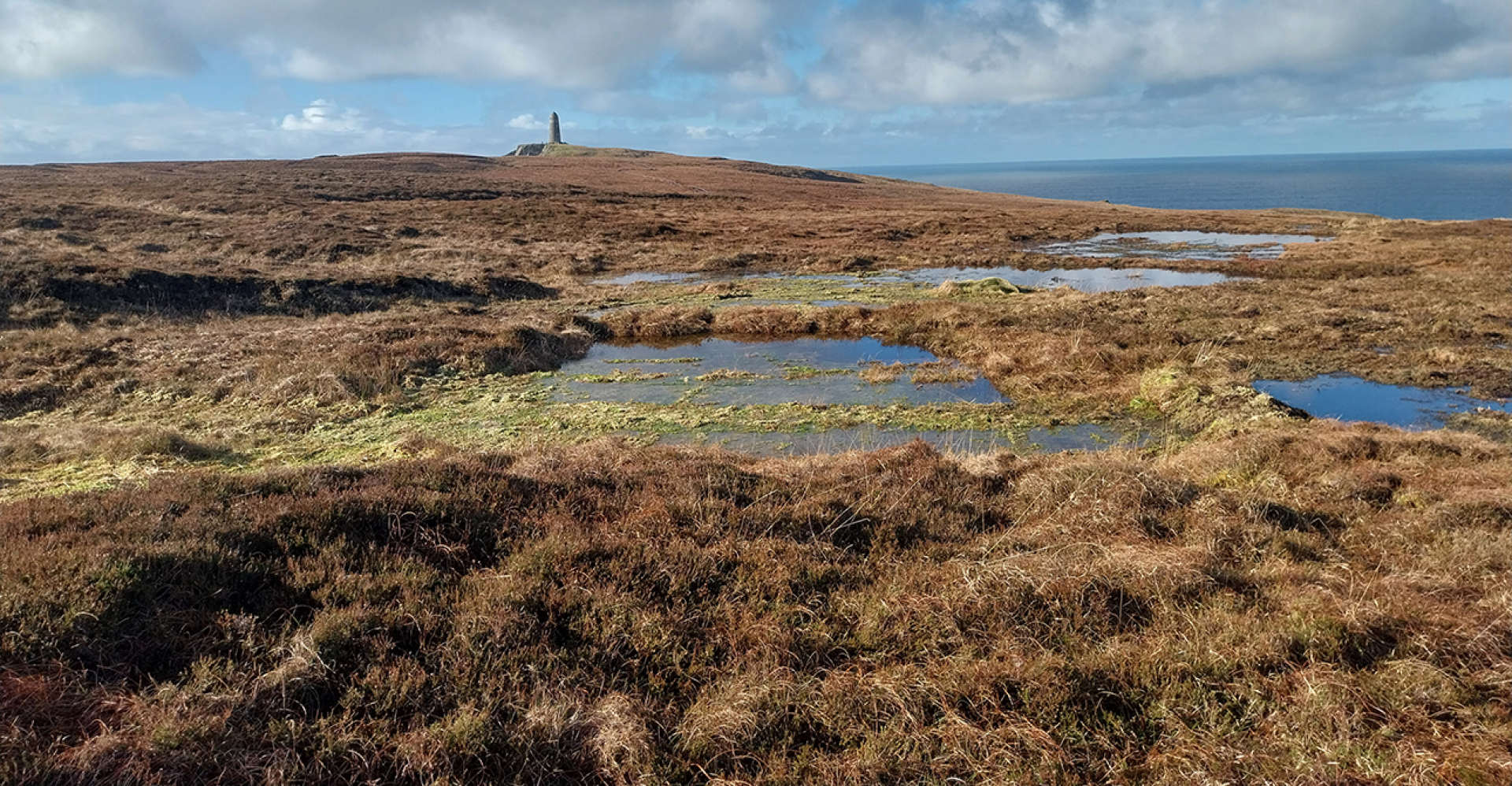
Three major whisky producers have joined forces with the Royal Society for the Protection of Birds (RSPB), the UK’s largest conservation organization, to fund a five-year peatland restoration project at The Oa nature reserve on Islay. With its sheer cliffs and wild moorlands, The Oa is an important habitat for wildlife that supports rare breeding birds such as the golden eagle, hen harrier, chough, and corncrake.
Jointly, Suntory Global Spirits, Diageo, and Moët Hennessy’s The Glenmorangie Company will invest $2.1 million to restore 1,000 hectares (2,471 acres) of peatland on the remote peninsula, equivalent to an area three times the size of Central Park in Manhattan.
Collectively, these multi-national drinks companies operate six Islay distilleries prized for their smoky single malt scotches: Ardbeg, Bowmore, Caol Ila, Lagavulin, Laphroaig, and Port Ellen.
Peatland covers a fifth of Scotland’s land mass, where the compressed, partially decomposed plant material in the peat acts as a nationally important carbon store. Healthy peatlands counter the effects of climate change by reducing carbon emissions, helping to improve water quality, and promoting biodiversity, but around 80% of Scotland’s peatlands are degraded and drying out. Peat cutting for domestic fuel, drainage, burning, forestry, and overgrazing have left these landscapes increasingly vulnerable, and the pressures of hotter summers, more intense rainfall, and the growing wildfire risk are speeding up the degradation of the ecosystem.
Peatland restoration involves encouraging revegetation of exposed peat areas, removing forestry established on peat to restore natural wetland conditions, and increasing the water levels to create shallow pools to enable sphagnum mosses to flourish. These soft, sponge-like plants are water hoarders and help maintain the waterlogged, low-oxygen conditions necessary for decomposing organic matter to form into peat and keep the carbon locked in.
The Scottish Government has committed $320 million to support the restoration of 250,000 hectares of peatland by 2030, working with public, private, and third-party organizations. Scotland’s Nature Agency, NatureScot, coordinates peatland restoration projects through Peatland ACTION. More than 50,000 hectares have been restored in Scotland since 2012, providing welcome employment opportunities for people living in rural communities. Suntory Global Spirits has an established track record of supporting peatland restoration through its Peatland Water Sanctuary, which has previously included joint initiatives with the RSPB to restore peat bogs on The Oa peninsula. In November 2025, Diageo also pledged $6.5 million to restore 3,000 hectares of degraded peatlands across Scotland in partnership with Caledonian Climate, and Diageo previously funded a peatland restoration project on Islay in 2016 as part of the Lagavulin 200th Anniversary Fund. The three whisky companies’ latest investment for The Oa, in partnership with the RSPB, represents an additional .6% of the value of the government funding, and reflects the increasing cost per hectare of peatland restoration since 2020.
Of course, the peat bogs of The Oa are not being restored so peat can be harvested to make smoky whiskies: that takes place elsewhere on Islay. The industry is, however, keen to ensure the continuation of peat extraction for malting to protect jobs, brands, and its reputation by actively championing peatland restoration programs.
While the horticulture and energy sectors have faced peat restrictions and bans in recent years, scotch whisky companies have downplayed the relatively small proportions of peat extracted for whisky making. Many new distilleries opened in the 21st century, including Kilchoman, Isle of Raasay, Ardnahoe, and Torabhaig, and have also leaned into the peated whisky trend, adding to the demand for peated malt in some cases. However, other new distilleries have chosen to make unpeated whisky exclusively for sustainability reasons, such as Nc’nean. Choosing not to use peat is not just the prerogative of the start-up; the historic Glenturret Distillery announced that it was phasing out peat in 2024 and will only use unpeated malt from 2026.
Whisky producers are also exploring more efficient ways to source and use peat, including reducing the amount burned in the kiln to produce each ton of peated malt, devising methods to capture and recirculate peat smoke, and augmenting supplies with peat discarded during construction work for new housing, transport, and energy infrastructure projects. Taken together, these efforts suggest an industry beginning to reckon with its dependence on peat—and the responsibility to safeguard the Scottish landscape, communities, and natural world that make its whiskies possible.