
A Whiskey Maker in New York's Wine Country
Now, almost two decades into its tenure, Finger Lakes Distilling is making well-aged whiskeys
June 11, 2026 –––––– Julia Higgins
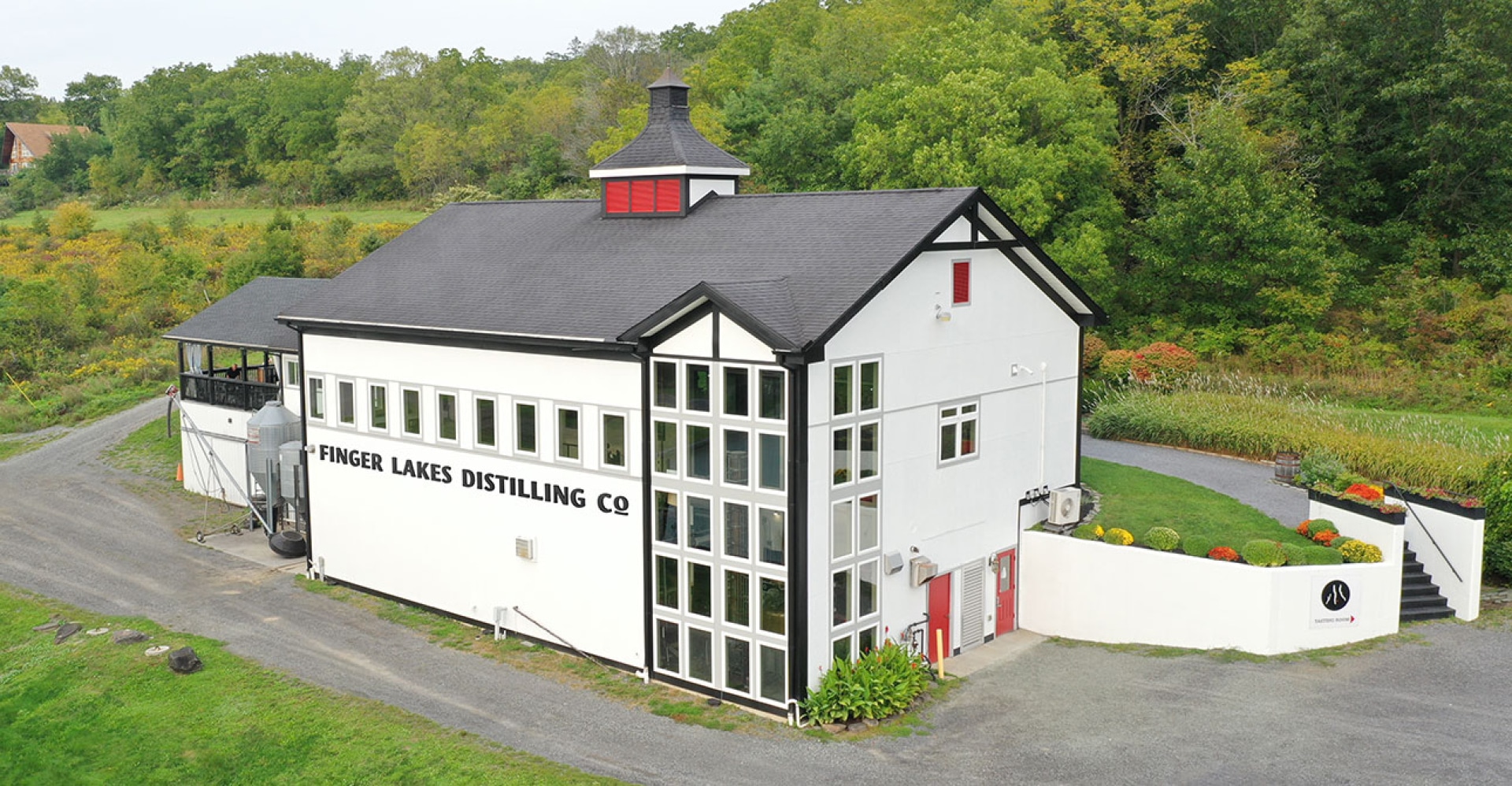
For nearly 20 years, high on a hill overlooking Seneca Lake—one of New York’s 11 elongated Finger Lakes—Brian McKenzie has made whiskey at Finger Lakes Distilling. He opened the Burdett-based distillery in 2007, working with a 350-gallon pot still from Germany, followed up with a 25-foot Vendome column still soon thereafter. While most whiskey makers, and the craft world especially, have been weathering an industry-wide correction period, at Finger Lakes, it’s more or less business as usual.
“We’ve been holding our own, and we’re doing just fine,” says McKenzie. “We’re figuring out ways to adapt, but baseline, we’re continuing on with everything as is.” That’s meant full steam ahead with the distillery’s many whiskeys, which now range from Empire rye and bourbon to pot still and American single malt. No matter the style, the whiskeys are all made with grains sourced from New York State; the distillery’s primary farmer is a couple of miles away, and it’s where all of its corn, rye, and wheat are grown (the malted barley hails from slightly further away, but it’s also from a Finger Lakes-based farmer).
.jpg)
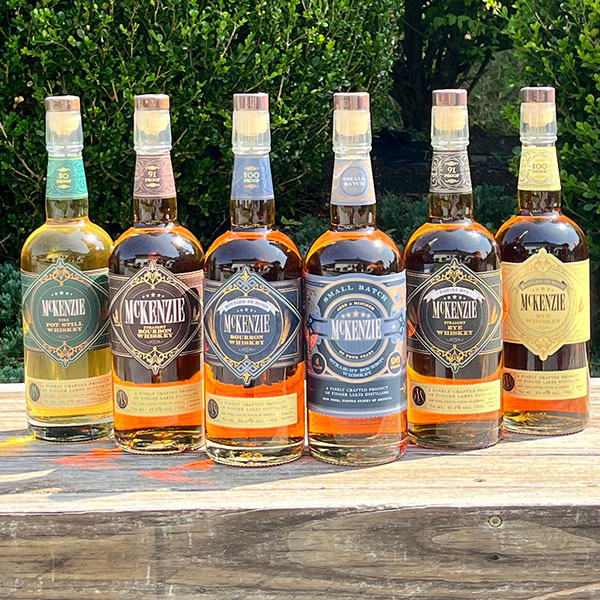
The most consequential whiskeys from Finger Lakes are its Empire rye—made from 80% danko rye and 20% malted barley—and its bourbon, which McKenzie says accounts for the majority of the distillery’s business. “Rye has such heritage in New York, and we’re really proud of that,” he says. Within those whiskeys, there are a few variants, including bottled in bond, small batch, and single barrel expressions, as well as a scarce selection of cask finishes. “With the bourbon, we’ll change up the mashbill [the flagship is high-rye, for instance, and the bottled in bond is a wheated bourbon], whereas with the rye, the different expressions are generally just at different ages,” he explains. The age of the whiskeys has gradually increased as the distillery itself has matured, and these days, the whiskeys are upward of 5 years old, with some releases as old as 10, which McKenzie believes is generally about the limit for his whiskeys, although there are American single malts as old as 15 in the warehouse.
Aside from the bourbons, ryes, and single malts, McKenzie also dabbles in pot still, corn, and blended whiskeys, plus a variety of brandies, vodkas, gins, liqueurs, and grappa. The pot still variant, in particular, was created so that visitors might have something subtler to sip on. “We wanted a softer whiskey for people to drink when they came to see us,” he notes. “We make pretty big, flavorful whiskeys, and the [pot still] is lower proof, and light, and fits in the portfolio nicely as it’s a little more approachable.” It’s true—the pot still whiskey, made from unmalted barley, malted barley, and oats, is light as a feather, an endlessly sippable, delicately sweet dram that could serve as an entry point for the whiskey-cautious. On the flip side, the flagship bourbons and ryes are more complex and flavorful, with each expression packing a pretty heady punch. When trading up to the bottled in bond and single barrel variants, the depth of flavor only grows, with darker, more barrel-influenced notes emerging in the glass.
Specialty releases from the distillery are varied, including single barrel bourbons and ryes and one-off mashbill creations, as well as cask finished ryes. “The rye lends itself nicely to a sweeter cask finish—things like rum, which [was a cask finish] we were really proud of,” McKenzie notes. He’s also played around with locally sourced pommeau (apple brandy) casks in the past; generally, these releases are hyper-local, available at the distillery and select New York retailers.
Amidst its good news, there was one recent bump in the road for Finger Lakes: A secondary tasting room that McKenzie purchased down in Ithaca (about half an hour east of the distillery’s home base) was open for just several months before ultimately being sold off. “We bought it primarily for storage, and we had a little tasting room there, but the license we needed for the barrel warehouse never materialized,” he notes. In lieu of the Ithaca site, McKenzie is now building out more storage at the distillery to accommodate its snowballing inventory. He expects this coming summer the distillery will see plenty of foot traffic (it sits along the Seneca Lake Wine Trail, a hotbed for seasonal tourism); while tours are available by reservation and on weekdays only, its tasting room is open every day, serving flights, cocktails, and small bites. An on-site bottle shop offers locally made goods and bottles for purchase.
Finger Lakes Distillery at a Glance
Location: Burdett, New York
Master distiller: Collin McConville
Core whiskeys: McKenzie straight bourbon, bottled in bond bourbon, and small batch bourbon; McKenzie straight rye and bottled in bond rye; McKenzie straight malt whiskey; McKenzie pot still whiskey; Mac’s American blended whiskey
.png?resize=410x0)