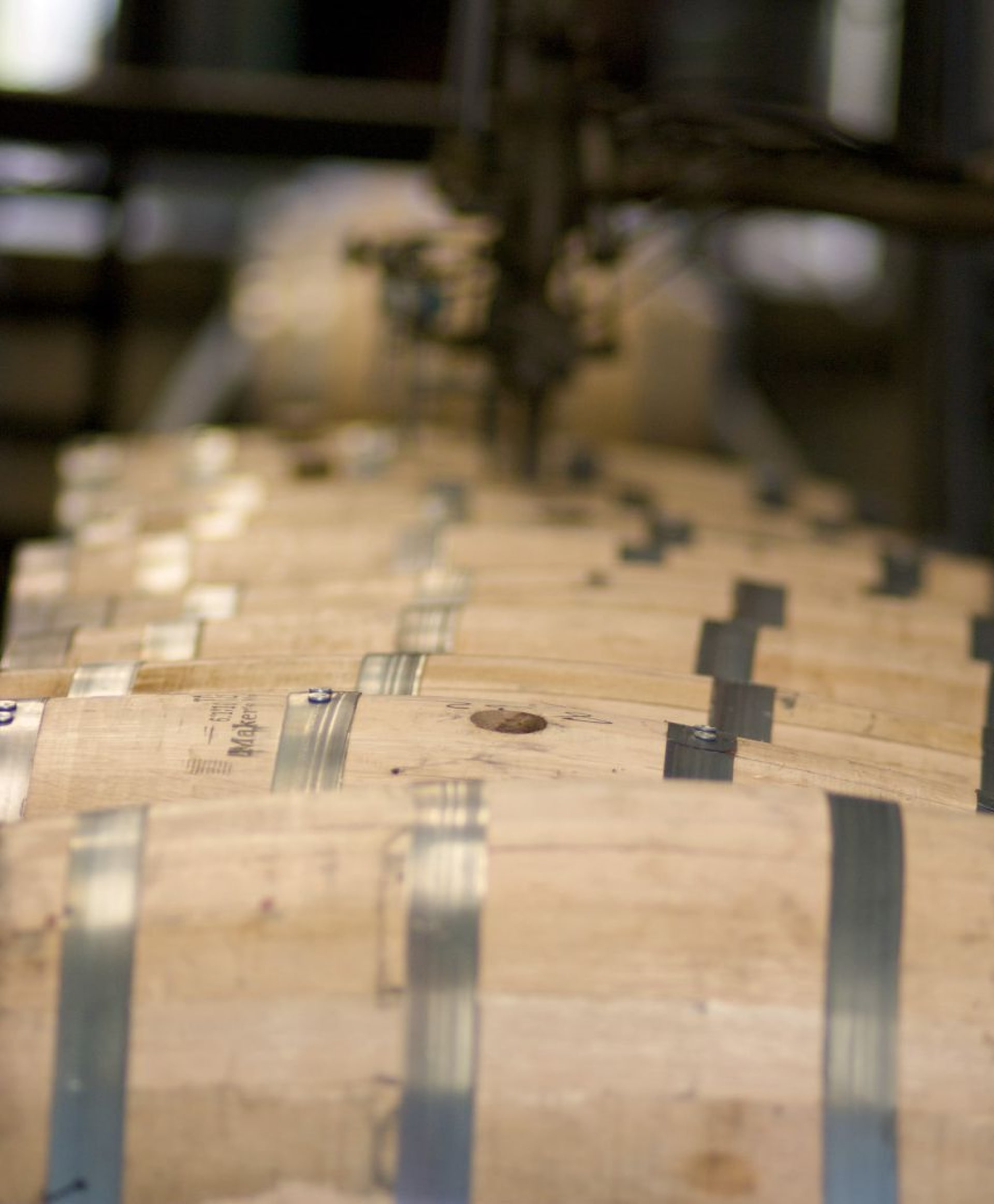
Barrels waiting to be filled at Maker’s Mark Distillery in Loretto, Kentucky.

The Impact of Low Barrel Entry Proof
The low-entry proof method is a maturation game-changer
July 22, 2026 –––––– Danny Brandon
Of the many methods used in the whiskey-making process, one that’s relatively unfamiliar is barrel entry proof (BEP), which refers to a distillate’s strength prior to entering the barrel for maturation. Most American whiskeys are barreled at the legal maximum of 125 proof. Some distillers, however, add more water before the distillate goes into the barrel—lowering the proof to 115 or less. They argue that it increases the extraction of desirable barrel flavors and smooths out a whiskey as it ages, and many of these low-entry proof whiskeys have built a quality reputation among aficionados.

The issue came to the fore in 1935, when the federal government established new standards of identity for whiskey, hoping to better regulate an industry that was getting back on its feet after Prohibition. Back then, the maximum entry proof was 110, and most distillers tended to barrel at or just under that number. But in 1962, at the behest of distillers, the government raised the limit to 125, helping some struggling producers to improve their margins by using fewer barrels to produce the same volume of aged whiskey.
Maker’s Mark was one of the very few that has stuck with its barrel entry proof, the original 110 that Bill Samuels, Sr. implemented in 1954. The lower BEP helps the distillery to truly shine in two areas that fans of the brand tend to gravitate toward: extended aging and stave finishing. On the finishing front, the additional water in the barrel helps extract more flavors from the staves—including spice from French oak in expressions like Maker’s 46 and The Heart Release, or vanilla and caramel from American oak in The Keepers Release and others. It has also played a key role in paving the way for the distillery’s annual Cellar Aged series, which features some of its oldest and most impressive blends that, despite the double-digit ages of their components, are remarkably vibrant and complex without being overly tannic.

For Wild Turkey, the change was more gradual. The distillery had long barreled its whiskey at 107 proof, since that’s the way master distiller Jimmy Russell had always done things. But that changed in the early to mid-2000s, when Jimmy’s son Eddie began playing a larger role in production, and more labels like Russell’s Reserve were introduced. During this time, the distillery raised its barrel entry proof twice—first to 110 in 2004 and then to 115 in 2006. Wild Turkey doesn’t disclose what BEP it uses today, but it claims that it still uses a low entry proof to help maintain complexity and reduce the amount of water needed to proof the whiskey post-maturation. In our tastings, we’ve found that certainly suits the house style, with notable examples including the 8 year old Jimmy Russell 70th Anniversary bourbon and Rare Breed Barrel Proof straight rye, which both made appearances on our Top 20 lists with scores of 94 points.
Buffalo Trace is another historic distillery that uses low entry proof, albeit in somewhat limited fashion. While its rye whiskeys and most of its bourbons are barreled at the standard 125 proof, Buffalo Trace drops it to 117 for its wheated labels like W.L. Weller. Buffalo Trace also explored other entry proofs in a limited fashion, using its Experimental Collection to release wheated and ryed bourbons in 2013 and 2014, barreled at varying proofs between 90 and 125. Master distiller Harlen Wheatley found that the entry proof had a significant impact on flavor, with higher BEPs generally yielding spicier profiles, while lower entry proofs produced sweeter, fruitier characters. Those whiskeys may be hard to find now, but a worthy alternative exists in its more accessible W.L. Weller Full Proof, which is proofed back down to its entry proof of 114 prior to bottling.
Modern Marvels
Outside those historic distilleries, a few newer ones have also adopted the practice. One of the most prominent is Michter’s, which began distilling its own liquid in 2014 and barrels all of its distillate at a relatively low 103 proof. (Its 20 year old and 25 year old are a completely different story, coming from stocks sourced earlier that were barreled at indeterminate proofs.) According to Michter’s master of maturation Andrea Wilson, low BEP is one of the most significant parts of the distillery’s process. “Water is a powerful hydrolyzer for wood sugars and other soluble compounds,” she explains. “This way, every barrel begins with a beautiful catalyst for a lot of wonderful chemistry, and allows each barrel to extract more from the wood to increase the complexity and flavor of the final product.” Wilson works with wood that’s open-air seasoned for 18-60 months to further soften any astringent, bitter, or green flavors that can sometimes come from oak during maturation. The result is a distillate that shines at all levels of the proof spectrum, with its US*1 Single Barrel rye (91 points/42.4% ABV) and its barrel strength counterpart (93 points/54.9% ABV) both carrying complexity, power, and grace that belie their respective bottling strengths.

Kentucky Peerless has been barreling its whiskey at 107 proof since it began producing in 2013, though the team briefly considered barreling at 123 proof instead. According to master taster and single barrel curator John Wadell, the decision was rooted in a desire to showcase the distillery’s use of sweet mash. “The first thing we thought about is the need to respect the grains and fermentation,” Wadell says. “With lower barrel entry proof, you allow the grain character to stay more prominent, the fermentation esters to survive, and the yeast-driven fruit and spice to shine through more.” He also notes that the process helps preserve some of the natural oils that add viscosity, especially if the whiskeys aren’t chill-filtered. We certainly found that to be the case with the distillery’s Double Oak bourbon, noted for its syrupy texture and complexity, which led to a 93-point score from our tasting panel.
For Peerless it all comes back to flavor. “Your water will pull more of those wood sugars: the vanillins, the caramelized hemicellulose, and your baking spice compounds. Whereas a high entry proof will extract more dried oak, bitter tannins, and some of those sharp astringencies you may have,” Wadell argues. “Our water becomes an ingredient, not a dilution, in this process.”
6 Low-Barrel Entry Proof Whiskeys to Try
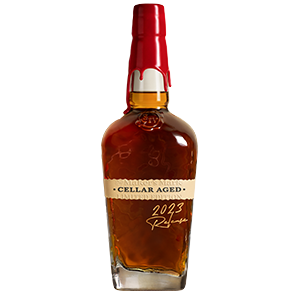 95 points - Maker’s Mark Cellar Aged Bourbon (2025 Release), 56.45%, $175
BEP: 110 Frosted cinnamon roll, cocoa powder, tobacco barn, and lemon curd
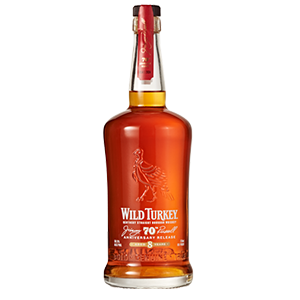 94 points - Wild Turkey 8 year old Jimmy Russell 70th Anniversary Bourbon, 50.5%, $50
BEP: 115 Salted caramel, cappuccino, leather, and cherries
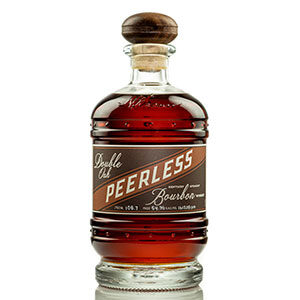 93 points - Kentucky Peerless Double Oak Bourbon, 54.35%, $85
BEP: 107 Warm apple pie, raisin cake, dark chocolate, and gingerbread
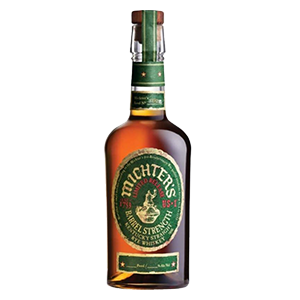 93 points - Michter’s Limited Release US*1 Barrel Strength Rye (Barrel 25B0605; 2025 Release), 54.9%, $120
BEP: 103 Brown sugar, orange peel, black pepper spice, chocolate
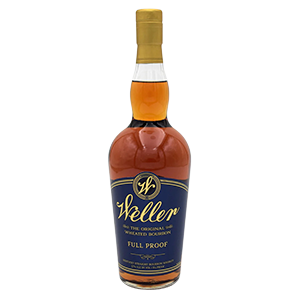 93 points - W.L. Weller Full Proof Bourbon, 57%, $65
BEP: 107 Tiramisu, milk chocolate, caramel mocha, and dark fruits
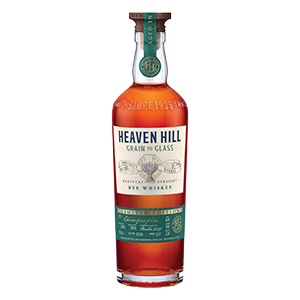 92 points - Heaven Hill Grain to Glass Specialty Series Chinquapin Rye, 53.5%, $125
BEP: 107 Nougat, toffee, cherry, and dark chocolate-covered espresso beans