
LALO's Third High-Proof Blanco Introduces Agave Fiber Fermentation
This tequila maker, which has long prided itself on its artisanal methods, takes a new approach to agave
November 16, 2026 –––––– Aubrey Thompson
Founded in 2019, LALO Tequila has built its identity around blanco tequila. Now, with its third annual high-proof blanco, co-founder Eduardo (Lalo) González is continuing that exploration, highlighting how small changes in production can bring out different characteristics of the agave.
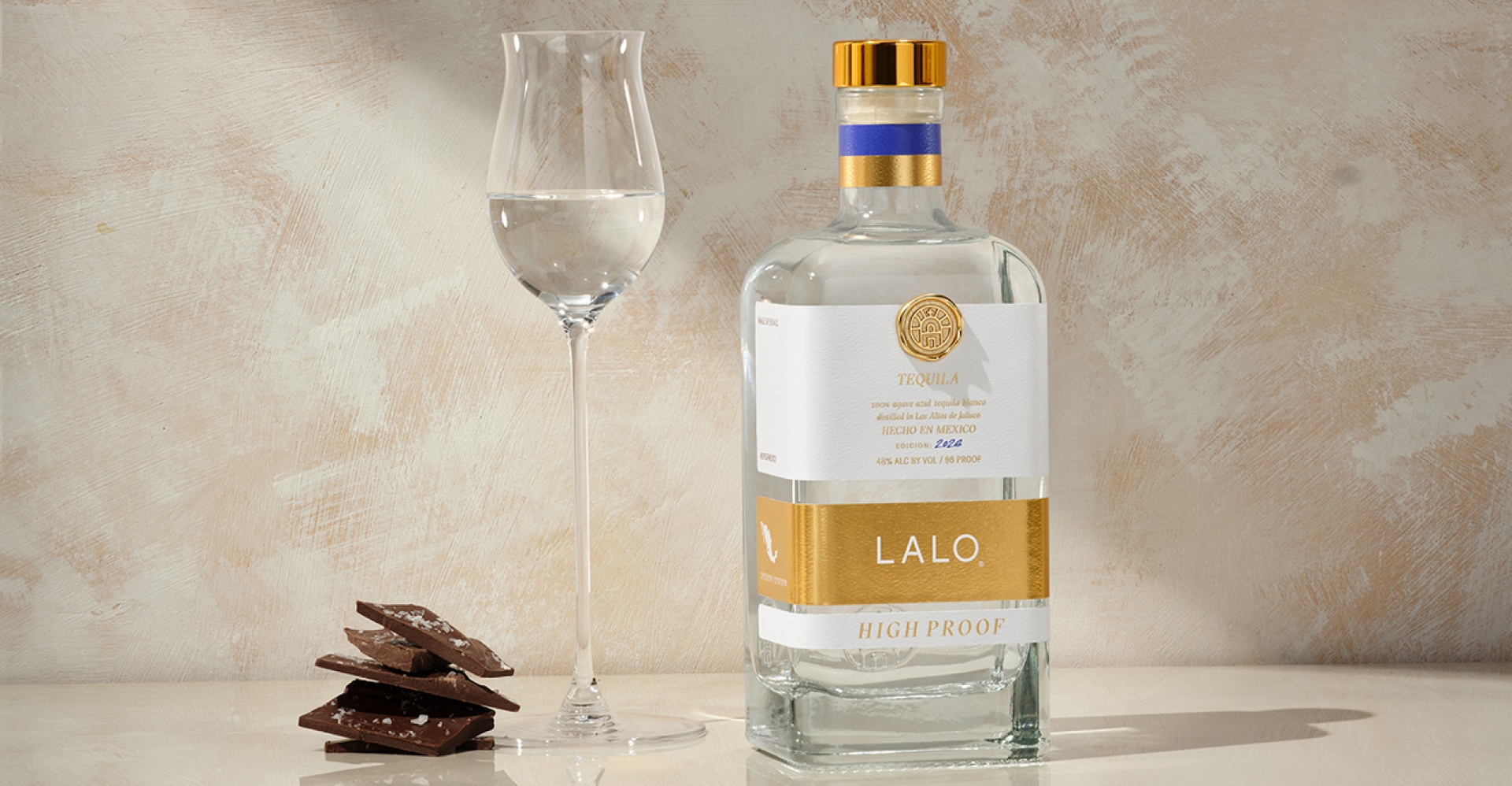
Since debuting its flagship 80-proof blanco in 2020, LALO has steadily raised its proof. Its latest release, bottled at 48% ABV, sits slightly below the previous two offerings—54% in 2024 and 50% in 2025—but González says it’s all about proof. After experimenting with 46%, 48%, and 50% ABV, the team selected the 48% expression. González describes its flavor profile as having “rich, super-sweet cooked agave,” with a funkiness reminiscent of old-school tequila and notes of overripe pineapple paste.
This year's release also introduces a new production method for LALO: incorporating agave fibers, known as bagazo, into fermentation. González attributes the expression's distinctive flavor profile, including its cooked-agave sweetness and pineapple funkiness, in part to the addition of these fibers. While already common among tequila producers, the technique marks a departure from LALO's previous fermentation process. To introduce this element, González and his team opted for a stainless-steel filter system he likens to a “reverse French press.”
“It's basically a huge filter that's the same circumference as the fermentation tank,” González says. Held in place by four brackets inside LALO's 18,000-liter fermentation tanks, the stainless-steel filter keeps the agave fibers submerged. After the cooked agave passes through a crusher and the first of five roller-mill presses, approximately 450 pounds of fibers are collected and added directly to each tank. Fermentation lasts about 76 hours, compared with the usual 72 hours for LALO's original blanco.
LALO isn't alone in combining agave fibers and Champagne yeast during fermentation. Lost Explorer's blanco also employs both techniques, while Volcan De Mi Tierra is another player who uses Champagne yeast, purportedly for its added viscosity, fruity and citrus aromas, and softer finish. For LALO, Gonzalez toyed with several strains before the brand launched, including yeasts commonly used in tequila, cognac, and beer production. While cognac yeast brought floral characteristics, the brewer's yeast didn't produce the profile he was looking for. Champagne yeast ultimately offered the balance González was seeking, creating what he describes as a “beautiful dance of flavors.”
“We were pretty stubborn about it—even when everyone thought we’d fail,” he adds. As Lalo grows, aged expressions aren't completely off the table, but Gonzalez sees continued opportunities with blanco. “I think we’ll have some things we can do. Changes in the production process—again, respecting the mantra of using Highland agave and being consistent with what we've done in the past.”
The 2026 is available in limited quantities for $75 in 41 states, excluding Iowa, Maine, Mississippi, New Hampshire, Pennsylvania, Rhode Island, Vermont, Virginia, and West Virginia.