
The Louisville Rickhouse Whiskey Co. Wants You to See Every Barrel
Three ticketed tastings, same-day single-barrel picks, and a 19 year old hazmat bourbon all await at the company's first Kentucky home
August 10, 2026 –––––– Sean Evans
The barrels are the first thing you notice. Two hundred of them, stacked on ricks in a government-bonded room in the middle of Louisville's NuLu district. The barrel heads are facing you, so you can be impressed when you see the stencils of Jim Beam, Barton, Campari, O.Z. Tyler (now Green River), staring back at you. That transparency is the point. Louisville Rickhouse Whiskey Co., which opened in late July, wants you to see its fantastic sourcing before you taste it.
The company is the Kentucky offshoot of Nashville Barrel Company, the Tennessee non-distilling producer that co-founder Mike Hinds and his partners Casey Kostrzebski and James Davenport built into a national name through single-barrel selection and small-batch releases. Coming to Louisville was always the goal. “We wanted to get to the mecca of bourbon tourism,” says Hinds. After years of perfecting the craft in Nashville, the team wanted to share its aged whiskey with a bigger audience, in the city with the deepest claim to it.
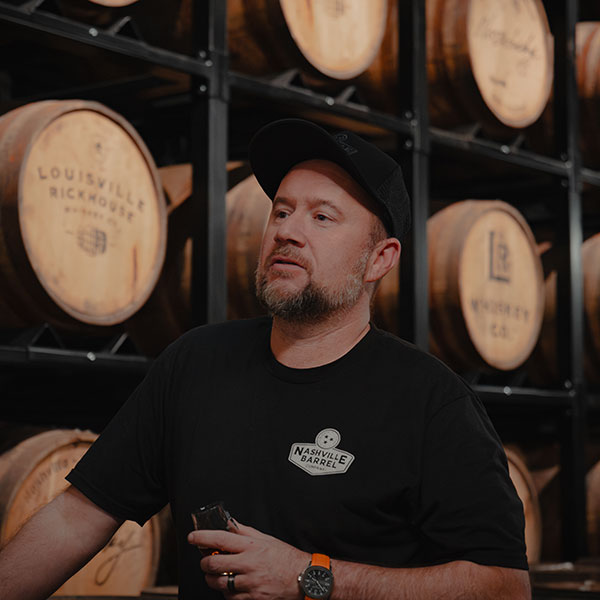
A Tennessee company opening in the bourbon capital could read as an intrusion. Hinds heads it off by leaning into Kentucky rather than around it. “Some of our favorite bourbons are from Kentucky. And location matters. We want to make sure we’re a welcome addition to the neighborhood,” Hinds laughs. For the new space, 90% of the barrels in Louisville Rickhouse are from legacy Kentucky distillers, with the remaining 10% from outside the state, including Tennessee and Indiana. Guests can taste through six, seven, or eight Kentucky and Indiana distilleries in one visit, a spread few single-brand tasting rooms can offer.
Three Ways to Taste at Louisville Rickhouse
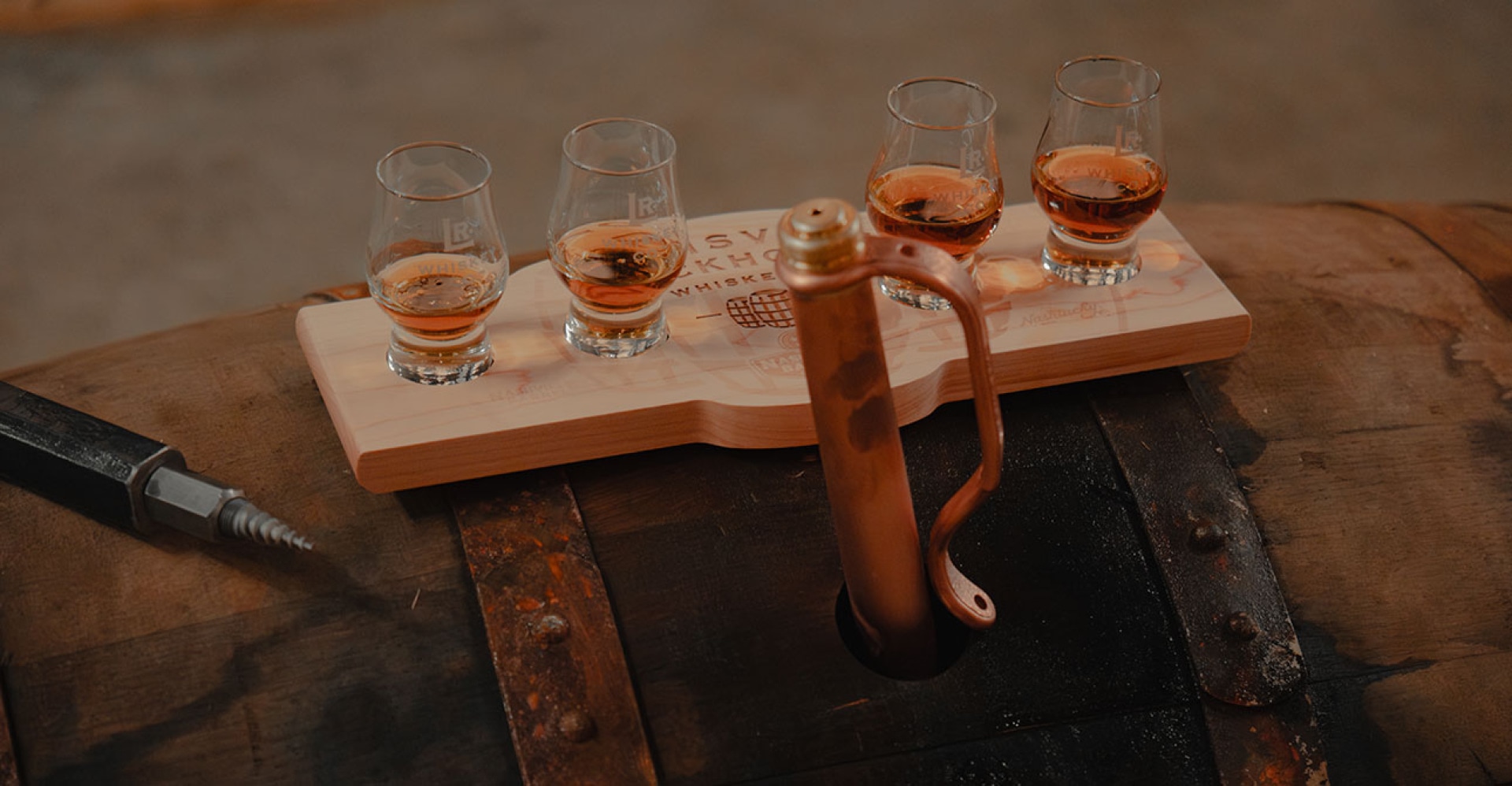
What sets the space apart from a conventional distillery tour is the level of education that Hinds and the team have imbued into the three ticketed experiences, which allow guests to taste straight from the barrel (a fourth tasting of a curated flight is also available). There’s a Rare and Allocated Tasting ($75), which allows participants to select four self-pulled pours of whiskey aged over 10 years. The current lineup includes a 19 year old Tennessee bourbon, a 15 year old Indiana rye, a 12 year old double-oaked Kentucky bourbon, and a 12 year old Indiana bourbon. Hinds expects to always have ultra-aged stock available. “We’re giving you some of the best whiskey made, not just our core items,” he said.
The Single-Barrel Experience ($150), ported from Nashville, walks guests through a blind barrel pick usually reserved for stores, bars, and “rich people,” Hinds quips. Guests sample four barrels, choose their favorite, and leave with a bottle of it. Interestingly, participants aren’t given the opportunity to select a favorite mashbill or age range; constraints that are deliberate. “After watching this for five years [at the Nashville distillery], most people pick what they say they don’t like,” Hinds says. Guests arrive certain they hate rye and leave converts, he says, adding that each barrel is between 7 and 10 years old and typically includes three bourbons and a rye, though precise options are up to the guides helming the experience.
The third tasting, The Experimental Deep Dive ($50), presents four barrel-finished pours of honey, maple, madeira, and cognac casks, with a maple rye often in the rotation. “While you taste, we tell you about the process. How to know when to dump it, what you’re looking for from this kind of finish, and more,” says Hinds. These are mostly bourbons, though Hinds has a soft spot for maple-finished ryes.
Pick a Whole Barrel, Bottle It the Same Day
The engine underneath all of this is the barrel program that made Nashville Barrel's name. A group can walk in, pick a full barrel, and leave with the bottled result the same day. At $10,000 to $30,000 a barrel, depending on the age and bottle yield, it’s not a cheap proposition, but it’s certainly an interesting one, considering it takes up to 6 months to receive single barrel selections from most major distilleries. And Hinds’ inventory moves. Two weeks ago, with buyers and groups cycling through, the company sold 20 barrels in a single day.
The Same Great Nashville Barrel Co. Standard, Now in Kentucky
The room holds between 150 and 200 barrels, roughly 5% of the company’s total stock, and serves as the last mile for whiskey that is mature and designated as ready for consumption. Most of it is 7 years or older, and the climate-controlled space slows further profile swings.
The bonded status puts Louisville Rickhouse in company with Angel's Envy, Old Forester, and Michter's, all of which run bonded spaces in the city. “Being bonded brings a huge set of challenges to clear, so it’s pretty cool to have a few hundred barrels sitting in the middle of Louisville,” Hinds says.
While there’s no kitchen, guests can bring their own food. And plenty of good options abound in the Nulu neighborhood. For non-whiskey drinkers accompanying loved ones, there’s a limited list of wine, cocktails, and bubbles, ranging between $12 and $20 per glass. And some merchandise is available, including a very fun hat that simply reads “HAZMAT,” a nod to those who like their whiskey above 140 proof.
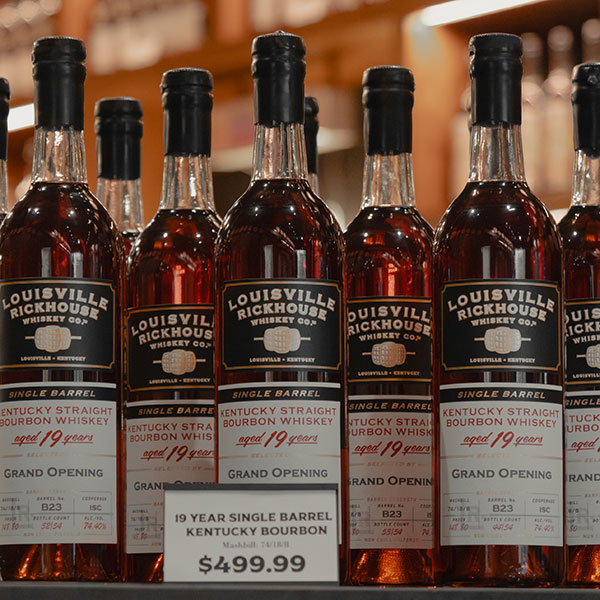
Louisville Rickhouse Hazmat Bottle Exclusives
Hazmat hounds will rejoice at Hinds’ launch exclusives: hazmat 19 year Kentucky bourbon. “We knew when we launched here, we wanted to bring the heat,” Hinds says. “We’re sourcing, but we have the best. Not many companies have 19-year Kentucky bourbon, let alone at hazmat proofs.” Hinds declined to comment on the source of these, but you can assume it’s from a heritage distillery with four numbers in its name.
Each run is a single cask, with many being short barrels, and costs $499 per bottle. “We launched with a 54-bottle cask; the one I’m bottling now is 65 bottles. We had one that was 13 bottles at 158 proof, so that ended up being a personal barrel for us,” Hinds says. We tried two of the available cask offerings and were blown away at how underproof they drink. Hinds says he has enough to keep the 19-year run “going for several months.” What’s after that? “We’ll figure that out when we get there,” he laughs.
.png?resize=410x0)