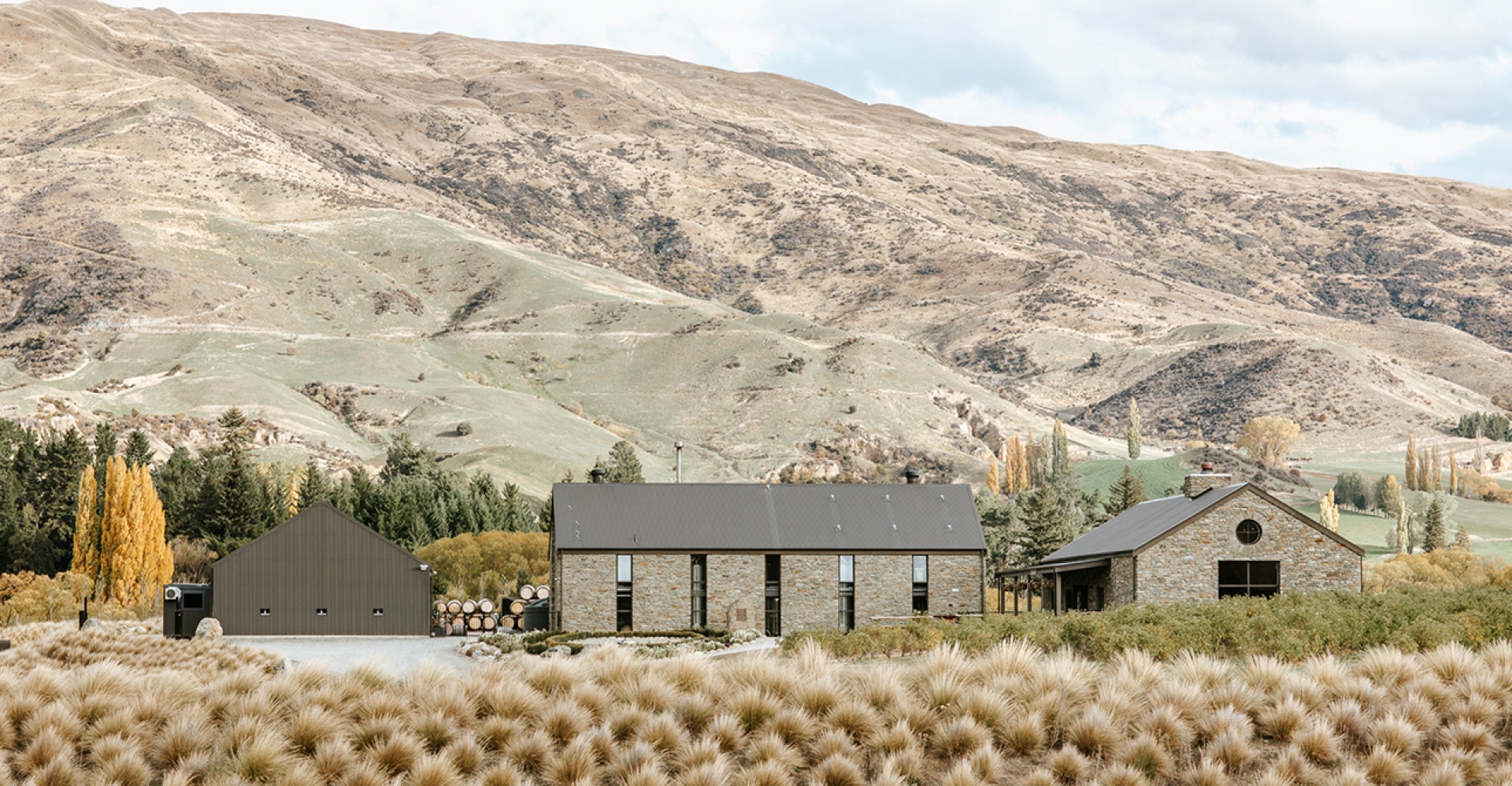
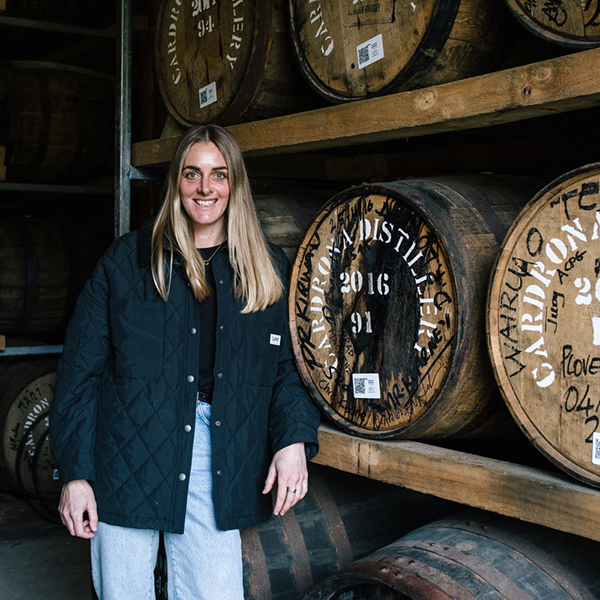
Cardrona Distillery is located in the southern Alps. PHOTO BY ANNA ALLAN

Single Malts, Kiwi-Style
New Zealand’s single malt distillers are making some great whiskies
September 8, 2026 –––––– Julia Higgins
New Zealand, the ruggedly beautiful, isolated nation of around 600 islands, is best known for beer and wine (and “Lord of the Rings”), but it’s also home to a growing single malt whisky scene. Since the start of the millennium, the country has gone from zero single malt distilleries to 20 and counting. The total barrelage is still tiny, and only a few distillers are exporting, but the Kiwis are putting their own stamp on single malt.
Given New Zealand’s Scottish roots, you might think the country’s whiskies are the southern hemisphere’s answer to scotch, but a variety of climactic factors combine to create whiskies with their own terroir and national character.
“We have a fantastic climate and fertile soils for barley here,” says Sarah Elsom, head distiller at Cardrona Distillery. “We’re predominantly all working with barley. There’s a little play with rye and wheat by some, but it’s at an experimental level. Barley grows exceptionally well in the Canterbury plains of [South Island], so much so that it’s often a site used by the UK in their off-season for seed development trials.”
The barley of choice for New Zealand’s distillers is the laureate varietal, which is also used in scotch. But the grain expresses itself far differently in New Zealand. “Laureate grown in New Zealand is much sweeter than the laureate that’s grown in Scotland, and that’s because of the growing conditions,” says Pōkeno Whisky founder Matt Johns. “If you’re starting with a sweeter barley, that’s going to positively affect your spirit. For ours, it definitely means a fruitier spirit.” This idea is echoed by The New Zealand Whisky Collection general manager and head distiller Michael Byars, who notes that while all New Zealand whisky makers are creating unique single malts, laureate barley is what binds them together. “We’re all slightly different, but there’s one category that’s all the way through in every single malt distillery: our grain,” says Byars. He cites an overwhelming creaminess and oiliness that’s present within many of New Zealand’s single malts, and attributes it directly to the barley.

In letting the laureate barley shine, many New Zealand distillers also employ longer fermentations and slow distillations, in what Elsom calls an “unhurried approach.” At Cardrona, fermentation was around 115 hours, though these days it skews closer to the more standard 72. “We have quite a fruit-driven flavor profile, and the way that we ferment and distill our barley very much encourages those fruit-forward esters,” she notes. At Pōkeno, the mash is fermented for around 90 hours, and Johns keeps the spirits run to around 9 hours. Similarly, The New Zealand Whisky Collection’s, Byars pushes fermentation over a week long and runs distillation by smell and taste, not by numbers. “I want to extract as much character from the grain and new make as possible, and the resulting spirit is creamy and rich and full of grain character,” he explains.
North vs. South
While these production similarities exist from distillery to distillery, you won’t find a signature style of New Zealand whisky— at least not yet. That’s due in part to the country’s dramatic differences in climate. It’s about a thousand miles from the southernmost tip of South Island to the northern reaches of North Island, a distance that takes nearly 30 hours to traverse by car and around 4 hours by plane. This translates to subtropical conditions on North Island, and a cooler, more temperate climate on South Island.
“We have a more rapid maturation on North Island, with an angels’ share of 9.5% per year,” explains Pōkeno’s Johns. “If you go to a distillery like Cardrona on South Island, they’ll be sitting at a 3.5% angels’ share. We’ll never get to the age statements that the South Island distilleries will, but that’s great because it illustrates this regionality all around New Zealand.” The warm, humid temps around Auckland mean more tropical fruit in Pōkeno, especially in its younger whiskies; conversely, Elsom points to Cardrona’s more delicate honeyed and floral notes, brought about by higher altitude and temperature swings.
Distinctly Kiwi
The other key factor driving the diversity of New Zealand single malts is something the Kiwis call the “number-8 wire.” While it’s a type of wire used in agricultural fencing, it became a catchword for a ‘can-do’ national mindset of inventiveness, creativity, and resourcefulness as they adapted the wire for uses far beyond its original purpose. “New Zealand is a long way from everywhere else, so we have to be creative and innovative,” says Johns. “That’s what the number-8 wire approach is about. The Kiwis have always batted above their weight [because of it].”
So, if number-8 wire calls for thinking outside the box, New Zealand’s distillers have done that in spades. Take Pōkeno—a hunt for barrels made from native New Zealand wood led the distillery to establish its very own cooperage—the only one in the country—enabling it not only to make barrels from local totara and kauri trees, but to also build a coopering business that supplies other distilleries, wineries, furniture makers, and even film sets. At The New Zealand Whisky Collection, Byars opted not to import sherry barrels from Spain, and instead took New Zealand pinot noir casks and oxidized them himself to create the sherry character he wanted.

For others, following the number-8 wire mentality has meant incorporating more of New Zealand’s natural resources into the whisky-making process. Native manuka wood—famous for its potent antibacterial honey—is used by Pōkeno, Scapegrace, and others to smoke malt. “Manuka-smoked malt gives the distillate this smoky, sweet, savory flavor that’s distinctively New Zealand in nature; it’s an aroma you’d smell if you were camping out here,” says Scapegrace co-founder Mark Neal. The manuka-smoked malt has so far appeared in Anthem, one of Scapegrace’s inaugural single malts, and Neal expects it to play a role in future releases as well. A handful of distillers, Thomson and Waiheke among them, are making smoky whiskies with locally sourced New Zealand peat, but those releases have yet to reach the American market.

Given New Zealand’s robust wine industry, it’s no surprise that distillers have turned to local winemakers for barrels too. Both Byars and Elsom came into distilling from wine backgrounds and have built connections with local wineries for casks. Thus far, Elsom has used port, pinot noir, sauternes, and chardonnay casks for Cardrona’s single malts, emphasizing first-fill maturation rather than finishing. The New Zealand Whisky Collection has gone in a more traditional direction, using New Zealand pinot noir, merlot, syrah, and others for cask finishing, not entire maturation periods.
Small But Dynamic
For U.S. whisky drinkers, one of the biggest issues with New Zealand whisky is its limited availability. Few Kiwi distilleries have direct routes to the market. The New Zealand Whisky Collection has entered and exited the American market multiple times, and has been absent here since COVID. Põkeno, imported by ImpEx Beverages since 2022, is among the most available, and ImpEx founder Sam Filmus makes a point to get not only the distillery’s flagships in American stores, but its limited releases as well. Scapegrace is now distributed in a handful of states (it’s handled by Sazerac’s 375 Park Avenue distribution arm), and Cardrona was purchased by International Beverage in 2023, giving it a firm foothold on the global stage. But with such small production out of those three, there’s not a lot of New Zealand whisky to go around.
As they steadily build their stocks and consider routes to export markets, New Zealand whisky makers have time to consider the trajectory of their single malts. Cardrona’s oldest whisky turned 10 last year, a milestone for the distillery. “We’re seeing these rolling waves of character that are just developing, and I think we’ll have to be open to allowing what we believe is the signature profile to evolve, and play with it and work with it in a way that’s not moving away from what we’ve celebrated so far,” Elsom muses. At Pōkeno, Johns is of a similar mindset. “The jury is still out for us—is age a friend or an enemy for the quality of our spirit? We don’t really know yet, but we’re finding out.” In an industry so young, the sky’s the limit.
Temperance Legacy
Whisky making came to New Zealand in the 1830s with the arrival of Scottish settlers. But high taxes and other major obstacles, including a ban on stills, effectively drove the industry underground or wiped it out in some places altogether, and late in the century a strong temperance movement took hold. By the 20th century, New Zealanders were mostly drinking imported whiskies. Gradually, local production restraints began to loosen, but by then the country had just one distiller of consequence: Willowbank, producer of the Wilson’s brand. It was acquired by global drinks giant Seagram in 1981 and sold to Australian brewer Foster’s Ltd. in 1997, which promptly shut it down. Foster’s eventually sold its remaining casks to The New Zealand Whisky Collection in the early 2000s—right around the time when the country’s smaller independent distillers were starting up, as was happening in other countries around the world.
New Zealand’s single malt production began to take off in 2009, when home distiller Matthew Thomson (yes, home distilling is legal there) co-founded Thomson Whisky, initially as an independent bottler sourcing stocks from Willowbank. A year later, The New Zealand Whisky Collection, another independent bottler, launched. They began bottling and exporting in limited quantities. By 2014, Thomson had opened his own distillery just north of Auckland, and down on the South Island, gin maker Scapegrace began producing small amounts of its own single malt. A year later, the distilling resurgence continued with Cardrona, South Island’s first single malt distillery with export aspirations.
More distilleries followed, very gradually. Pōkeno Whisky joined Thomson Whisky on the North Island in 2019, becoming the largest single malt distillery in the country with production capacity of 66,000 gallons (for comparison, Buffalo Trace’s annual production capacity is estimated at 2.65 million gallons). By 2021, The New Zealand Whisky Collection established Dunedin Distillery in leased space within Speight’s Brewery in Dunedin and started distilling its own single malt on South Island, while Scapegrace opened a state-of-the-art facility in 2024, capable of producing 160,000 cases of single malt each year. Finally, Waiheke Whisky set up shop east of Auckland on Waiheke Island in 2024, rounding out the modern class of more substantial New Zealand whisky distillers.
New Zealand Whiskies to Try
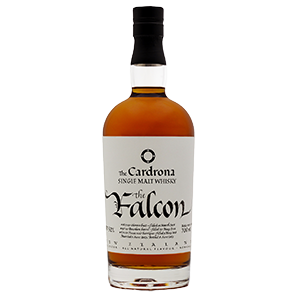 92 Cardrona The Falcon Single Malt, 52%, $285
Vanilla pudding, orange zest, cinnamon, cardamom, clove, sweet custard, and tannic oak
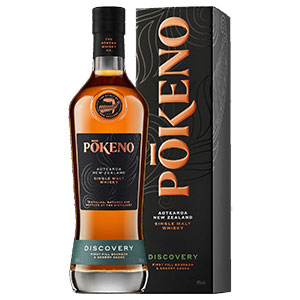 91 Pōkeno Discovery, 43%, $75
Raisins, black cherry, orange peel, malt, vanilla, milk chocolate, toffee, and black pepper
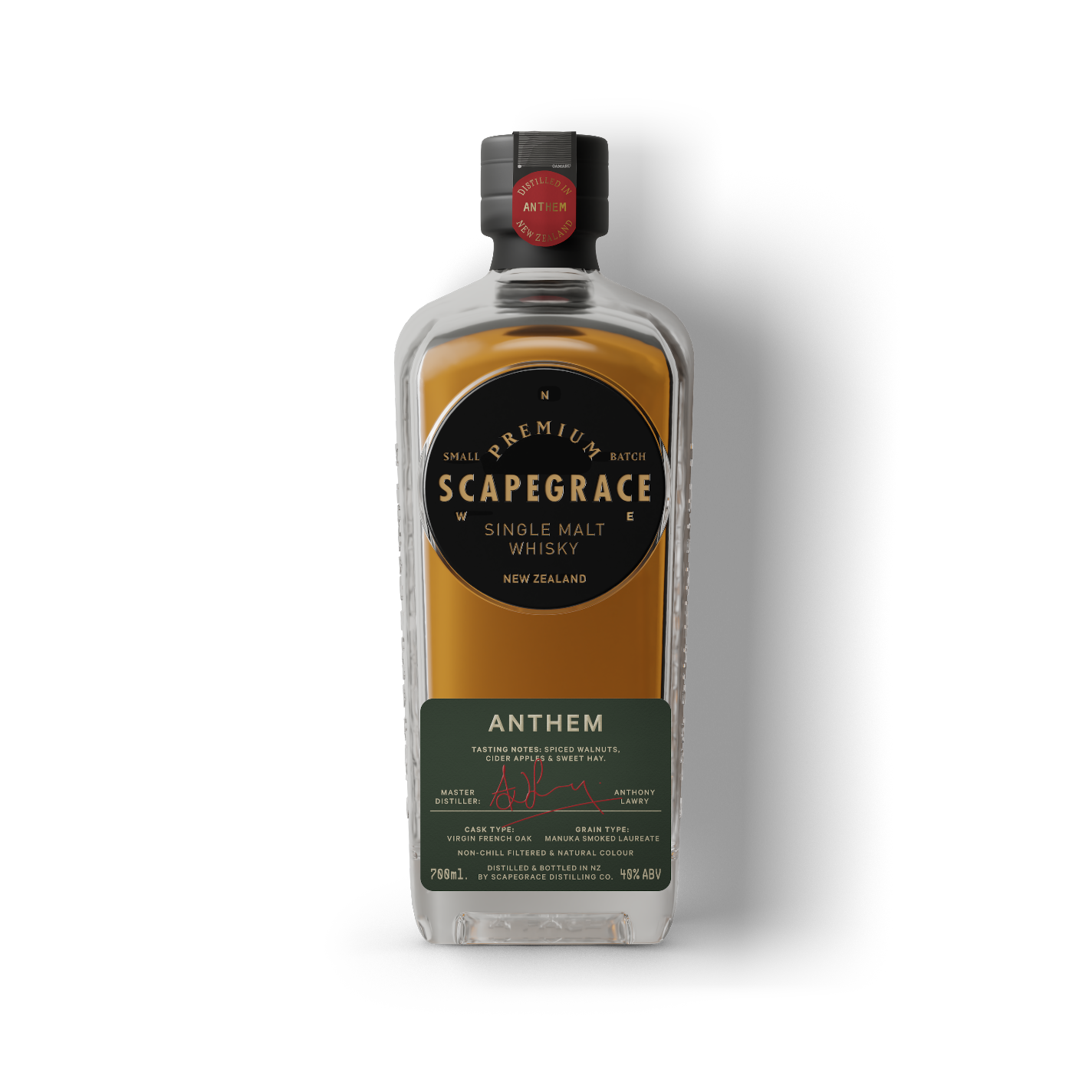 NR Scapegrace Anthem, 40%, $90