
Whiskeys With Red, White, and Blue Roots
Heirloom corn comes in many colors and strains, including some patriotic hues
August 5, 2026 –––––– David Fleming
In the early days of American distilling, bourbon producers made whiskey from whatever corn was planted nearby, so local corn strains were often the only available source. By the middle of the 20th century, as the bourbon industry consolidated and ramped up production to a national scale, corn was needed in far greater volumes. Local varieties fell by the wayside in favor of high-yielding mass-production hybrids—notably the No. 2 yellow dent hybrid (known for a slight dimple or dent at the top of the kernel). Most major bourbon distillers came to use this efficient, sturdy hybrid, and still do today.

But the craft distilling movement in the 2000s brought a revival of traditional methods, including the use of heirloom strains. While there is no legal definition of heirloom corn in the U.S., they are naturally pollinated varieties—not hybrids—usually passed down through generations. Heirloom corn is best known for its brightly colored kernels of red, blue, purple, black, pink, orange, and other hues, though some types come in the more traditional colors of white and yellow.
Color Combinations, American Style
Texas whiskey maker Still Austin, founded in 2015, has long made heirloom and non-GMO grain a focus of its craft, perhaps more so than any other non-farm distiller. In a 2019 blog post titled “Realness in Red, White, and Blue,” head distiller John Schrepel revealed his mission of focusing on grain and drilling down on regional identity. He foresaw 100% of Still Austin’s grain being grown in Texas, and that is indeed the case today. His ideas called for “new Jimmy Red and ultra-high rye blue corn bourbons, as well as a white corn bourbon.” Still Austin’s first whiskey to feature 100% Texas-grown grain was its straight bourbon released in 2020, beginning the path to making all its whiskeys from local grain.

Still Austin’s most prominent heirloom and non-GMO expressions can be found in its bottled in bond range. The bottled in bond Red Corn bourbon has a mashbill of 36% Jimmy Red and 34% white corn, 25% rye, and 5% malted barley, and was a Whisky Advocate Top 20 whisky in 2024. The distillery’s bottled in bond Blue Corn bourbon is made from 26% blue and 25% white corn, 44% rye, and 5% malted barley, and scored a 93 with our panel. Its bottled in bond bourbon is made of 70% non-GMO white corn, 25% rye, and 5% malted barley, and notched a 92-point rating. The non-GMO white corn it uses is the same as that used for the tortillas made in Austin.
Still Austin also has a bourbon that features the patriotic combination of its red, white, and blue corn expressions: Tanager Cigar Blend, first released in late 2024, is a 6 year old blend of all three. The primary ingredient is its Blue Corn bourbon, which creates most of the sweet flavors, according to master blender Nancy Fraley, while the Red and White Corn bourbons contribute fruit, nuttiness, and spice. Tanager scored 92 points with our tasting panel.
Waving The Colors
While Still Austin is certainly a prominent player in the heirloom corn space, one whiskey maker that’s totally committed to heirloom grains is Shelbyville, Kentucky-based Jeptha Creed. Its involvement began when co-owner Joyce Nethery began growing heirloom tomatoes, which ultimately led her to heirloom corn. Today, the family harvests around 2,000 acres annually on its farm. Bloody Butcher (a red-hued dent variety) is its most prominent heirloom, but the family also grows Hickory King white corn and Bruce’s Blue corn, among others.
Jeptha Creed has also gone all-in on heirloom corn’s patriotic color combination, as its work ultimately led it to create what’s arguably the standout Jeptha Creed expression: Red, White & Blue straight bourbon. Launched in 2021, it’s made from a mashbill of 25% Bloody Butcher, 25% heirloom white, and 25% Bruce’s Blue corn, with 20% malted rye and 5% malted barley. It’s aged 4 years, and, living up to its patriotic theme, a portion of its sales supports veterans’ causes.

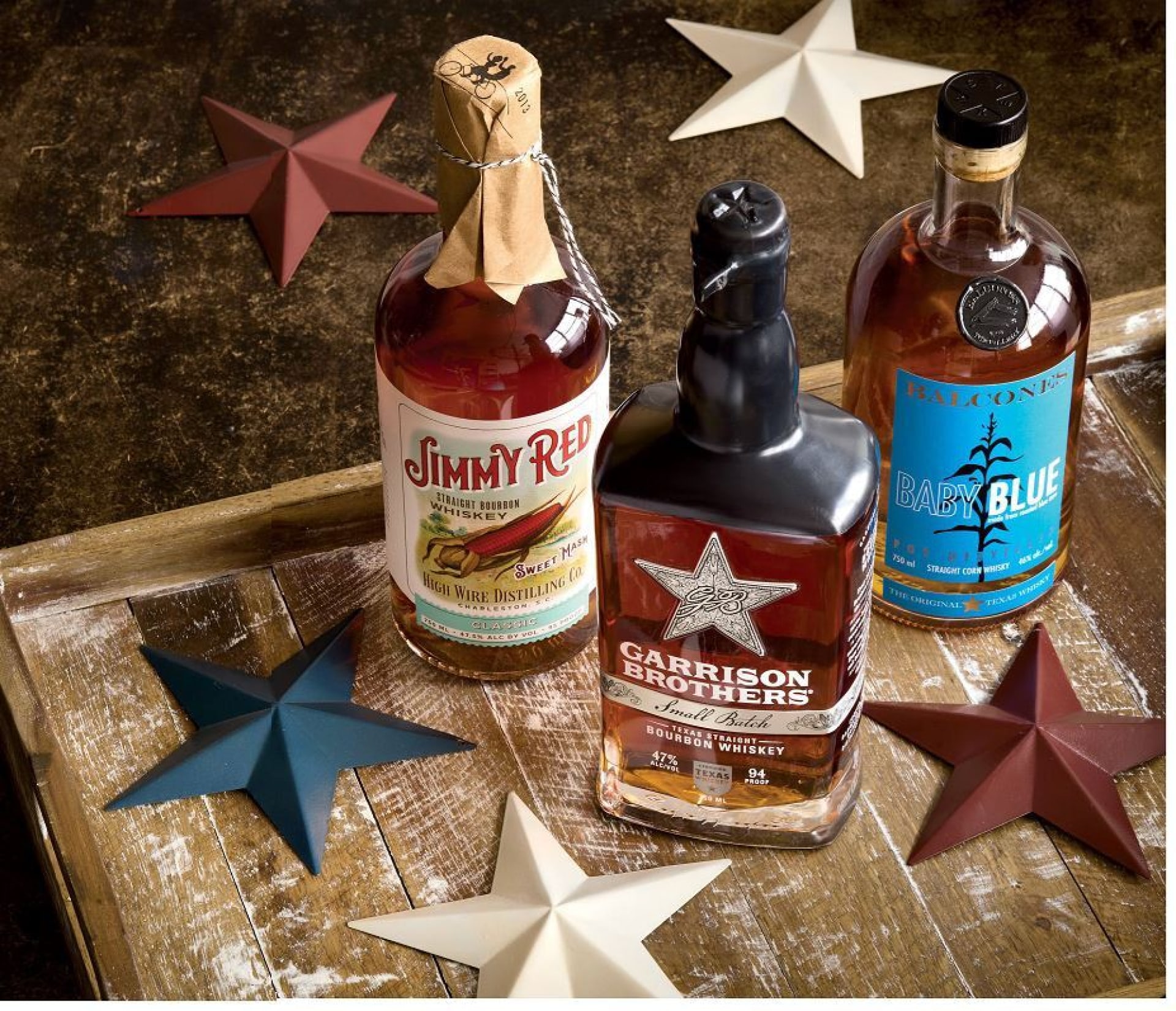
In Charleston, South Carolina, husband-and-wife Scott Blackwell and Ann Marshall founded High Wire Distilling in 2013 with a mission to explore the flavors of long-forgotten grains. High Wire went all-in on the Jimmy Red varietal, a strain grown for years on James Island near Charleston. It scaled up sourcing of this once-forgotten grain to the point where today High Wire has hundreds of acres of Jimmy Red planted under contract. Jimmy Red straight bourbon is made from 100% Jimmy Red, and the whiskey is noted for its smooth texture and enhanced flavors, including cherry, marzipan, and almond.
Back in Texas, the state’s original purveyor of heirloom corn whiskey is Balcones, best known for its Baby Blue corn whiskey, the distillery’s inaugural release launched in 2009. Baby Blue is made of 100% roasted blue corn, at first Hopi Blue from New Mexico and later Texas-grown blue flint corn. Fellow Texas distillery Ironroot Republic utilizes heirloom corn varietals “like a spice rack” to enhance flavor, according to co-founder and distiller Jonathan Likarish. The distillery’s flagship Harbinger bourbon’s mashbill includes Andean purple corn from Indiana and Bloody Butcher. Its Hubris and Icarus corn whiskeys also include purple, red flint, and non-GMO yellow dent corn.
Down On the Farm
Other farm distillers besides Jeptha Creed, of course, play a big role in the heirloom scene. Illinois farm-distiller Whiskey Acres has released single corn varietal bourbons made from Oaxacan green corn, blue popcorn, and sweet corn. Its Artisan Series includes a Blue Popcorn and a Bloody Butcher bourbon, which are very limited annual releases that sell out quickly.
There are many smaller farm distillers experimenting with heirloom varietals, and plenty of non-farm distillers who’ve made exciting heirloom corn expressions. Kentucky’s New Riff Distilling has a program exploring older heirloom strains, and its releases have included its Yellow Leaming and Blue Clarage corn expressions. Brooklyn, New York-based Widow Jane began growing an heirloom variety back in 2013 at its upstate New York location, and it even has its own proprietary strain: Baby Jane, an orange-colored heirloom derived from a cross of Bloody Butcher and Wapsie Valley yellow corn. Widow Jane’s Baby Jane bourbon, first released in late 2024, is a blend of its own distillate made from the Baby Jane strain and bourbon sourced from Kentucky.
Mexico’s Bounty
Sierra Norte Distillery, based in San Agustin de las Juntas in the Mexican state of Oaxaca, is among the early pioneers in working with native heirloom corn varieties in a host of different colors. Founder Douglas French can map out the flavor profile for each: white (green husks, peanuts, toasted oak, pepper), yellow (dried chiles, maple syrup, marmalade), black (banana peels, earth, ginger, and roasted corn), red (graham cracker, spices, buttered corn), purple (brisket, peanut shells, star anise), and rainbow, which combines corn from multiple varietals (sweet corn, dried fruits, spice, vanilla). All the corn is from local Oaxacan farmers, and each varietal is distilled in individual batches of 85% corn and 15% malted barley.
Amid this flurry of heirloom corn over the past two decades, the question remains whether heirloom grains actually improve the flavor of a whiskey. Distillers sometimes take opposite sides on the issue, though many whiskeys made from heirloom corn have scored highly. The use of heirloom strains will remain confined to smaller-scale operations or to very limited releases by larger distillers because cost and supply make it difficult to produce large volumes. So expressions made from heirloom corn will remain a small but very interesting and enjoyable part of the whiskey scene—and one whose value and fan appreciation are very likely to grow.