
Whiskey of the Week: Virginia Distillery Co. Split Barrel Project No. 1
This release seeks to bridge the worlds of bourbon and American single malt
June 30, 2026 –––––– Danny Brandon
Though it has come a long way since the pioneering McCarthy’s label first hit the shelves in 1998, American single malt (ASM) remains a tiny part of the whiskey landscape. The style certainly has its loyal fans—many of them scotch lovers drawn to familiar flavor profiles—but it has yet to find mainstream success. Some of that difficulty is due to the fact that American single malt can be a tough sell for bourbon drinkers, many of whom associate it with scotch—and often associate scotch with peat smoke and decide to skip giving it a try.
Some ASM producers have tried to bridge the gap between the styles, most typically by aging single malt like bourbon, with Beam’s Clermont Steep label, Stranahan’s, Westward, Redwood Empire, and others maturing in new charred oak rather than used barrels—betting that familiar notes of oak and vanilla would appeal to bourbon drinkers. But Virginia Distillery Co. (VDC) has taken a different approach with its new Split Barrel Project No. 1, which blends bourbon and single malt together.
Opposites Attract
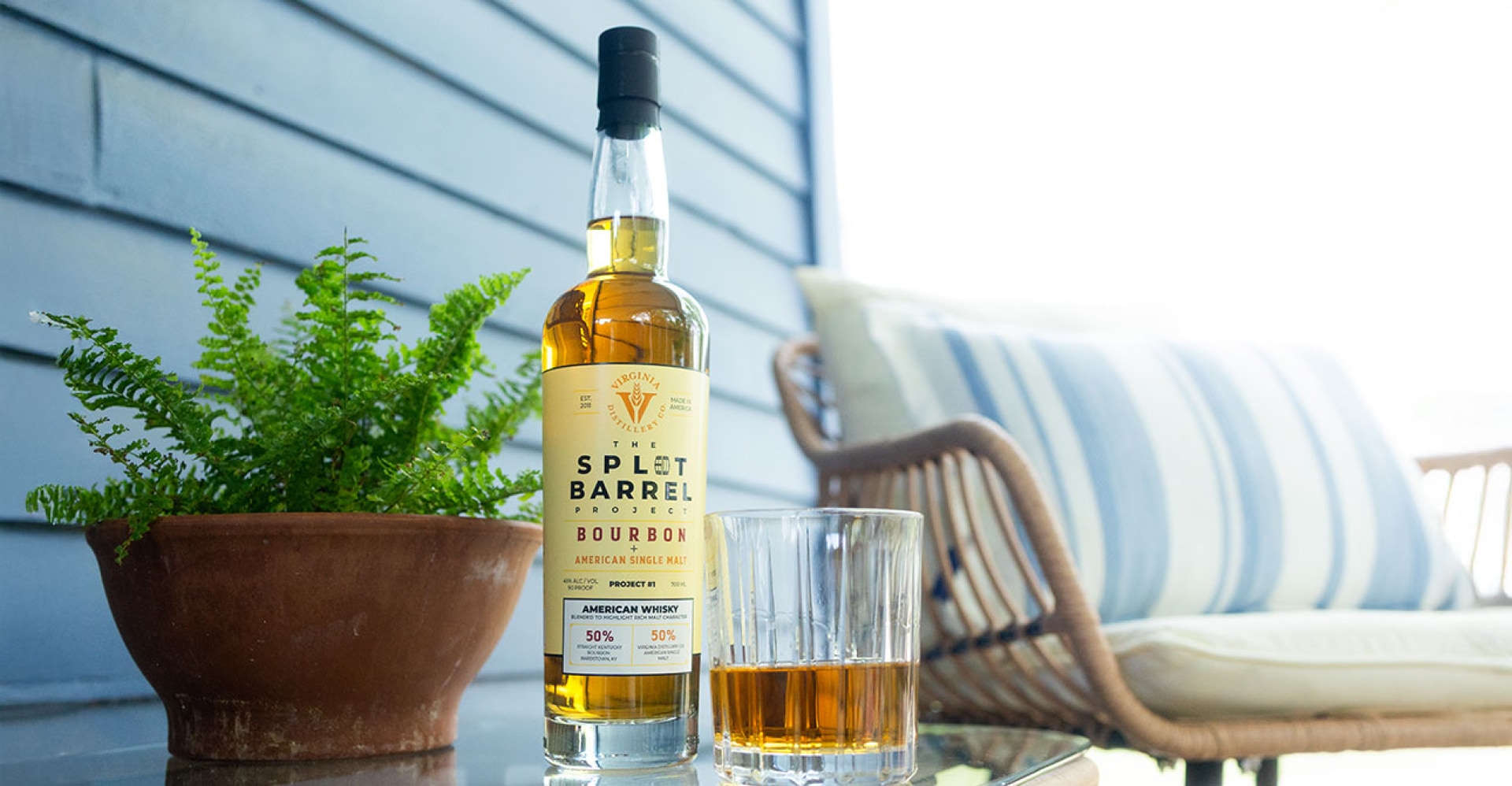
Split Barrel Project No. 1 has only those two ingredients, blended in equal parts. The bourbon, sourced from Bardstown Bourbon Co., was aged for 4 years and has a mashbill of 75% corn, 15% rye, and 10% malted barley. The single malt is VDC’s own, aged for 5 years exclusively in first-fill bourbon barrels.
According to director of liquid development and lead blender Amanda Beckwith, blending these two styles comes with some difficulties. “The main challenge I faced for the Split Barrel Project was selecting barrels that would blend harmoniously while still maintaining their identity,” she explains. “For me, this meant focusing on the mashbills of the bourbon options, as well as the maturation options for all my prototypes.” She originally wanted to include older bourbon in the blend, but found that the 4 year old was an overall better partner for the ASM. She decided early in the process that an equal-parts recipe was a good way to communicate both styles to the drinker. “I always want to tell a clear story with my whiskeys, and Split Barrel 1, with its goal of bridging the bourbon/ASM divide, really made sense at that 50/50 ratio.”
This expression is the first in a new series that will continue to experiment with American single malt as a blend component. Beckwith confirmed she is currently working on other partnerships for future expressions. She’s interested in eventually incorporating other whiskey styles in the future, though the next few Split Barrel expressions will likely focus on just ASM and bourbon.
Difficult Combination
American single malt and bourbon blends aren’t a completely new concept, but they are fairly rare. From a blending perspective, this is a notoriously difficult combination to nail. Some of the ones we’ve tasted over the years have flavors that totally clash, often leading to jagged and unbalanced profiles that show poor integration. In 2024, the Distill Ventures-backed Lodestar label hit the scene with a high-rye/single malt blend that somewhat missed the mark and scored 85 points with our tasting panel. Beer giant Coors also notably tried its hand at the style, with its flagship Five Trail expression—a blend of Colorado single malt with Indiana and Kentucky bourbons—scoring 88 points with our panelists. In most cases, the single malt component has been used as one of several blending whiskeys, whereas VDC’s expression is a rare 50-50 bourbon-single malt combination. The only other example we could find is from Pennsylvania craft distillery Altered State.
How Does VDC Split Barrel Project No.1 Taste?
90 points—Virginia Distillery Co. Split Barrel Project No. 1 American Whiskey
ABV: 45%
SRP: $45
Availability: Online and select retailers nationwide
This may be a 50/50 blend, but the single malt component is definitely in the driver's seat. The nose leads with dried apricots, orange peel, cinnamon applesauce, Triscuits, Frosted Flakes, and French vanilla. Fruits keep coming on the palate, with baked apples, baking spice, and poached pears. The bourbon reveals itself on the finish, adding vanilla custard and oak amid familiar orchard fruits and plum. Perhaps not greater than the sum of its parts—the flavors don’t always integrate perfectly—but it’s an interesting blending showcase nonetheless.
.png?resize=410x0)