Photo by JONATHAN TIMMES

How to Imbue a Glass With Smoky Flavor
Adding smoke to your glass adds theater—and flavor to neat pours and whisky cocktails
January 23, 2026 –––––– Laura Pelner
Smoke and whisky have been friends for a long time, most notably with peated expressions. But the partnership also extends to the cocktail world, as bartenders have been adding smoke to cocktails and whisky pours for years. The idea became a recognized trend in 2007, when New York bartender Eben Freeman created a smoked Coca-Cola and bourbon drink, popularizing the technique for adding smoke to cocktails for flavor and theatrical effect.
But smoked cocktails are mainly inspired by food traditions, as the smoke enhances flavor, says Lou Bernard, beverage director at Mita, a Latin American restaurant in Washington, D.C. “Smoke engages the senses before the first sip,” he continues. “It adds layers of aroma, a touch of theater, and it can enhance flavors of whisky or cocktails without overpowering them.” Mita offers drinks like the Smoked Old Fashioned, made with Prieto Y Prieta Mexican whisky and smoked cinnamon bark, and the Smoked Piña del Campo, a mezcal cocktail that’s smoked with dried corn husk.
The smoking process is also visually interesting— watching fresh smoke swirl around the glass creates a compelling presentation—but it’s the flavor element that makes it so appealing. Adding smoke to your glass adds instant aroma and flavor complexity, creating dimension, depth, and a sensory experience that’s hard to match. The smoke can come from many sources, and the element you choose to smolder can have a big impact on the flavor.
Different Smokes
Not all smoke is the same. Burning oak or cherrywood chips adds body and sweetness, while smoldering herbs like rosemary and thyme contribute earthy and fragrant notes, and igniting spices like cinnamon, clove, or star anise adds warmth. There are other options too. Burning tea leaves from lapsang souchong or Earl Grey varieties creates interesting flavors, while dried citrus peels add zest and bitterness, and cocoa nibs provide depth and richness.
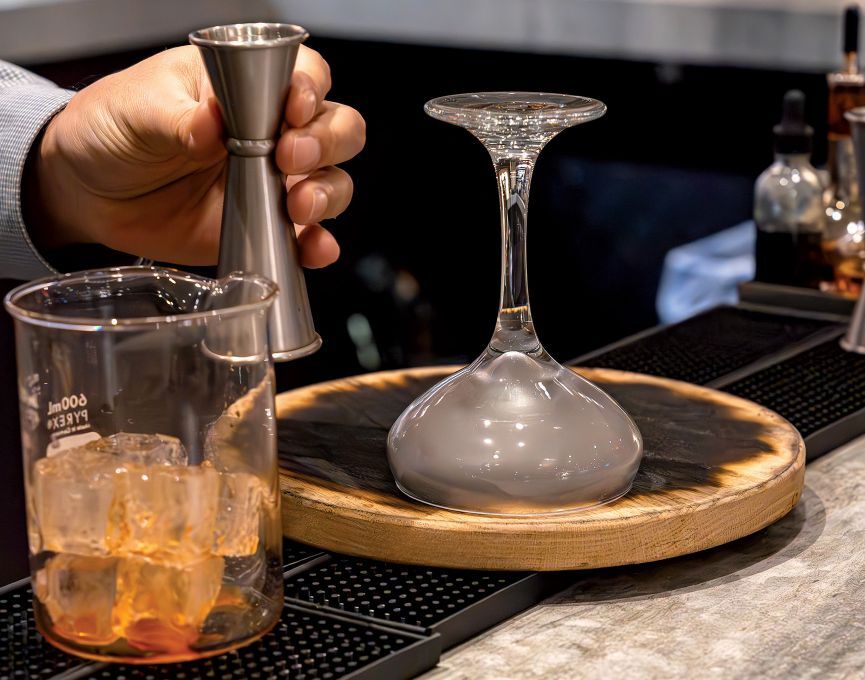
Regardless of what you use to add a smoky dimension, the important factor is the length of time the glass is exposed to the smoke. Even just 5 to 10 seconds can have an impact, and anything longer than 30 seconds can quickly become too intense. “For at-home mixologists, using a smoking gun with flavored wood chips can create that smoky essence,” says Jose Gil, beverage director at modern American restaurant Dear Olivia Bar & Kitchen in Parkland, Florida. “It enhances the drink’s flavor profile with complex smoky notes, adding depth and an intriguing sensory experience. It’s a simple process that can elevate flavor and presentation.”
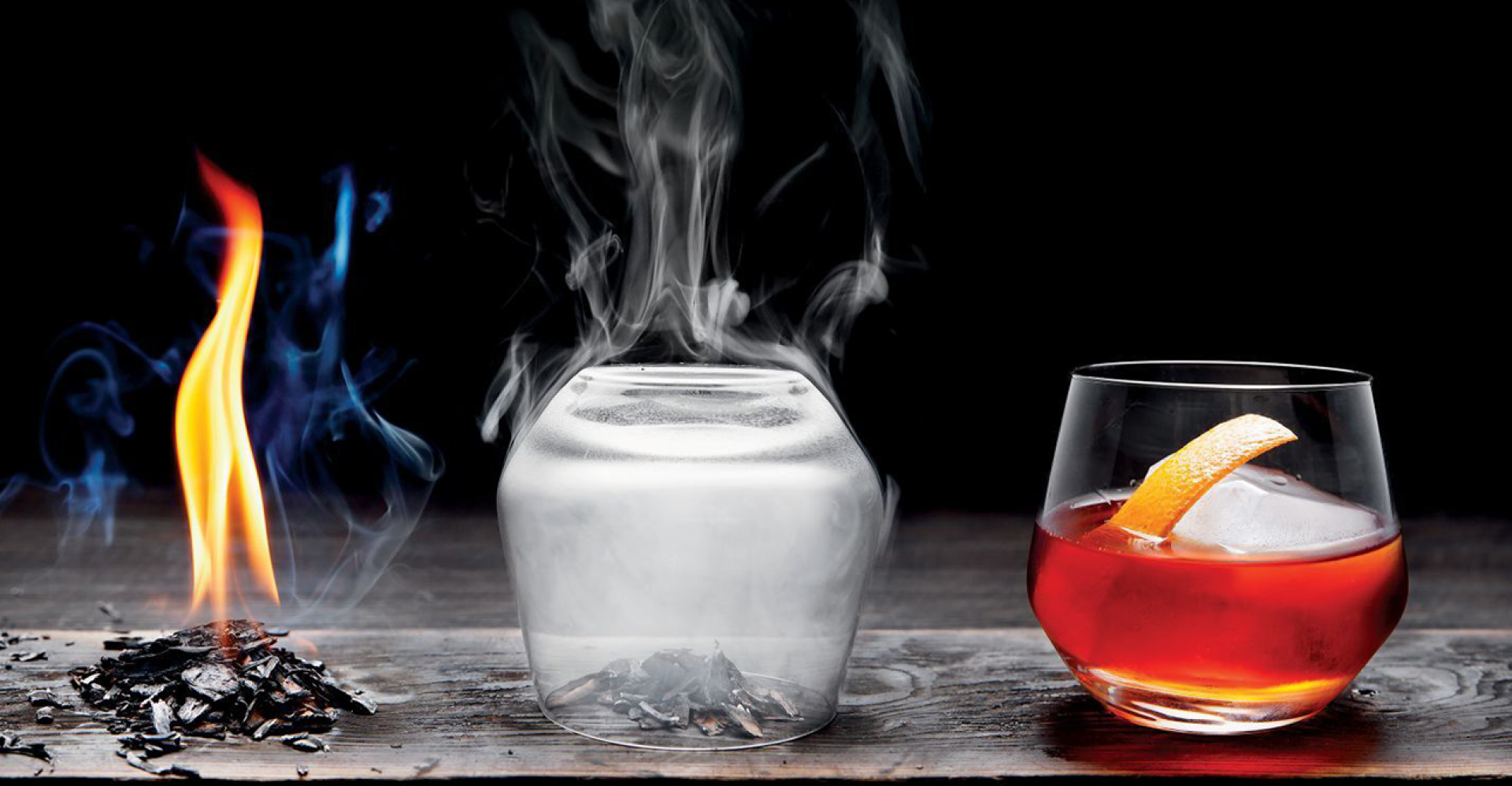
It’s true: Adding smoke to a drink is easy to do at home and doesn’t require an arsenal of professional tools. Most of these items are accessible for quick purchase, making experimentation easy for home bartenders. All you really need is a lighter, a fire-safe surface, something to burn—wood, herbs, spices, etc.—and a glass to trap the smoke. Above is a how-to for home mixologists, plus some pro tips to take your smoking game from newbie to elite.
A Guide to Smoking a Glass at Home
1: Pick Your Smoke
Decide which flavors you want to impart, then choose your wood, herb, or spice accordingly, and make sure it’s food safe. If you’re not smoking an already edible ingredient like cinnamon or rosemary, start with common barbecue woods like oak, hickory, cherry, or apple.
2: Be Safe
Invest in a fire-safe surface. A ceramic plate, cast-iron pan, or even a large ashtray will work. Make sure it’s thoroughly cleaned and tough enough to withstand direct flame.
3: Choose Your Flame
A kitchen torch is convenient and generally affordable. You can find them at many mass-market stores for under $40. But if you’re not ready to commit, you can also use a long lighter—one designed for candles or grills.
4: Glass Class
Pick the right glassware for the job. Generally, a standard whisky glass—a rocks glass or a Glencairn—works well. The glass needs to be wide enough on top to fully fit around the element on your fire-safe plate, so it can trap the smoke while inverted.
5: Light It Up
Place a small pinch of the wood, herb, or spice on your fire-safe plate. Using your torch or lighter, ignite it just until it starts to smolder and produce smoke. You don’t need a full flame.
6: Find Cover
Capture the smoke by placing your empty glass upside down directly over the smoldering elements. Let it sit for 10 to 30 seconds, depending on how strong you want the final smoke effect to be. For newcomers to the process, remember that less is more—start light by using less time for the smoke.
7: Time To Build
Flip the glass upright and watch the smoke swirl.