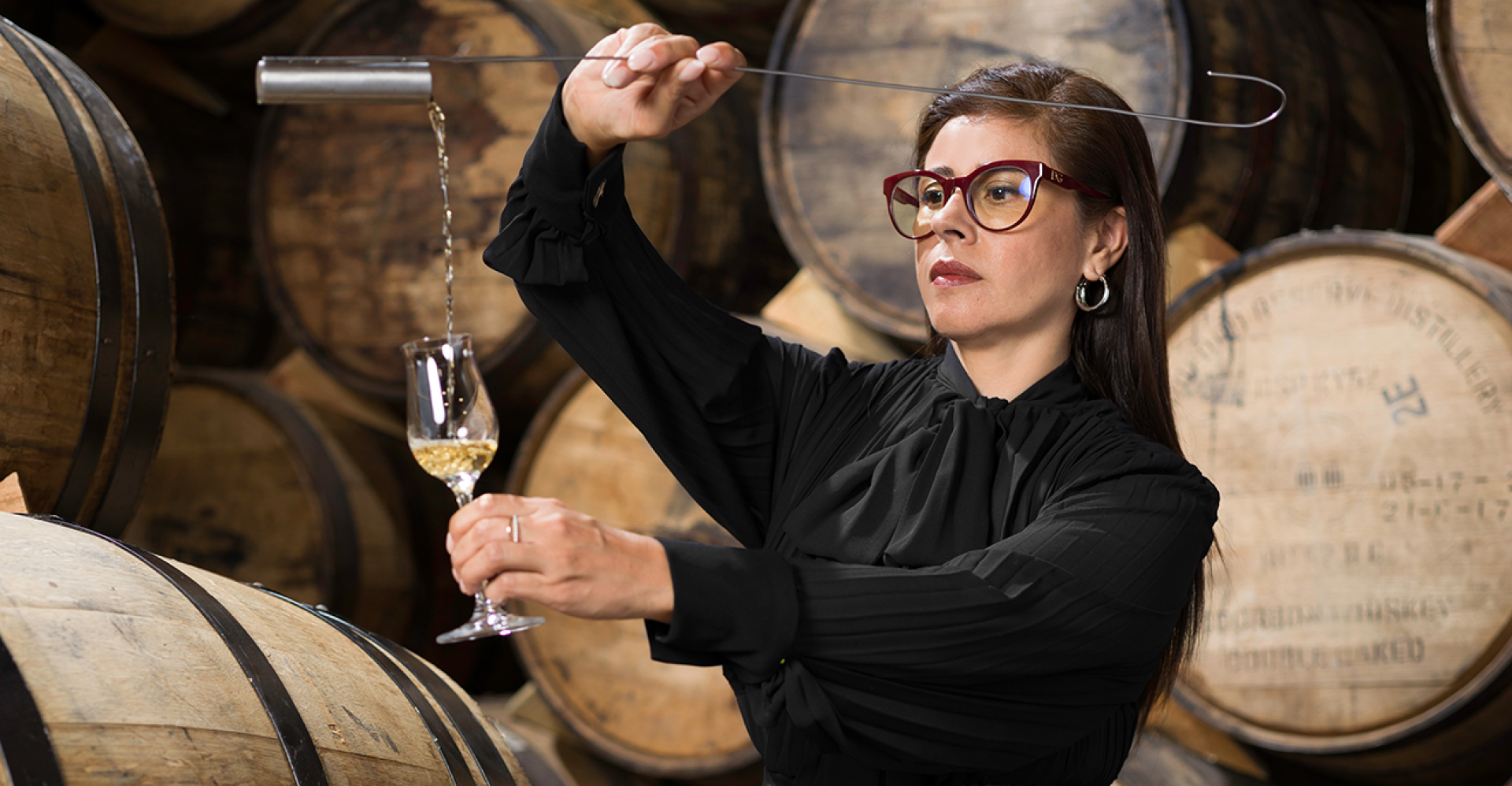
Clase Azul master distiller Viridiana Tinoco checks the brand's oldest barrels every six months.

Tequilas That Take Their Time
Ultra-aged extra añejo tequilas have qualities that whisky drinkers can appreciate
January 22, 2026 –––––– Julia Higgins
This past July, Gordon & MacPhail released an 85 year old Glenlivet—the oldest whisky on record. While that was unusually old, ultra-aged whiskies are a big part of Scotland’s repertoire. On the flip side, tequila’s maturation time is generally much shorter, spanning from blanco (aged up to 2 months) and reposado (2 months to 1 year) to añejo (1 to 3 years). Once a tequila moves past the 3-year mark, it takes on the extra añejo designation, a fairly new classification considering that it was created in 2006, 13 years after the requirements for blanco, reposado, and añejo were introduced. While many extra añejo releases hover at around 3 years old, others keep on aging. A number of brands with extra añejo expressions also go a step further and call them “ultra-aged;” given tequila’s relative youth in comparison to drams that us whisky lovers might enjoy, terms like ultra-aged have less weight than they would in whisky, and generally point to something 5 years or older.
“Aging tequila for more than 5 years is a delicate process,” says Clase Azul master distiller Viridiana Tinoco. “The angels’ share is very high, due to factors such as time and humidity; in ultra-aged tequilas it can range from 5%-10% per year. With barrels that are used for such a long time, there’s risk of overextraction too, whether it’s an excess of tannins, aggressive woody notes, or a loss of balance.” While extra añejos often present as some of the smoothest tequilas, mellowed by the extended time in oak and chock-full of pleasant vanillin and caramel notes, this can also be indicative of an imbalance.
At Clase Azul, Tinoco has several ways of combating these pitfalls. As a rule, she checks the oldest aging barrels every six months, monitoring them for evolution of flavor and physical state. “When a distillate begins to show signs of overaging, we look at it as a key moment—not a flaw, but a signal that the process is asking for intervention,” she explains. That might mean one of a few things: Tinoco can step in and stop the aging process by moving the tequila into stainless steel tanks or she can blend a variety of barrels together to end up with a fresher final flavor profile. “The ‘problematic’ nuances are sometimes what give the tequila a unique personality,” she adds. “We’ve found barrels that, on their own, wouldn’t be harmonious, but when integrated with others become the piece that supports an entirely new expression.” Mitigations aside, these potential issues are a big reason why more brands don’t pursue ultra-aged tequilas; as with whisky, there’s a lot that can go wrong the longer a tequila rests in the barrel.
Aging In Unique Places
Enrique Fonseca, master distiller at Tequila Fuenteseca, has managed to mitigate the perils of the angels’ share and overextraction, releasing tequila as old as 21 years by cultivating a network of unique barrel-aging sites and barrel types. Many of Fuenteseca’s tequilas spend their early years in a dry underground room that sits nearly 3,900 feet above sea level. From there, barrels selected for the longest-term maturation (18 and 21 years) are moved to a mountainside site, where even higher elevation begets cooler conditions and permits many additional years of aging. Joining the 18 and 21 year old tequilas in the Fuenteseca roster are 5, 7, 9, 11, 12, and 15 year old releases.
The use of varied barrels is also helpful in creating ultra-aged tequila. Introducing new barrels after an initial aging period can transform a one-dimensional tequila into something with balance and flair. “After years of contact with its first barrel—such as whiskey American oak [which many producers use]—the tequila has already developed body, structure, and depth,” says Tinoco. “The finish is a tool we use to soften that intensity, introduce new sensory layers, or balance certain traits.” Over the course of its nearly 30-year history, Clase Azul has introduced a variety of older tequilas, including its core Ultra Añejo release—a 5 year old tequila finished for 2 years in a combination of amontillado, oloroso, and Pedro Ximénez sherry casks—as well as limited editions like the Master Artisans series, whose current iteration features a trio of tequilas aged for 8-plus years (one is finished in Tuscan red wine barrels, one in port casks, and the final one in Grand Cru red wine casks from Bordeaux).
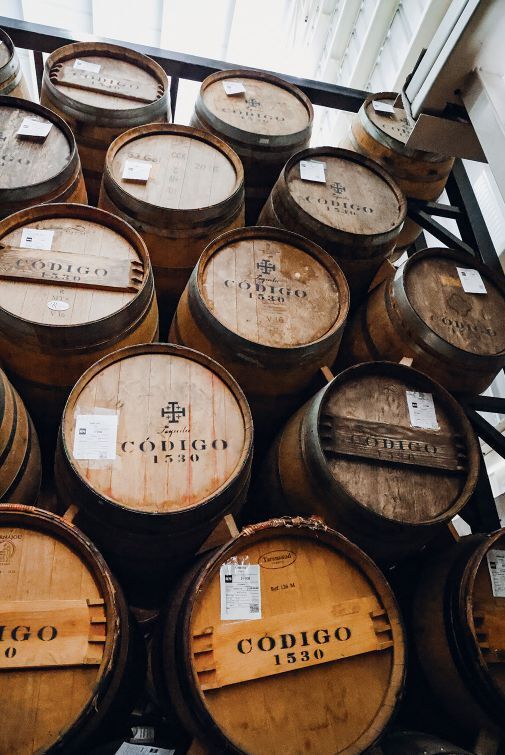
Other producers with even older tequilas gravitate toward their own unique set of barrels. As part of its Extra Añejo line, Patrón released a 10 year old; unlike Clase Azul, which prioritizes sherry and wine finishes, Patrón aged its 10 Años in both bourbon barrels and hybrid casks made from American and French limousin oak. Another well-known label, Codigo 1530, has a 14 year old extra añejo, which spent the majority of its maturation in French oak barrels that previously held Napa Valley cabernet before being finished in cognac casks. A slightly newer venture prioritizing only the oldest of tequilas is Qui, which was founded in 2011 by New York City restaurateur Medhat Ibrahim, Peter Girgis, and Mike Keriakos. Qui exclusively releases extra añejos, and the oldest in its permanent lineup is a 7 year old aged in Tennessee whiskey, Bordeaux, and sherry casks.
No matter the producer, there’s one thing you can be sure of when it comes to ultra-aged extra añejos: The price of entry is steep. That said, given the similarities these elder tequilas share with whisky, there’s a good chance that, if you find yourself faced with an opportunity to try one, you’ll have plenty to enjoy.
6 Extra Anejo Tequilas to Try
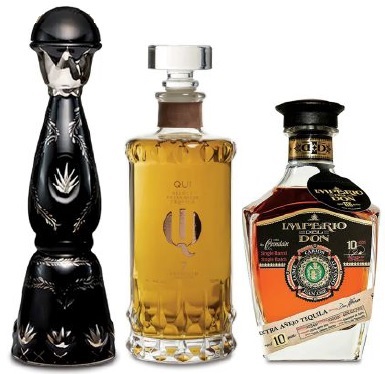
Clase Azul Ultra Añejo, 40%, $2,000
Aged for 3 years in American whiskey barrels before a 2-year finish in a combination of amontillado, oloroso, and PX sherry casks
Fuenteseca Reserva Extra Añejo 21 year old, 43.5%, $1,280
Aged for its entirety in a combination of Canadian rye whisky and California white wine barrels
G4 Reserva Especial Extra Añejo, 42%, $500
Aged 6 years in George Dickel barrels, then finished for 1 year in a variety of French wine casks
Imperio Del Don Extra Añejo 10 year old, 42%, $250
Aged for 10 years in bourbon barrels
Patrón Extra Añejo 10 Años, 40%, $349
Aged for a decade in a combination of American oak and hybrid American/French limousin oak barrels
Qui Select 7 Year Extra Añejo, 40%, $200
Aged 7 years in Tennessee whiskey, French bordeaux, and sherry casks