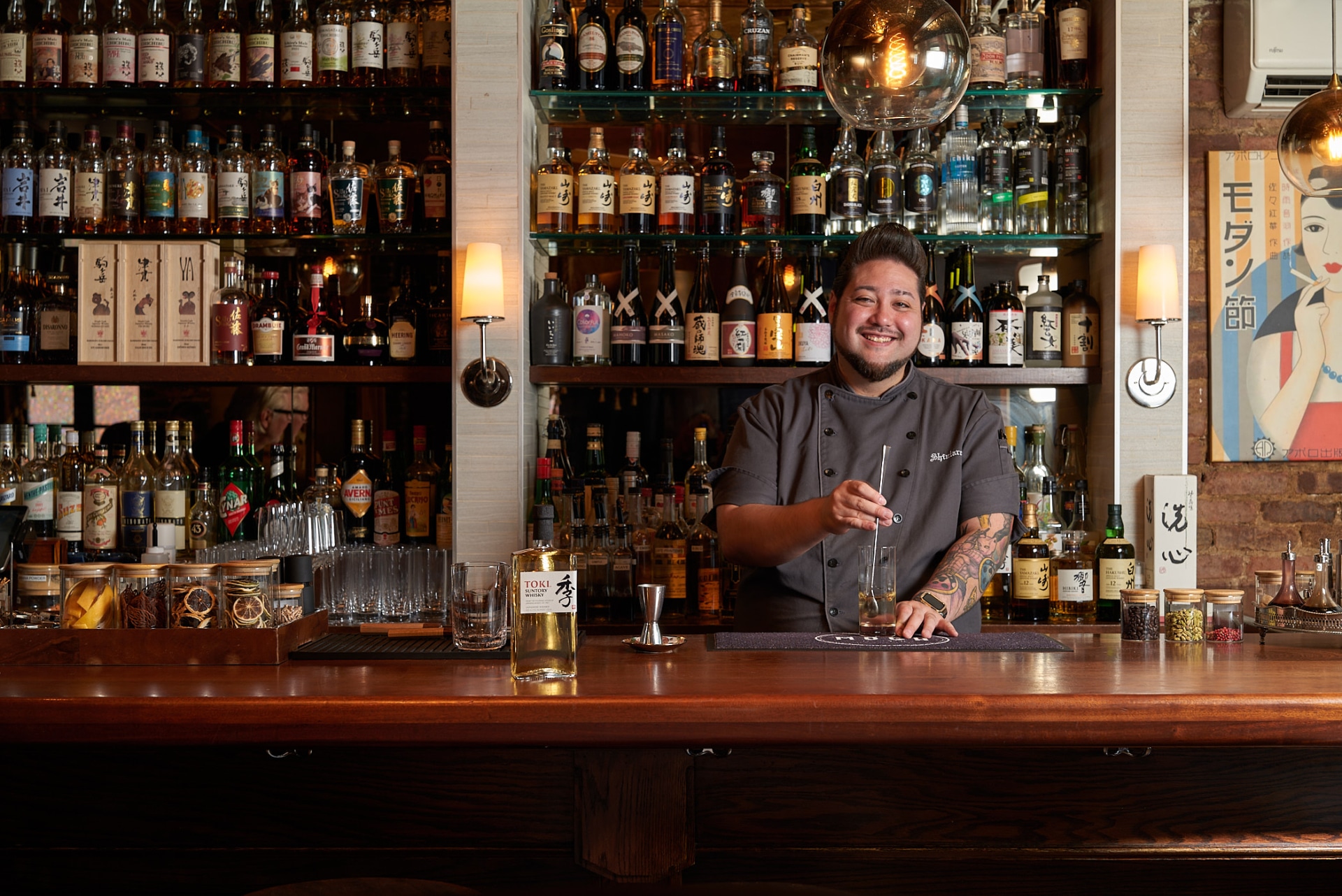
Bar Moga's head chef and beverage coordinator Shintaro Eleazar Tozzo crafts a Highball. PHOTO BY ADAM SAVITCH PHOTOGRAPHY.

Japan's Cocktail Craftsmanship Transforms The Classics
Meticulous technique and Japanese ingredients shape these whisky cocktails from New York’s leading Japanese cocktail bars
October 6, 2026 –––––– Aubrey Thompson
Japanese bartending has long been admired for its exacting technique, impeccable hospitality, innovation, and intention for cocktails to be savored, not rushed. No longer confined to Tokyo, this Japanese approach to cocktails has taken root in the U.S., where Japanese cocktails continue to flourish—particularly in New York City, from long-standing destinations like Bar Goto and Bar Moga to newcomers including Cocktail Omakase and Bar Orai.
On bar menus, Japanese whisky usually shows up in elevated Highballs, dual-spirit drinks, and rare bottlings at venues like Teruko, located beneath the storied Hotel Chelsea, home to over 350 expressions. Beyond the whisky itself, bartenders are increasingly drawing from Japan’s pantry. Ingredients such as shochu, nori, and shiitake mushrooms add savory depth to classics, speaking to the growing trend of savory cocktails, while others like osmanthus lend a delicate aromatic touch.
At the core of Japanese cocktail culture is omotenashi, the philosophy first used to define hosting tea ceremonies in the 16th century. The word itself–omote meaning “public face” and nashi, meaning “nothing,” together means “no front, no back,” or no pretense. In a bar setting, this means extending hospitality beyond merely serving drinks to thoughtfully anticipating a guest’s needs. The philosophy carries through every aspect of the cocktail experience, with every ingredient, garnish, and technique carefully considered. These recipes showcase how leading Japanese-inspired bars reinterpret classics through technical precision, balance, and distinctly Japanese ingredients.
 Sushi Sazerac
Cocktail Omakase, which opened in spring 2026 in partnership with Tokyo's Bar Libre, takes its cues from the sushi omakase experience, where the chef selects the menu. For head bartender Mat Resler, one drink that inspired the concept was a Sushi Sour shared by Cocktail Kingdom Group owner Greg Boehm and his wife, Jessica, after the couple’s trip to Japan. "My wheels started to turn, and phonetically, Sushi Sazerac sounded great," Resler says of the cocktail's creation.
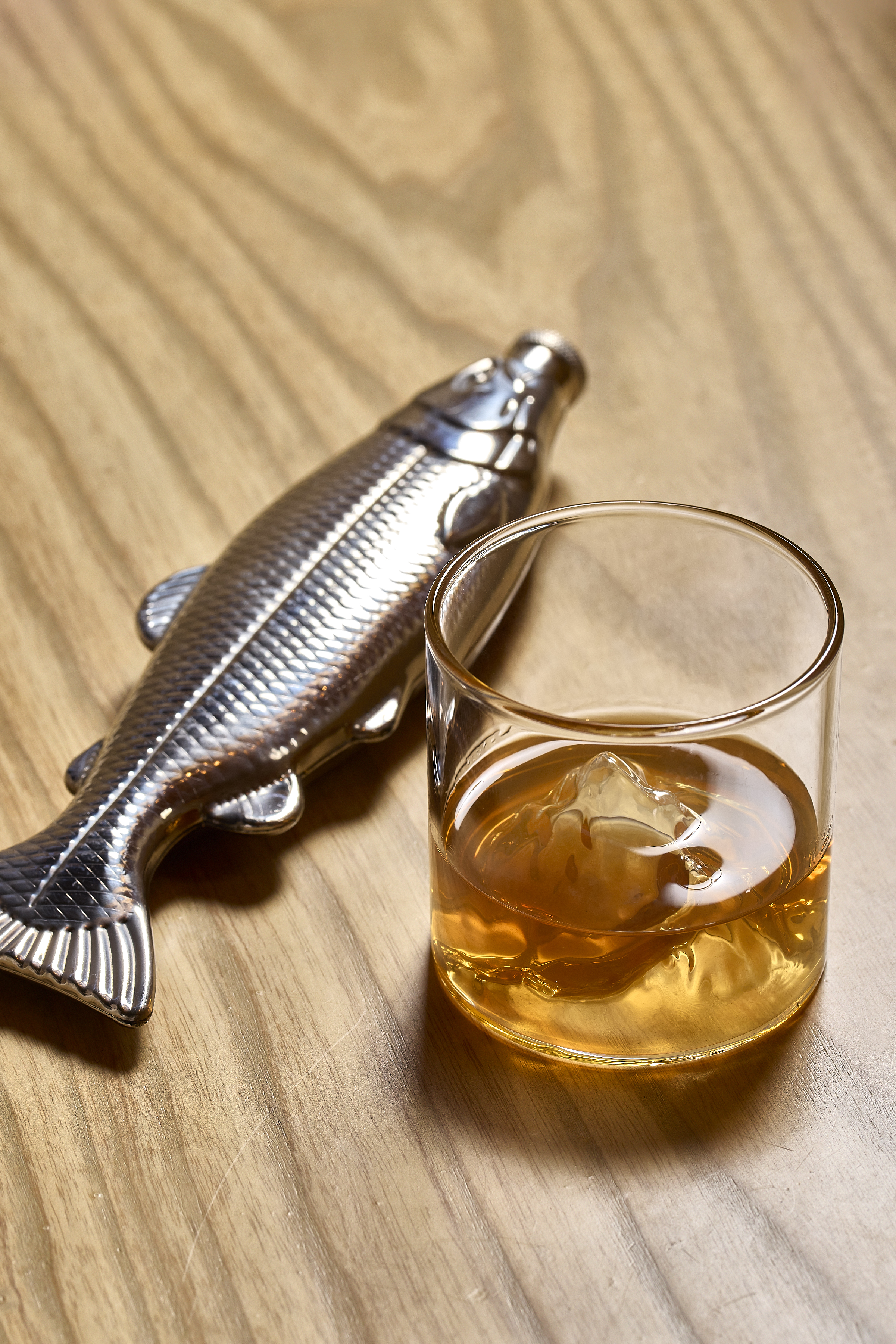
The drink, he says, needed to retain the backbone of a Sazerac’s profile, balancing strong, sweet, bitter, absinthe, and lemon oil while introducing unmistakable umami flavors. He settled on a base of nori-infused rye and Japanese barley shochu. At the bar, toasted buckwheat tea (soba cha) adds an extra layer of toasted sweetness to the demerara syrup, but it’s just as delicious without. Poured from a fish-shaped flask at the bar, it’s just as compelling poured directly into a rocks glass at home.
- 1 oz. Nori-infused Rittenhouse rye (recipe below)
- ¼ oz. demerara syrup (2 parts sugar, 1 part water)
- ¼ oz. Campari
- ½ oz. Ichiko Shinwa shochu
- 2 dashes aromatic bitters
- Lemon peel, for aromatics
Twist a lemon peel and coat the rim of the glass with lemon oil. Pour all ingredients into the glass and add one large ice cube.
Nori-infused whiskey
- ½ nori sheet
- 250-ml Rittenhouse rye
Crush the nori sheet and add to a large container with the rye. Macerate for 2 hours, stirring often. Strain through a fine-mesh sieve, discarding the nori. Keep refrigerated for up to 6 months in a sealed container.
Kinoko Old Fashioned
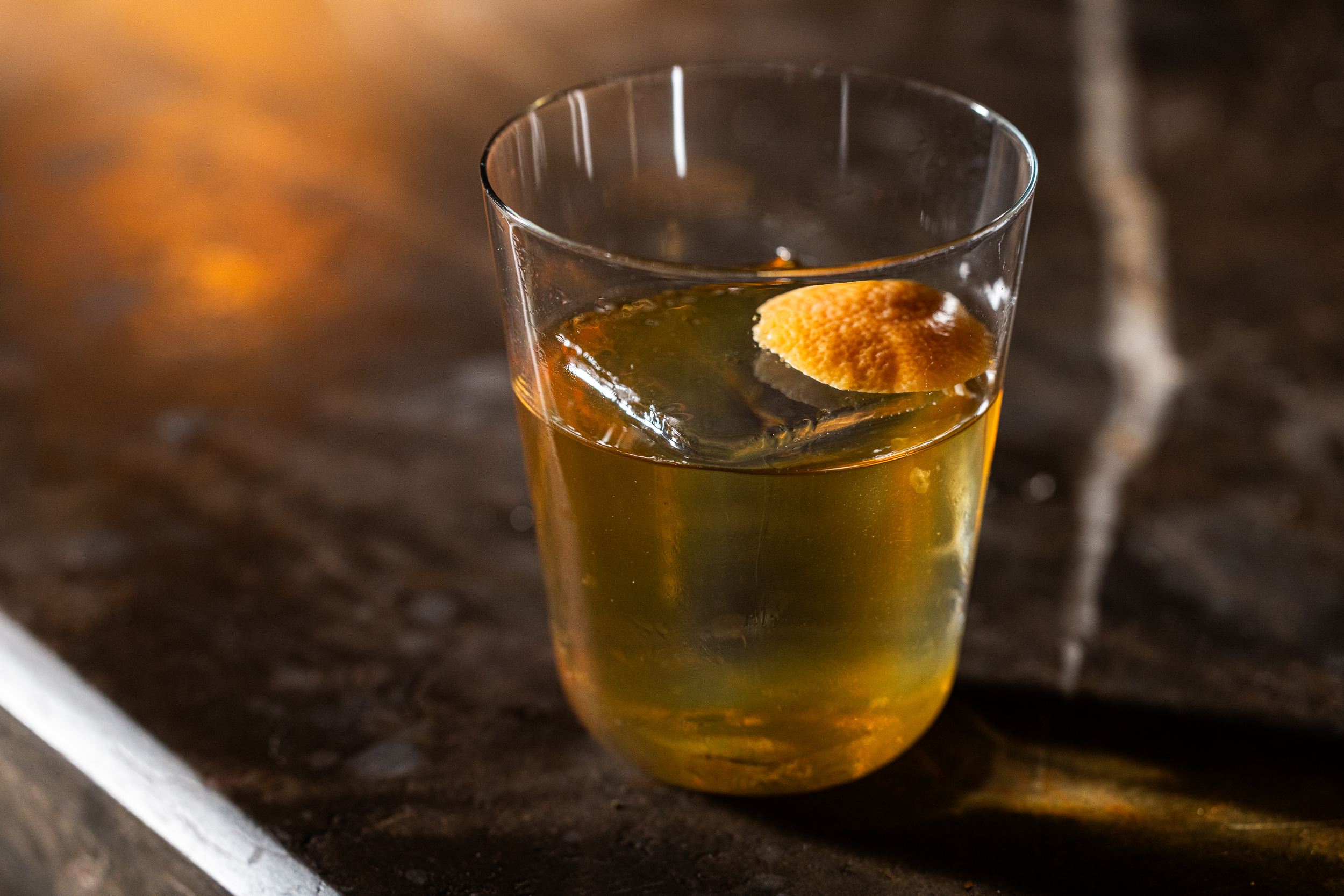
At Teruko, the Kinoko Old Fashioned transforms the classic into an umami-driven libation. Beverage director Brian Evans pairs mushroom-infused Japanese whisky with high-proof bourbon, vetiver liqueur, maple syrup, bitters, and awamori (a distillate made from Thai rice and koji) for a drink layered with earthy woodsy flavors. The awamori provides a savory canvas, while maple syrup provides subtle sweetness. The umami and chocolate bitters echo the rich funk of the shiitake-infused whisky.
- 1 oz. Shiitake-infused Japanese whisky (recipe below)
- ¾ oz. Maker’s Mark cask strength (or other high-proof bourbon)
- ¼ oz. Yokka Koji awamori
- ¼ oz. Vetiver liqueur
- 1 tsp. Maple syrup
- 2 dashes Japanese Bitters Co. umami bitters
- 1 dash Scrappy's chocolate bitters
- Grapefruit peel, garnish
Combine ingredients in a rocks glass and stir 15 rotations with a large ice cube. Express a swath of grapefruit peel approximately 3 inches from the surface of the cocktail, then drop expressed peel into glass as garnish.
Shiitake-infused Japanese Whisky
- 250-ml Suntory Toki whisky
- 2 dried shiitake mushrooms
Combine ingredients into a non-reactive, sealable container and infuse at room temperature for two days (stirring after one day), then strain through a mesh strainer, pressing on the mushrooms to extract maximum flavor. Discard mushrooms. Filter the infusion back into the bottle and store in the refrigerator for up to 1 year.
 Eau de Osmanthus
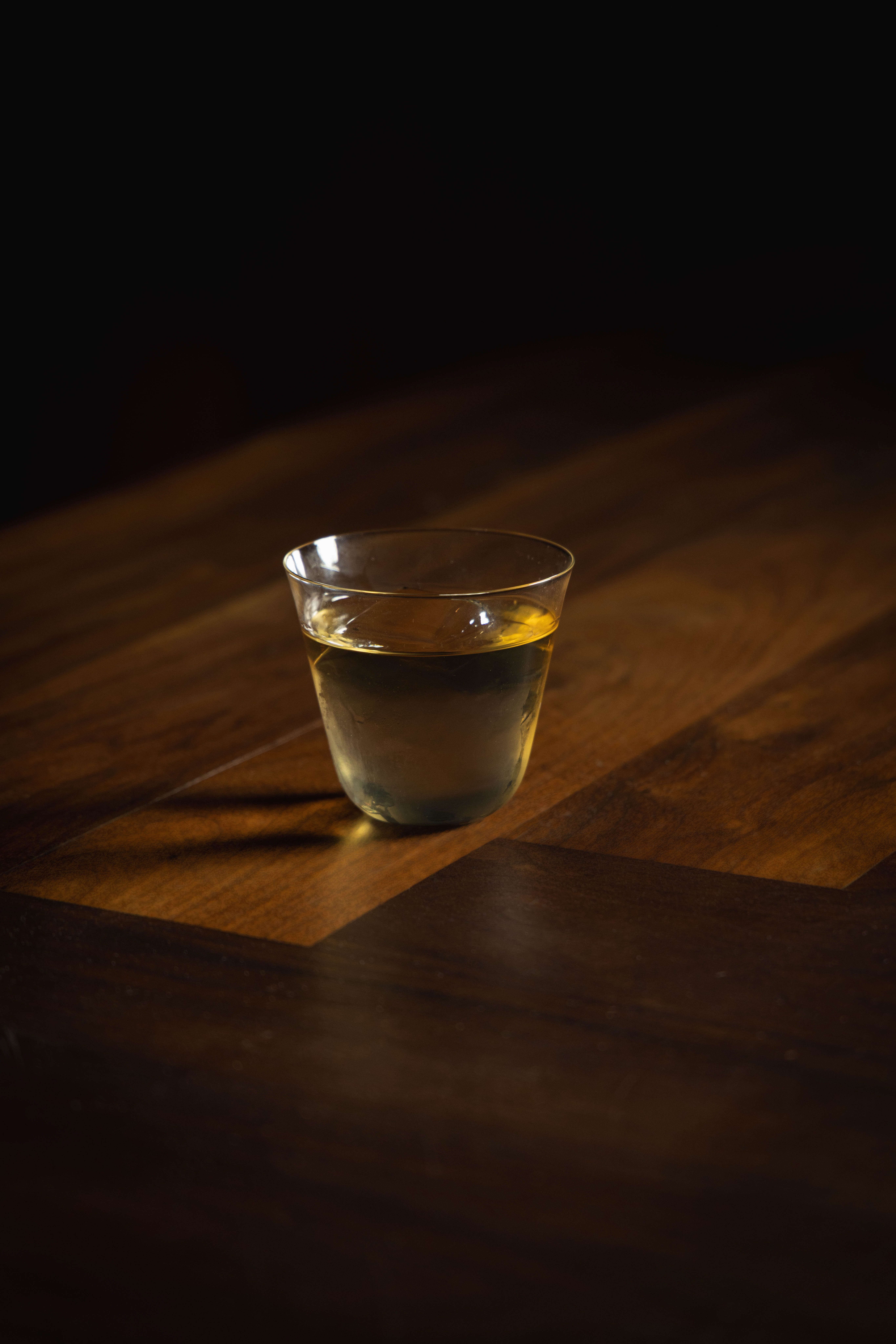
Created by Rio Azmee, creative director at Stone and Soil, this cocktail takes its inspiration from the art of blending perfume, using two delicate ingredients often used in the practice–oolong tea and osmanthus. Together, they lend floral aromas, with notes of stone fruit and a honey-like finish, according to Azmee. At the bar, guests choose between two types of infused Japanese whiskies: Hibiki Harmony or Toki. Its simple build is akin to an Old Fashioned, with a high ratio of spirit, lightly sweetened, and kissed with citrus.
Osmanthus is available online, at Asian supermarkets, or tea shops. If you can’t find it, jasmine tea, chamomile, or more oolong tea are good substitutions.
- ¼ cup Oolong tea-infused Hibiki Harmony or Toki
- ⅓ oz. Osmanthus Syrup (recipe below)
- 2 dashes Scrappy's Bitters Black Lemon
Stir together all ingredients in a rocks glass with a large ice cube. Garnish with lemon peel.
Osmanthus syrup
- ⅓ cup sugar
- ⅓ cup water
- 3 tsp. Dried Osmanthus flowers, or Jasmine tea
Bring sugar and water to a boil in a small saucepot. Turn the heat to a simmer and add the osmanthus, infusing for 3-5 minutes. (If using jasmine tea, immediately strain out and discard tea leaves.) Let steep off the heat for 10 minutes. Strain, let cool before use. Store in an airtight container in the refrigerator for up to 2 weeks.
 Whisky Highball
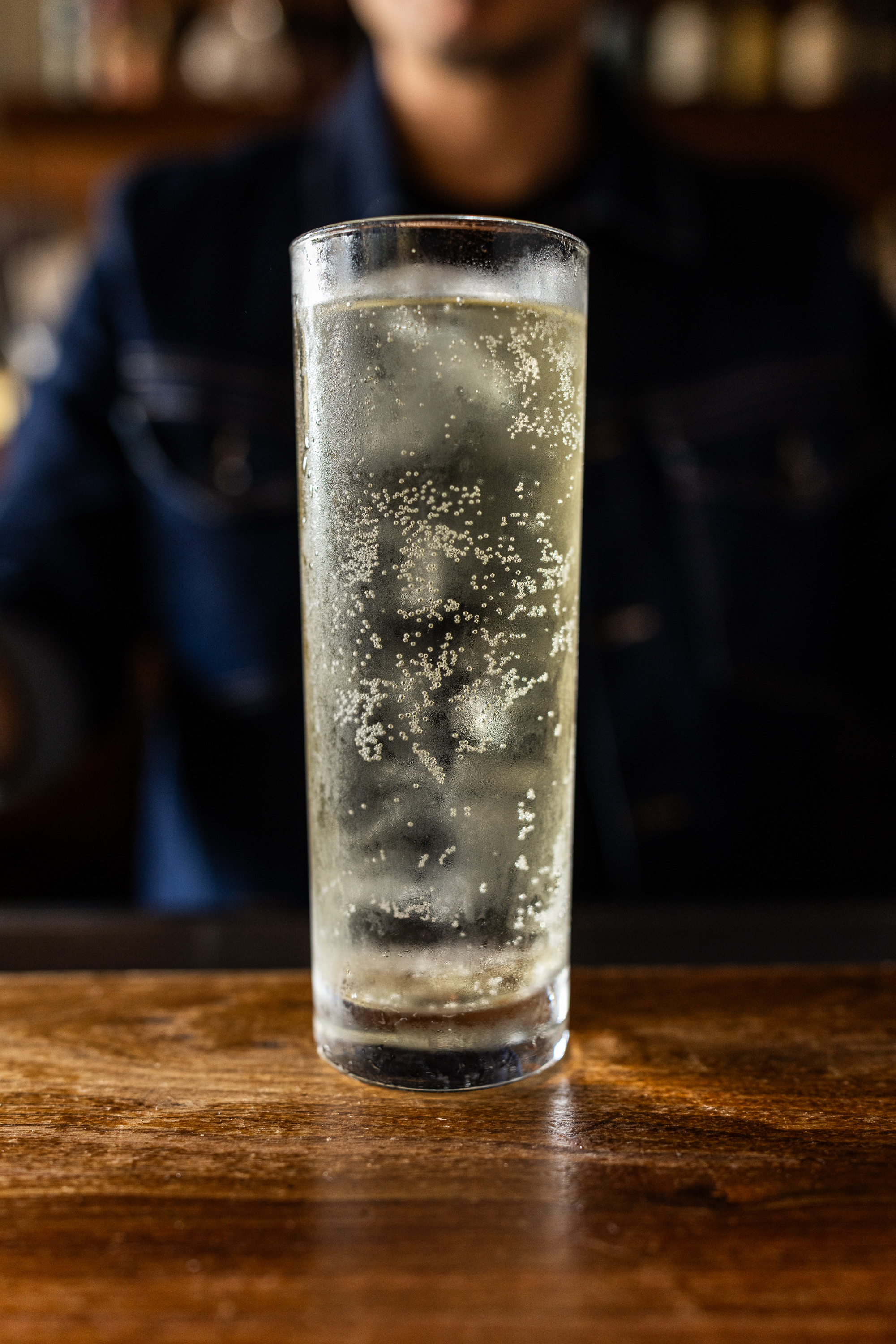
The Japanese Highball may appear simple, but at Bar Goto, it becomes an exercise in ensuring each element shines. Owner Kenta Goto pays close attention to dilution, temperature, carbonation, and whisky selection to create a balanced cocktail. Two Japanese whiskies, Blend Tokie and single malt Kanosuke, are the cocktail’s backbone.
His biggest tip for making one at home? Using whisky kept in the freezer before building the drink to ensure the drink stays ice cold. It slows dilution and preserves the crisp carbonation that defines a proper Japanese highball.
- 5½ tsp. Suntory Toki, chilled, ideally in freezer
- 2 tsp. Kanosuke single malt, chilled, ideally in freezer
- 4 oz. club soda, chilled
Fill a highball glass with ice cubes or an ice spear. Pour the chilled whisky into the glass and top with the chilled club soda. If the whisky is not chilled, add the chilled club soda first. With a barspoon, lift the ice gently to blend.
.jpeg) Prelude
Prelude
Created by the team behind Bar Moga, a 1920s-era Japanese cocktail bar with creative pours and live jazz, this drink was designed as an opening note, or aperitif for the evening. “The Woodford Reserve provides the structure, warmth, and oak backbone that grounds the drink, while lavender brings an airy elegance, with a hint of soft almond from the Crème de Noyaux to round out the finish,” says bar lead Simon Xi.
The attention to detail extends to the ice. Bar Moga uses Kuramoto Ice from Kanazawa, Japan from a producer established in 1923, the same era that inspires the bar. The water is carefully filtered before being slowly frozen for an average of 72 hours, a process that removes most of its minerals and reduces its hardness from around 40 to just 3 to 4. The result is exceptionally clear, pure ice, with each piece cut by hand to fit the glass and cocktail. “For us, ice deserves the same care as every other ingredient,” says beverage coordinator and head chef Shintaro Eleazar Tozzo.
- 1 oz. Woodford Reserve
- ½ oz. Cocchi Americano Bianco
- ¼ oz. Suze
- ¼ oz. Crème de Noyaux (or amaretto liqueur)
- ¼ oz. lemon juice
- ¼ oz. honey
- 2 dashes lavender bitters
- 1 ½ oz. soda water
Shake all ingredients in a shaker except the soda water. Pour into a highball glass with ice. Top with soda water. Stir lightly and serve.
 Penicillin
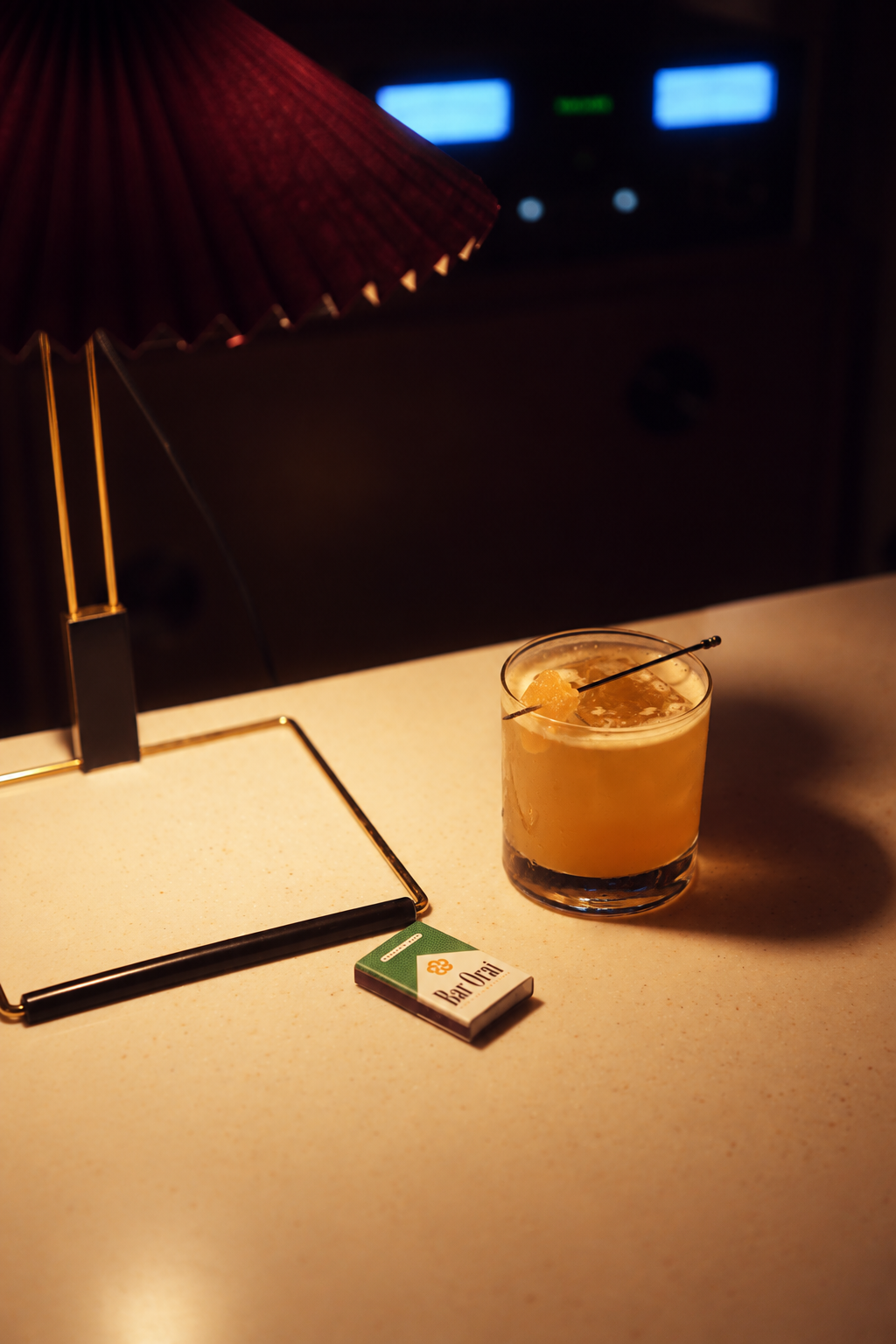
Sam Ross’s modern classic keeps its bones in this version from Bar Orai, a Japanese-style vinyl listening bar located in Midtown East Manhattan. The vital ingredients–honey, ginger, lemon–remain the same, but are anchored by a Speyside single malt heavy blend finished in mizunara, the prized Japanese oak that’s a popular finishing cask for a variety of whiskey styles. Instead of the classic Islay malt floating on top, this version threads smoky scotch into the honey-ginger syrup. “The Japanese oak, not Japanese whisky, does the talking here. A Scotch classic wearing a Japanese accent,” owner and creator Joseph Moon notes of this version.
- 2 oz. Chivas Regal Mizunara
- ¾ oz. Fresh lemon juice
- 1 oz. Honey ginger scotch syrup (recipe below)
- Candied ginger garnish
Add the whisky, lemon juice, and syrup to a shaker. Fill with ice and shake until well chilled. Double strain into a rocks glass over a large ice cube. Garnish with a piece of candied ginger.
Honey Ginger Scotch Syrup
- ½ cup honey
- ½ cup water
- 2 inch knob fresh ginger, chopped
- ¼ cup + 2 Tbsp. Laphroaig 10 year old scotch
Bring all ingredients to a boil in a small pan over medium heat, until the honey is dissolved. Let sit for 30 minutes. Strain ginger and whisk in the scotch. Refrigerate in an airtight container for 1 month.