
Review: Johnnie Walker Black Cask Trades Smoke for Sweetness
This Black Label line extension is made with bourbon lovers in mind
March 5, 2026 –––––– Danny Brandon
One of the most beloved whiskies in Johnnie Walker’s lineup has long been its 12 year old Black Label. The more-exclusive Blue Label might get all of the attention from aficionados, but Black Label has an enduring mainstream appeal that’s hard to deny—boasting legions of loyal fans, many of whom credit it as being one of the foundational blends that got them interested in exploring the wider world of whisky.
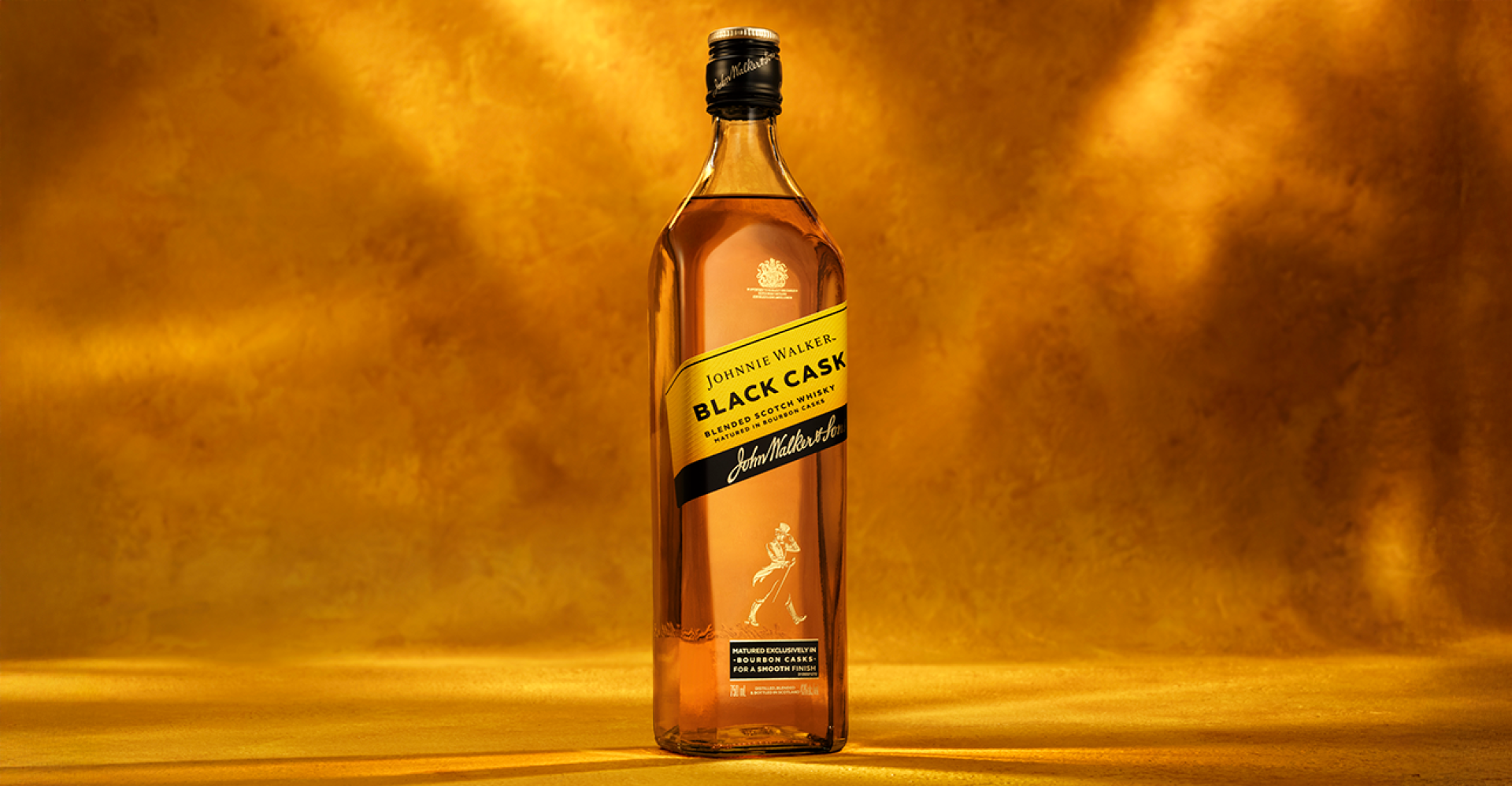
Most would agree that Black Label’s appeal lies in its balanced smokiness, which is largely imparted by the inclusion of peated single malt Caol Ila alongside other malts like Cardhu, Clynelish, and Glenkinchie. In 2011, the brand played even heavier into the smoke with the release of Johnnie Walker Double Black, a doubling down on Black Label that was touted as younger (non-age stated) and smokier, with a higher concentration of Islay malt and maturation in heavily charred casks. Johnnie Walker’s latest riff on Black Label is Black Cask, which moves in the opposite direction, positioned as an entry-level scotch for bourbon lovers that trades the smoke for extra sweetness.
A Sweet Detour
Black Cask starts off with a similar array of malts and grain whiskies as Black Label, though they aren’t blended in the same ratio. The heart of Black Cask’s recipe is a grain whisky from Cameronbridge Distillery—one that was partly distilled from corn using a column still—that master blender Dr. Emma Walker selected for its soft bourbon-like sweetness. The main malts of the blend come from Glen Elgin and Roseisle, both singled out for their orchard fruit flavors. All the whiskies were aged in American white oak bourbon barrels to highlight the sweetness, setting it apart from Black Label and Double Black, which include European oak and shaved, toasted, and recharred wine casks. Black Cask was also bottled at a slightly higher proof (43% ABV compared to 40%) to accentuate some of its spice notes and provide extra heft for bourbon drinkers accustomed to higher-strength offerings.
Though its emphasis is certainly on the sweeter whiskies, Black Cask still contains a very tiny amount of smoky Caol Ila in the blend. Dr. Walker says that she initially wanted to create a fully unpeated version, but eventually decided to scrap that idea after finding that the smokeless iterations lacked a certain je ne sais quoi. “It almost acts like seasoning, it reveals more of the other flavors,” she explains. “If we made this whisky without the smoky malt, it would be like having fries without salt on them. It was good, it was warm, it was welcoming, but it wasn’t what you were expecting. A little bit of smoke goes a long way.”
Indeed, we’ve seen that adding just a little peated malt can sometimes elevate an otherwise sweet blend, with Compass Box’s dessert-inspired Brûlée Royale including trace amounts (0.5%) of 23 year old Ardbeg to add scorched custard notes that complement the rest of the profile.
Some readers may have drawn comparisons between Black Cask and Lagavulin Sweet Peat, which also debuted recently. Both whiskies are owned by Diageo, and follow the same premise: entry-level peated scotches that dial back the smoke in favor of sweeter flavors from aging in American white oak bourbon barrels. The larger strategy at work here seems to focus on recruiting new drinkers into peated scotch, which has historically been perceived as a hard style for newcomers to get into. For Black Cask specifically, the goal is for these sweeter grain whisky-driven flavors to be familiar enough for bourbon drinkers to like. Perhaps before exploring it neat or over ice, Walker recommends trying it in place of bourbon in classic cocktails like an Old Fashioned and Gold Rush.
This isn’t the first time that Johnnie Walker has purpose-built an expression to attract American whiskey drinkers. In 2021, the brand rolled out High-Rye, a 45% ABV permanent release that was intended to, you guessed it, bridge the gap between the worlds of rye and scotch—capitalizing on rye’s rapidly growing popularity. That whisky included over 60% rye in the blend—including grain whisky from Cameronbridge as well as an experimental pot-distilled malted rye from Teaninich, in addition to malts from Cardhu, Glenkinchie, and Caol Ila.
How Does Johnnie Walker Black Cask Taste?
89 points - Johnnie Walker Black Cask Blended Scotch
ABV: 43%
SRP: $35
Availability: Nationwide
Arid and earthy on the nose, with hay, spiced oak, orange peel, green apple, and dried raspberries. The palate is soft, mellow, and honeyed, though without much depth, with sweet vanilla, baked apples, honey, corn muffins, flavorful grains, milk chocolate, and mocha latte, all accented by peppery spice. There’s lots of chocolate on a light but flavorful finish. A well-built whisky with some excellent flavors, though decidedly on the lighter side.—David Fleming