
Review: Lagavulin 11 Year Old Sweet Peat
Bottled at 11 years old, this is the first permanent release from the brand in nine years
February 16, 2026 –––––– Danny Brandon
Most scotch drinkers would agree that the standard bearer for Lagavulin’s house style is the 16 year old—a whisky that has built a reputation as a benchmark of Islay malt that all aspiring peat lovers must try at least once on their whisky journey. But in recent years, the distillery has defied convention by releasing some impressive younger whiskies. The 12 year old Lagavulin is a fan favorite, routinely released as part of the Diageo Special Releases annual series. The three latest editions—The Ink of Legends, Fireside Tales, and Grain & Ember—have scored between 93 and 94 points by our tasting panel, with the tequila barrel-finished The Ink of Legends named our No. 3 Whisky of 2024.
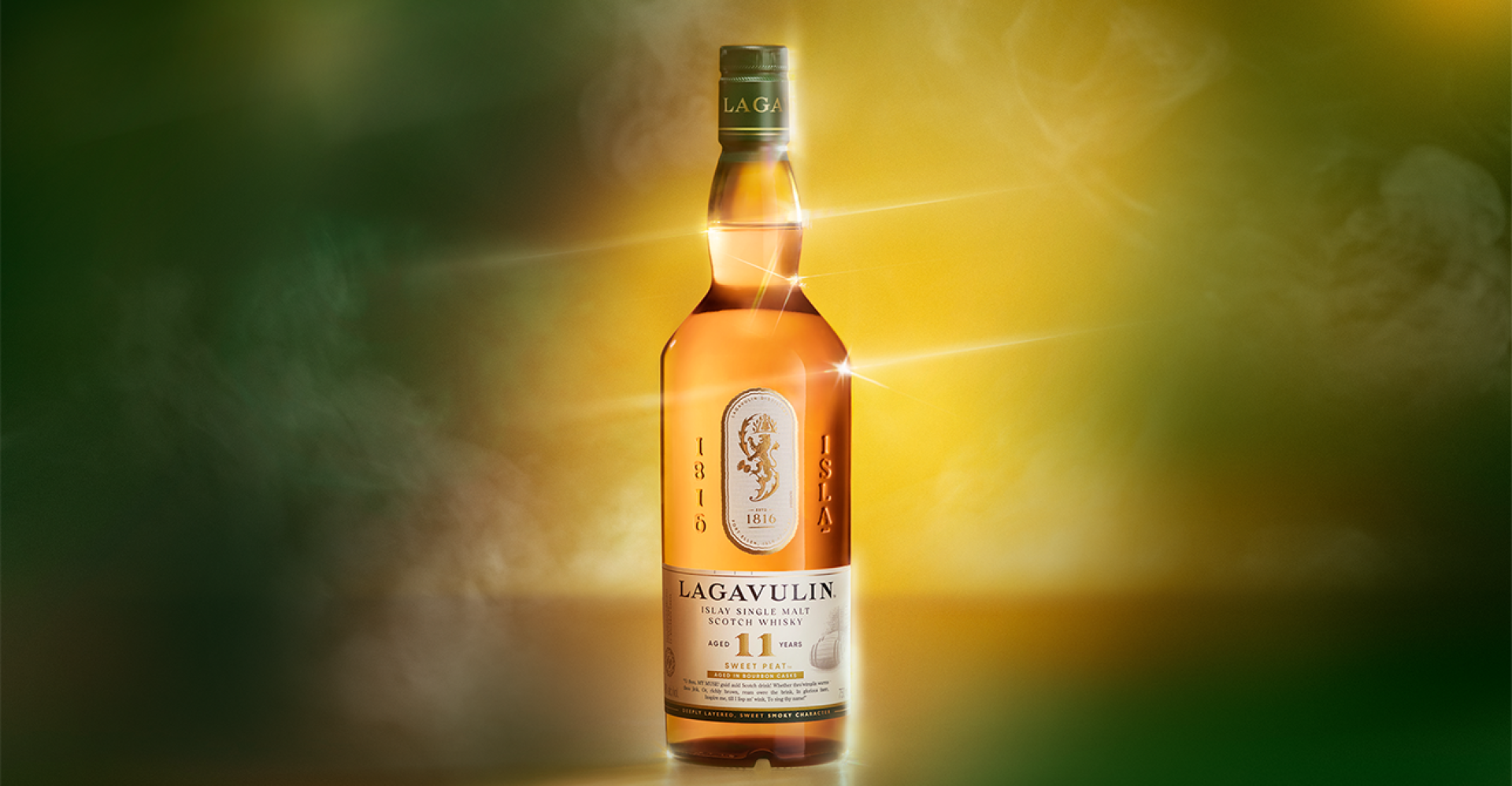
Another standout is the 11 year old, the standard age statement carried by the limited Offerman Edition whiskies made in collaboration with actor Nick Offerman. The first edition, released in 2019, scored 89 points with our panel. But the subsequent releases, which layer in cask finishes, have been far more impressive—particularly the 95-point Guinness Cask Finish, which was crowned our 2021 Whisky of the Year. Lagavulin’s latest release, not part of the Offerman series, is a bit different: a core-range 11 year old named Sweet Peat.
Sweeter Side of Smoke
As the name suggests, Sweet Peat aims to explore the deeper nuances of peat smoke by highlighting the whisky’s sweet notes alongside the trademark meatiness. It sounds like the same premise as the Offerman Rum Cask, but this one sets out to achieve that balance through primary maturation rather than cask finishing. It’s aged entirely in first-fill bourbon barrels, which sets it apart from other Lagavulin expressions like the 16 year old, which includes a small portion of sherry casks.
From a production standpoint, a closer comparison exists in the inaugural Offerman Edition single malt, which was also matured entirely in bourbon barrels and eschewed a cask finish. But there are some key differences: the Offerman batch used a mix of refill and rejuvenated (shaved and recharred) barrels rather than first-fills, and it was also bottled at a slightly higher proof (46% ABV compared to the newcomer’s 43%).
Lagavulin says that Sweet Peat was made with approachability in mind. Peated whisky has always carried a somewhat unfair reputation for being a hard style to get into—particularly for beginners, who are often intimidated by the prospect of overpowering smoke and maritime influence and end up never trying it. With a peat content of 35 phenol parts per million (PPM), Lagavulin occupies a sort of mid-point in the grander peat landscape—having more peat than Highland Park 12 (20 PPM), Springbank 10 (25 PPM), and Bowmore 15 (30 PPM), but less peat than Port Charlotte 10 (40 PPM), Laphroaig 10 (40–50 PPM), and Ardbeg 10 (55 PPM). Lagavulin also typically distills its whiskies slowly, using wash stills filled nearly to capacity, which is said to preserve more of the smokiness and weight from the grain. For the new whisky, Lagavulin seems to be banking on the first-fill bourbon barrels to provide enough sweetness to make it an attractive entry point into peated drams. To bolster those efforts, the brand recommends trying it in a cocktail—in place of American whiskey for a smoky riff on an Old Fashioned or mixed with honey-ginger syrup, lemon juice, black tea, and bitters for a spin on the Penicillin—as well as neat or on the rocks.
How Does It Taste?
91 points - Lagavulin 11 year old Sweet Peat Islay Single Malt
ABV: 43%
SRP: $70
Availability: Nationwide
Fragrantly sweet on the nose, with peat smoke, sea shells, cigar box, and pronounced sweetness of dried strawberries. Mellow on the palate, syrupy and smooth—peated but not a peat bomb at all, with strawberry jam, dark chocolate, and sugared coffee. The finish has spice and peat to keep the fruit sweetness in balance. Overall very light and sweet, almost candied at times. A few similarities to other Lagavulin expressions, but a distinct departure.—DF