
Inside the Making of Redemption's Next 18 Year Old Bourbon
Seventy-four barrel samples, an afternoon with master blender Alan Kennedy, and some consequential decisions about what to bottle—and what to leave in the wood
October 28, 2026 –––––– Sean Evans
“I want feelings and vibes, songs this reminds you of, or a collection of memories,” Alan Kennedy tells us. We’re sitting in a conference room in Kentucky, an intimidating lineup of 74 barrel samples of 18 year old bourbon is neatly arranged in front of Kennedy, Redemption’s master blender, to craft upcoming releases.
Kennedy sets a few ground rules. He doesn’t want us to identify flavors of marzipan, vanilla, or petrichor. He wants to hear what a whiskey evokes, not a formal review. “Shout out everything that you're feeling after a sip,” he says.
Our assignment today is twofold. First, we’re to identify barrels for the 2027 blend of Redemption’s 18 year old bourbon. Kennedy is open to finding several blends for the younger release: “If we find good groupings, we can do two or three different separate batches of 18 years,” he says. The samples will help determine how many distinct whiskeys he has to work with. Approximately 30 barrels will need to be allocated, with enough aging potential to become Redemption’s first 21 year old, potentially arriving in 2029.
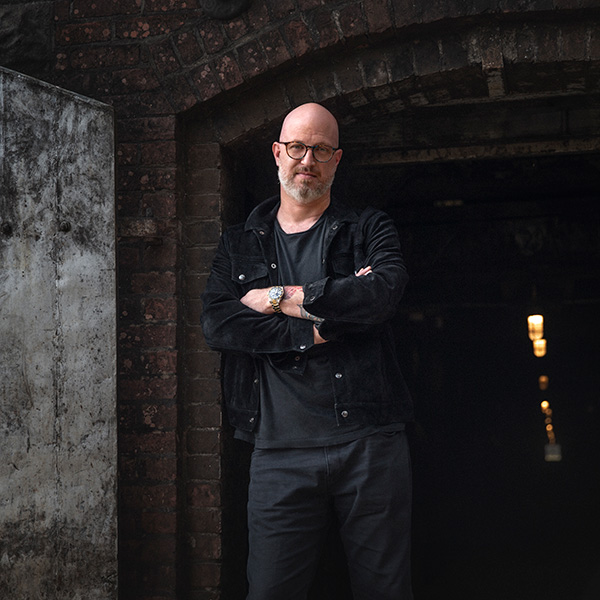
Let’s hope my palate doesn’t pack it in early; this is easily the highest volume of samples I’ve ever tried in a single sitting. Over the day, my notes include “toothpaste vibes,” “Boy Scout camp,” “If you had AI make generic bourbon,” “Outback Steakhouse,” and “A man wearing a suit on an airplane.” Odd as they seem, Kennedy’s pleased. “We can work with those,” he says. “As a sommelier, I learned early on that your tasting notes influence what other people taste,” he explains. Ask for vanilla, and you’ve already led the witness. “Connect it to memories and feelings or music or art; there’s more there.”
One Lot, Several Personalities
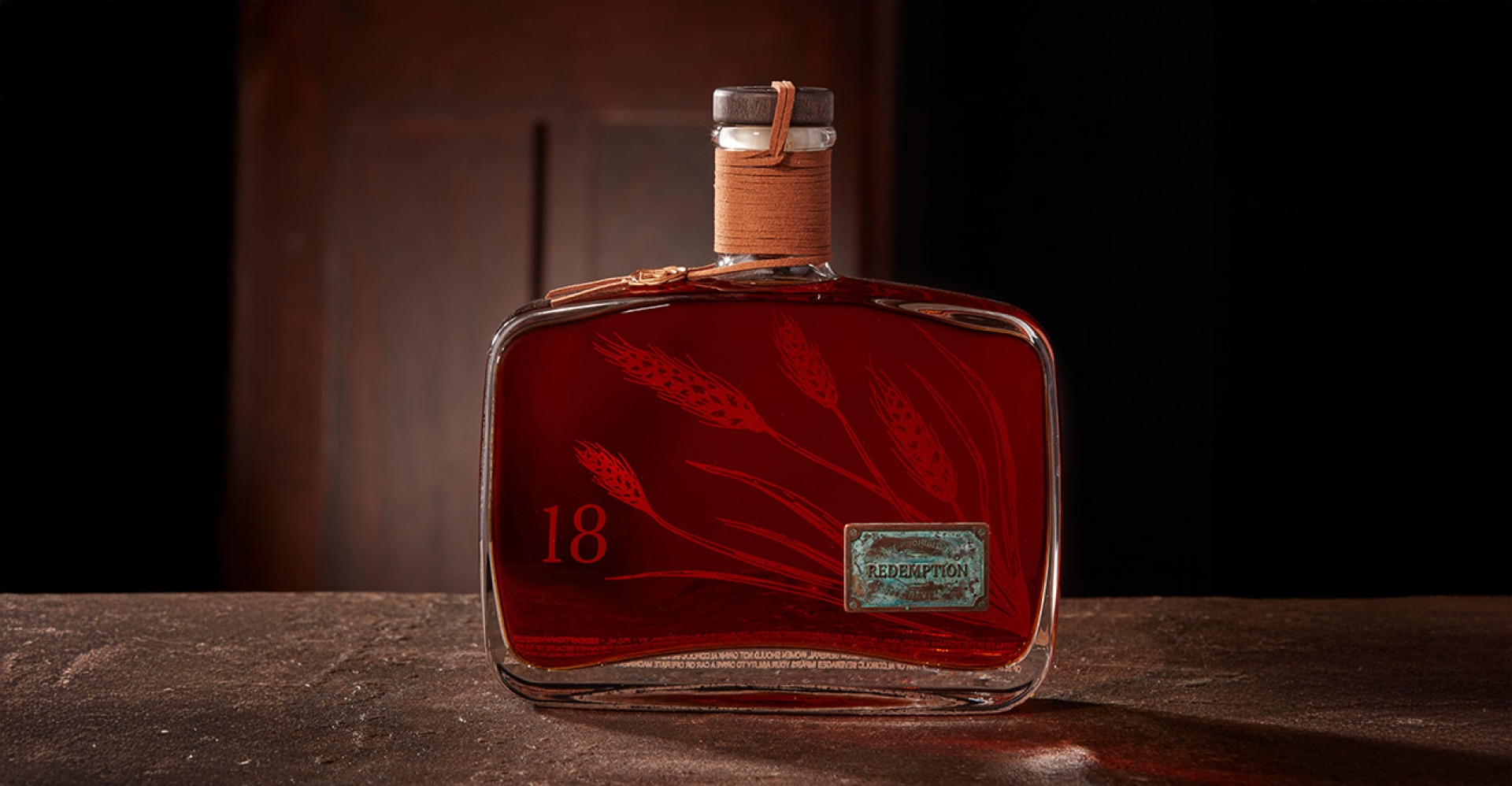
Redemption introduced its Ancients series in 2017, returning to the collection in 2025 with an 18 year old bourbon drawn from 69 barrels. That release yielded approximately 2,400 bottles at 103.4 proof, priced at $400. It returned in 2026, providing the immediate predecessor to the whiskey we’re helping Kennedy assemble.
Today’s samples come from lot 08F30, distilled in a single day at MGP in Indiana in 2008, using a mashbill of 75% corn, 21% rye, and 4% malted barley. They entered Independent Stave Company barrels with a No. 3 char at 120 proof, and were stored together in a row on the third floor of an MGP Indiana warehouse. The inventory predates current owner Deutsch Family Wine & Spirits’ 2015 acquisition of Redemption, but was included with the sale. Kennedy has spent the past three years sampling it.
Many of the 74 samples’ proofs register in the 80s, while 22 exceed 100. Kennedy attributes the low readings to humid maturation conditions in Indiana; the barrels moved to Kentucky about a month before our tasting. “There were some beautiful whiskeys in this that were naturally in the 80s, and I’m excited to show that,” he says. “In the time of hazmats, this is the reverse.”
Despite their shared inception, the barrels have matured to show radically different profiles. Number 23, now 81.77 proof, is juicy and cotton-candy sweet, yet dry. Barrel 49, at 85.5 proof, suggests eucalyptus, peppermint, then Listerine, and No. 25, at 96.79, smells like buttercream frosting dusted with cinnamon. Kennedy keeps pushing us for vibes, so we deliver. Barrel 53, at 85.03 proof, is a “freshly talcumed baby’s bottom,” 59, at 100.8, is “economy plus; basic but you get an extra free drink and a little more leg room,” especially compared to No. 15, which at 105.3 proof is “a business class blender, with swagger; someone who wears a suit on the plane.”
From Strawberry to Mouthwash
My more esoteric notes aside, samples do naturally sort themselves into categories as the day progresses. Seven barrel samples land squarely in the bakery case, suggesting pie crust, frosting, graham crackers, and cinnamon cereal. Counting fruit candies, caramel, and other sweets, that barrel pool widens to 19. A recurring theme in that pastry shop set is strawberry; it shows up about 12 times.
At the opposite end of the spectrum, a slew of barrels lean herbaceous. Eight barrels show explicit mint or menthol notes, ranging from dark chocolate with mint to my less welcome mouthwash impression. “Grouping comparative flavors together is good,” says Kennedy. “When you’re blending, you want to have a central idea, but you need to contrast that to give it more depth. If it was all strawberries, okay, fine. But strawberries with mint and leather? Now it starts to build. It’s the different hues that come together to make a painting perfect.”
We identify five barrels that are clearly ready and need to leave the wood. Another six are marked as blending components, including some I wouldn’t choose to drink alone. Number 50, for example. At 101.3 proof, it’s tight and tannic, with leather and mint chocolate, but Kennedy sees how its length and darkness could deepen brighter, fruitier whiskey. Three barrels are written off as not viable—too astringent or otherwise faulty. The majority are in good shape, and though it takes us more than six hours, we finally finish tasting the sample lot.
Kennedy is pleased by the session work. “Your memories and mine all came together and influenced each other,” he says. “But there are group memories we can share and relate to, and that makes a better whiskey.”
Which Barrels Make It to 21?
Barrel 41 is bright, fruity, and floral, prompting a question: “Can it hold a little more oak?” It becomes an early candidate for a 21 year. Overall, our group flagged 23 barrels that could benefit from more aging. Take No. 58, at 85.83 proof, the recipient of my “AI’s attempt at generic old bourbon” description. Kennedy agrees there’s nothing wrong with it; however, there’s no serious defect, and he sees it as a component that could fit into several combinations without disrupting them. “Let’s age it up,” he declares, scribbling in his notebook.
While Kennedy hopes to carry roughly 30 barrels forward, reaching that age won’t ensure a release. “It wasn’t a guarantee that I would do a 21,” he says. “The barrels we tasted were going in the right direction, but they’re not there yet.” He wants further development while preserving the candy notes, working with Castle & Key’s team on warehouse placement and reassessing them about every six months. “I have hope, and I’m optimistic,” he says. “But if it shouldn’t be done, we won’t do it.”
Pastry Shops and Kentucky Snow Days
What’s definite is a 2027 Redemption 18 year old release, something he’s currently working on. “Blending is an art form that’s been around for way too long to only be worried about the chemical structure of the product,” Kennedy tells me. That’s why he prefers to connect flavors to moments or emotions. “There’s more there; it’ll have more soul this way,” he says.
His takeaway from the 74 samples we tried was “three completely different maps of flavors” in the inventory: fruity candy; brown sugar, cinnamon, and crème brûlée; and the dusty character of older bourbon. The candy notes connect to his life as a father. He has children ages 5 and 9, one adventurous about food, the other less so. Sweets bring them together, and his eldest is fascinated by a New York shop that makes pastries that resemble the fruits inside them. “Those flavors are a deep part of my life,” he says. “Exploring life and food experiences through these things in my life right now.”
The baking flavors evoke another setting: Watching snow fall in Kentucky, bourbon in hand, old-school R&B playing. “It’s the warmth and the comfort,” he says. “Brown sugar, cinnamon, ginger, dark chocolate notes.” He’s weighing whether those directions deserve simultaneous releases or separate years, explaining that he wants to tell “the right story at the right time.”
How Does This Batch Compare to the 2026 Redemption 18?
Kennedy says this lot of barrels is similar to the 50 that comprise the 2026 Redemption 18 year old, with “maybe a little more cherry.” Bottled at 102.85 proof, “I had a suspicion when I tasted it,” he says of the 2026 18 year. Much of what he loves is “how much corn shows, with the fruit notes coming through naturally, and the lighter characteristics brought by aging but not diminished by the wood,” he says. “A real highlight of how things can age correctly.”
In my glass, the 2026 Redemption 18-year bourbon delivers perfectly. It’s round, juicy, and bright, offering cherry Blow Pop, vanilla wafer, and salted caramel on the nose, grounded by mushroomy rickhouse funk. The palate is full of syrupy maraschino juice, cherry-pie filling, flaky butter pastry, and cinnamon sugar. Its long finish recalls a final forkful of pie, caramelized browned crust and juicy filling together. It’s one of the most delicious 18-year bourbons I’ve ever had.