

A China-to-Kentucky Whisky Experiment Launches. We Tried Both Expressions
Maritine Brands redistilled sauce-aroma baijiu into a whisky base and aged it in American oak. The result is its own category
August 19, 2026 –––––– Sean Evans
The concept behind SHĀNG is genuinely new. Take a sauce-aroma baijiu from the Chìshuǐ River basin in Guìzhōu, the same watershed that feeds China’s most storied distilleries, then redistill it into a whisky base and mature it in charred American oak in Kentucky. Maritine Brands, a joint venture between True Essence Foods and Guizhou Guotai Liquor Group, is calling the result jiàngxiāng whisky and betting it can carry baijiu—China's national spirit—into an American glass.
Baijiu is a clear Chinese grain spirit, usually distilled from sorghum, and it's the best-selling liquor category on the planet by volume, almost entirely on the strength of its home market. It’s struggled to penetrate Western markets, especially those accustomed to bourbon, scotch, or tequila, in part due to its flavor profile.
What makes it an acquired taste, at least for palates raised on whisky, is the fermentation. Sauce-aroma baijiu, the style at the core of SHĀNG—pronounced “shong”—is built on solid-state fermentation using qū, a starter culture that drives funky, savory, soy-like flavors most Western drinkers have never encountered in a spirit. (Perhaps the closest analog would be rum made with dunder.) The result can read as pungent or fermented on first encounter, closer to aged cheese or soy sauce than to bourbon's caramel and vanilla.
That savory depth is the whole point for baijiu drinkers, and it's exactly the thing the team behind SHĀNG is asking American oak—and whisky—to reframe. That crew includes Whiskey House of Kentucky and The Blending House, coming together to achieve the vision of food-technology entrepreneur Matt Rubin, who’s driving this concept after years of trips through Guìzhōu.
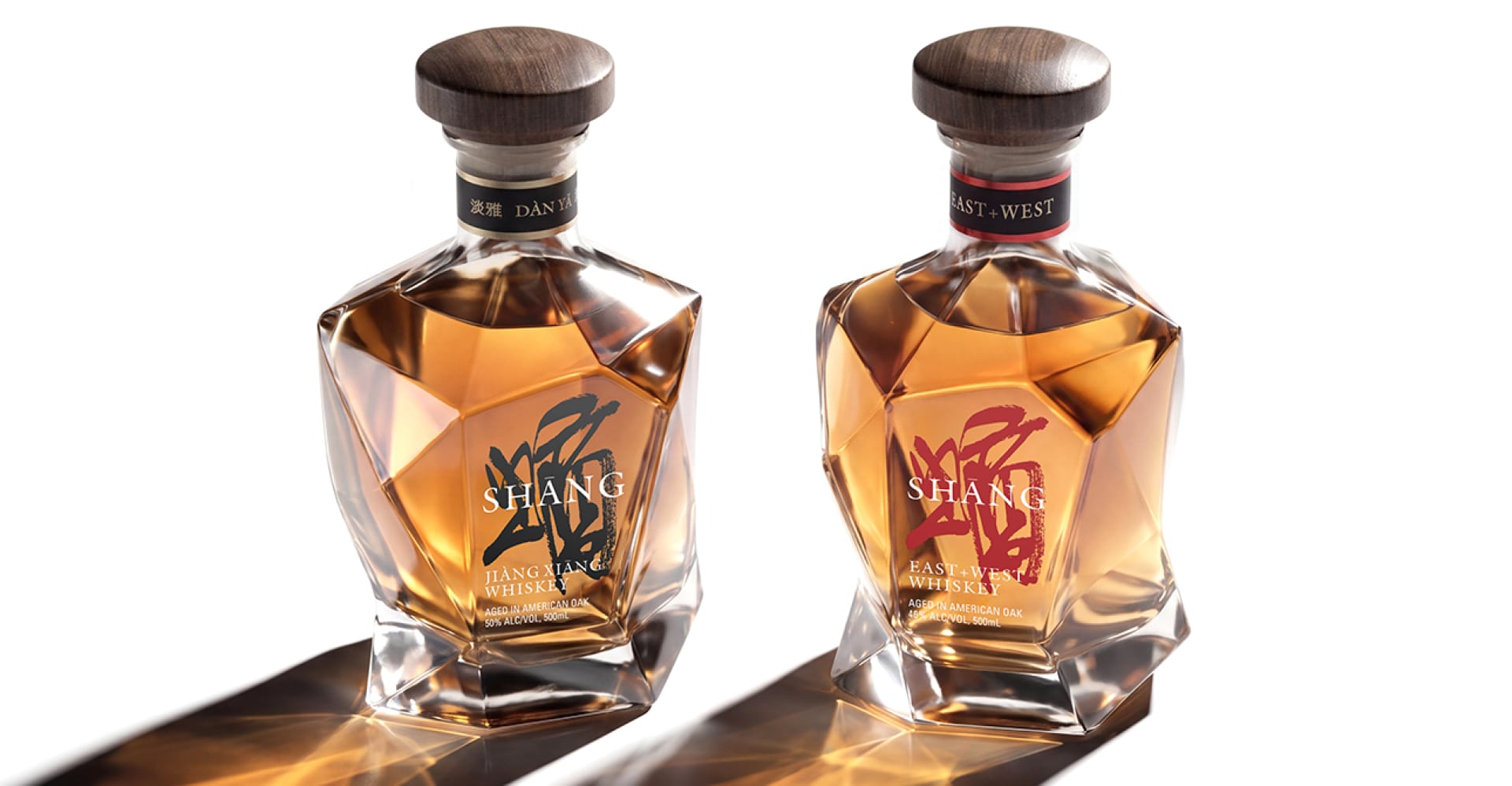
SHĀNG is launching with two expressions. Dàn Yǎ, the flagship, runs closest to the baijiu source. This jiàngxiāng whisky rests in no. 3 charred American oak barrels from Independent Stave Company for as little as 1 month and up to just under 1 year, but everything before that happens in China: distillation, then aging in traditional clay pots. At 100 proof and $65 for a 500ml bottle, it's the fairest test of whether the nascent category holds together.
This straw-colored liquid also demands the most patience. The nose leads with a lactic, fermented funk, alongside soy, fresh oak, mint, and ethanol. The palate is thin, fronted by a lot of bright new oak that gives way to charred barrel spice that builds slowly and lingers long. Vanilla surfaces, a pop of tropical fruit comes and goes, and peppermint threads through. The finish is barrel spice, plain and persistent. Drinkers who love baijiu will recognize what's happening here. Everyone else should come in expecting a non traditional whisky experience.
East + West is SHĀNG’s second expression. It blends the same jiàngxiāng whisky with a proprietary American whiskey distilled from U.S.-grown red sorghum, then aged in charred oak in Kentucky. Sorghum on both sides is the clever part. Rather than reconciling two different grains, the blend leans on one shared backbone, fermented Chinese-style in clay on one side and distilled American-style on the other. At 92 proof and $46, it's the softer landing.
The nose here is more narrow than Dàn Yǎ', and sweeter, with caramel, vanilla, and a heavy dose of new barrel spice. The thin palate is driven again by barrel spice, then a hefty pop of mint and a light Dr Pepper quality that reads more medicinal than sweet. The finish returns to barrel spice, this time carrying anise and a run of baking notes.
Both tip hard into young, spicy oak, which is what you'd expect from a spirit that has spent months rather than years in barrel, and that oak does a lot of the talking in each glass. Dàn Yǎ keeps more of the baijiu's strange, savory character intact, which makes it the more interesting pour. East + West trades some of that character for approachability.
What SHĀNG has gotten right is the ambition and the logic of the sorghum bridge. These are opening statements from a brand-new category, and while they read like it, the idea is worth watching. The liquid is still finding itself.

.png?resize=410x0)
