
Balvenie Releases the World's Oldest Single Malt
Malt master Kelsey McKechnie nurtured this cask to the ripe old age of 88
September 1, 2026 –––––– Mark Jennings
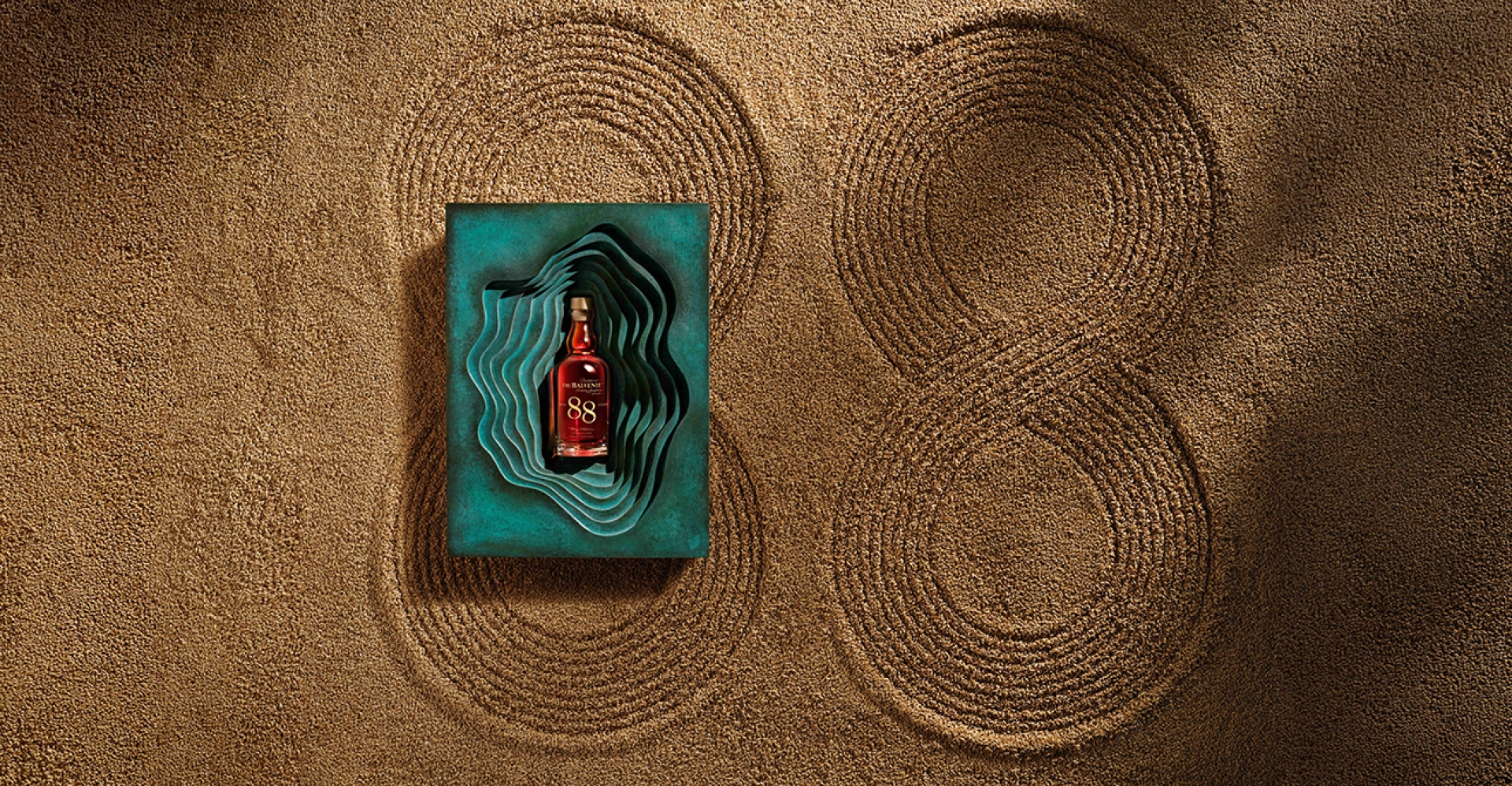
The record is undeniable. At 88 years old, Balvenie’s latest release is the oldest single malt whisky ever brought to market, surpassing the 85 year old Glenlivet released by Gordon & MacPhail in 2025. Only 17 bottles exist.
The whisky within Cask 239 did not remain in oak for nearly nine decades so Balvenie could win an age-statement contest. Malt master Kelsey McKechnie stopped its maturation in 2019, two years short of 90 and within sight of 100. For her, the more consequential number was not its age, but the point at which further maturation might begin to take something away.
The whisky was transferred to glass in 2019, fixing its age at 88. Some 95 years have now passed since the cask was filled, but none of that time in glass counts as maturation.
Filled on March 5, 1931, and fully matured in a European oak refill sherry butt sourced from Jerez. At the time, its spirit was probably destined for blending rather than release as a Balvenie single malt. How it escaped that fate cannot be reconstructed from the surviving records. McKechnie describes it as having been “hidden in plain sight,” watched over by generations of distillery workers while nearby casks were emptied.
When she sampled it, McKechnie deliberately set its reputation aside. “I had absolutely no expectation whatsoever,” she says. Whisky approaching 90 years is beyond the familiar boundaries of maturation, where knowledge of wood extraction, ester development, and declining alcohol strength becomes less predictive. “It’s absolutely doing its own thing.”
Nevertheless, Cask 239 had retained the distillery character. Honey and toffee remained beneath mint, damp bracken, worn leather, and aromatic oak. Bottled at a natural strength of 43.2% ABV, it tasted old without being overcome by wood.
I tasted it at the distillery. Its age was evident in its earthiness, leather, and drying oak, but it kept moving: buttery fudge gave way to woodland notes, then unexpected freshness and dark fruit. It felt less like a record-breaking age statement or something fixed in time, and instead something evolving and fresh. In McKechnie’s words, “a little nugget of scotch whisky history.”
McKechnie inherited the cask from her predecessor and mentor David Stewart, who could have released it during his own tenure. Instead, its stewardship passed to her. “I absolutely see my role as the guardian of the stock,” she says. McKechnie is “exceptionally proud” that Cask 239 was bottled during her tenure, but considers it “bigger than the malt master role”—the accumulated work and restraint of almost a century of people.
The 88 year old is part of The Balvenie 1931 Collection, accompanied by a 12 year old made with 100% on-site floor-malted barley and a 15 year old made entirely with barley grown and malted at the distillery. Both connect the release to 1931, when The Balvenie’s floor maltings opened. The 88 is available to private clients and collectors only at an undisclosed price, and most bottles have already been purchased. The 15 year old is available exclusively through global Travel Retail, while the 12 year old is available in selected markets.
Records will eventually fall; another cask may reach 89, 90, or 100 years. What cannot be repeated is the decision McKechnie made in 2019: to accept that the world’s oldest single malt was already old enough.