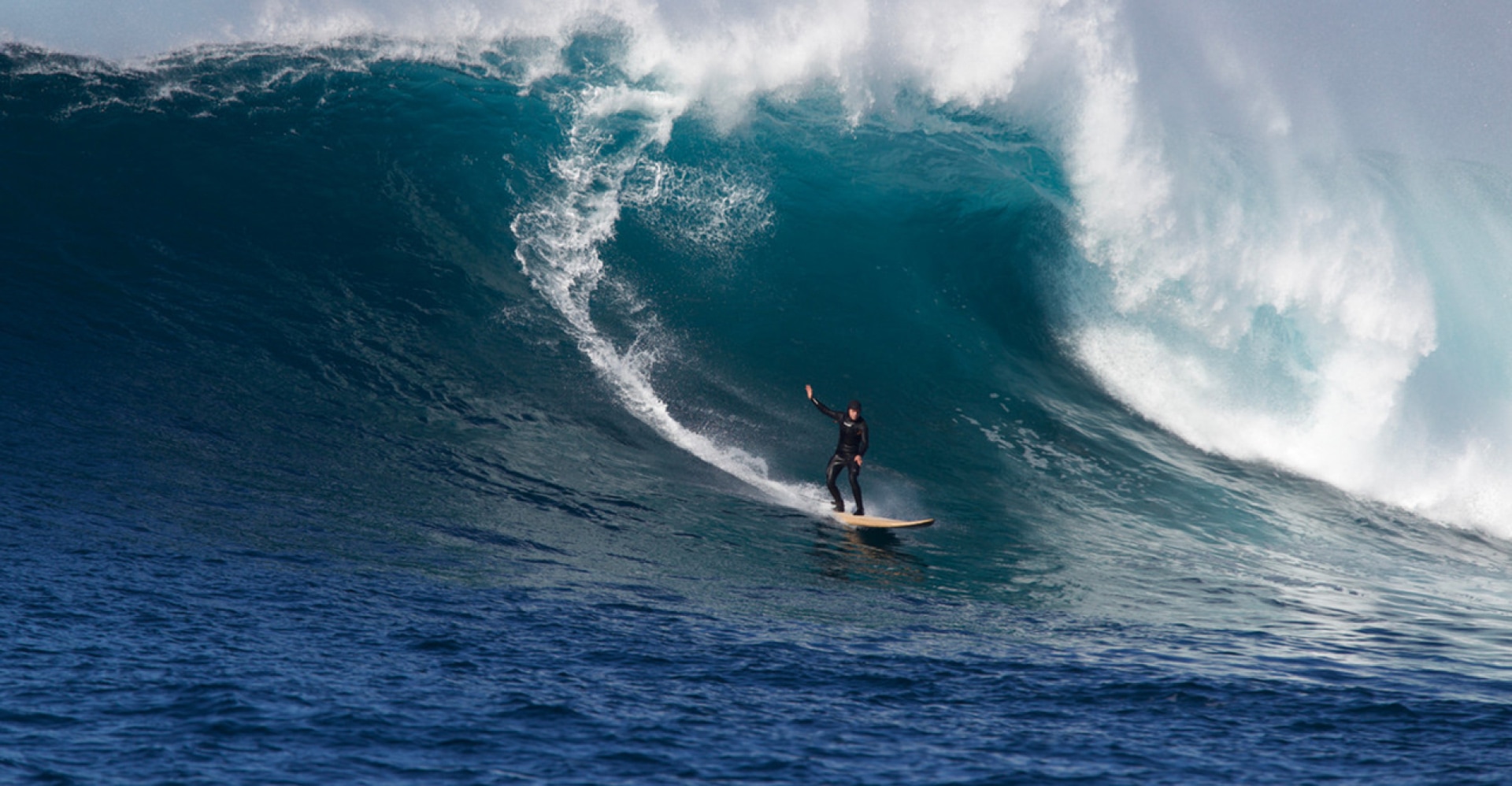
Gary Linden, pictured riding a wave, has been building surfboards from agave since 2003.

Gary Linden doesn’t drink anymore, but he spends every day with agave. The 76 year old surf legend’s life has revolved around the pursuit of riding waves. He once ran the Association of Surfing Professionals (now the World Surf League), and later founded the Big Wave World Tour—a circuit that sanctions the largest big-wave contests on Earth, including Jaws, Nazaré, and Mavericks, where he still judges today.
But Linden is also renowned for his skill at making surfboards. He’s been crafting boards since he was 17 and has operated Linden Surfboards out of an Oceanside, California workshop since 1978. Yet the thing that may define the final chapter of his board-shaping career has nothing to do with foam or fiberglass.
Agave Boards
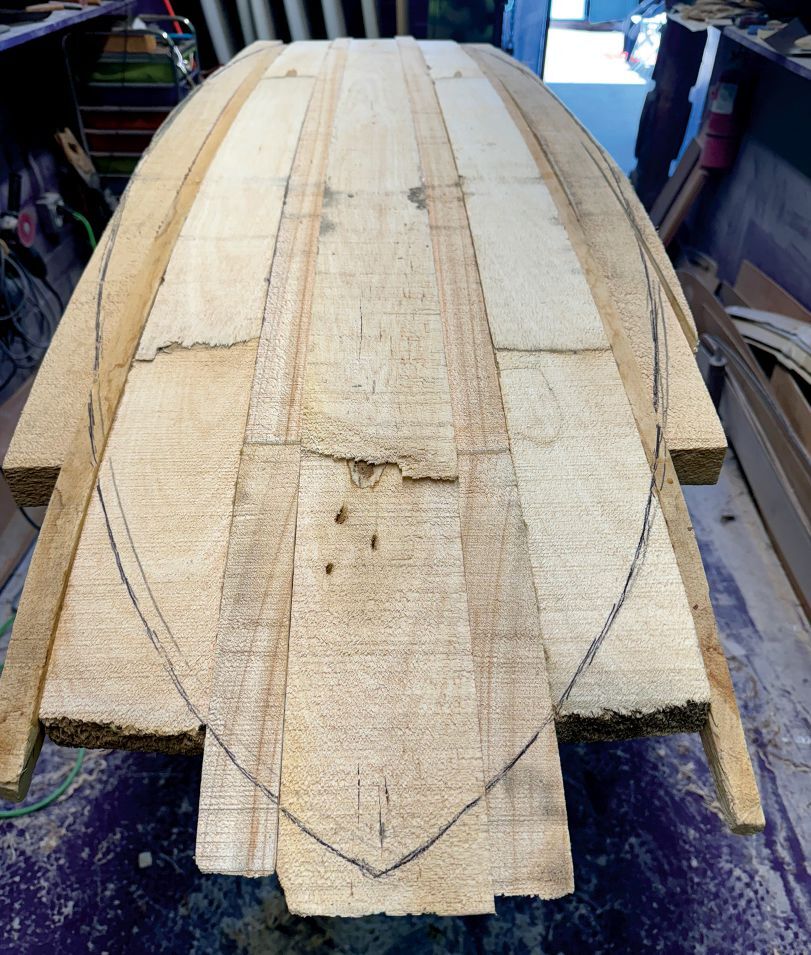
Since 2003, Linden has been building his boards from agave. He first became attracted to the idea when a doctor brought him some small surfboard blanks (the board’s core that still needs shaping and finishing) that had been made from agave. “They were rough, but they were beautiful,” he says. “I couldn’t throw them away. I showed the doctor how to make proper blanks and then started making them myself.”
Linden sources stalks from a 33,000-acre farm in Kenya and from canyon backyards in Southern California, milling and shaping every board by hand. Linden notes that there are about 26 to 30 varieties of agave. The ones in Kenya are sisal, whose fibers can be used for netting and rope. Blue Weber is, of course, the variety used for tequila, while mezcal is made from espadín and about 10 other varieties. “In California, what I’m working with is the century plant, which is used to make fencing,” he says. “They’re all different.” Linden uses dried quiotes or stalks of the plant to create the blanks for the boards. The boards are made entirely from the dried stalks. Agave grown for tequila is harvested before the plant produces a quiote.

After roughly a thousand boards, he’s just now approaching scaling his operation, so you may see more Linden agave boards in the ocean soon. “In making boards from agave, it doesn’t matter too much whether you drink the stuff or not,” he says. “It’s easier to explain to a tequila drinker about the plant and how I use it, and easier to explain what a surfboard core is made of to a surfer. With everyone else, you’re starting from scratch on both ends. The spirits drinkers get the plant. The surfers get the board. The overlap is small, but those are the people that really get it.”
Asked whether agave stocks from Kenya or California are best for surfboards, Linden says both are good. “The strength and flexibility in each are superior to what you’d usually make surfboards from—polyurethane foam, which is fairly brittle. Even though [polyurethane boards] have a wooden streak down the middle, they’re prone to breakage. Since an agave stalk is solid—closer to a reed—it’s much less susceptible to breaking.”
In either case, Linden argues that both the Kenyan and Californian agave boards will outlast traditional foam boards by five or more years. “California has a bigger stalk, a larger plant with an extraordinary range of colors,” he says. “I love putting them together in ways that complement or contrast each other—art pieces, I call them. The Kenya boards are less colorful, but are lighter and more workable for performance. California is more for the soul.”
So how does an agave surfboard actually ride? Linden explains it by referencing Goldilocks. “Balsa is too stiff; it doesn’t flex at all. Foam flexes too much—hit a wave and watch the energy dissipate,” he says. “Agave is just right. It flexes when you want it to and holds when you don’t want any movement. That gives you speed, stability, and a smoother ride. It’s like an old Cadillac compared to a bouncy VW bug. They’re best in big waves, like at Nazaré or Jaws. Foam boards chatter, while agave glides.”

Multi-Use Plant
In general, Linden marvels at the sheer diversity of the agave plant’s uses. “You can squeeze the juice from the heart to make a beverage, the leaf tip is a needle that has its own thread attached, and pulp from tequila production can be pressed into paper. Ranchers use the leaves for fencing. The mash can be repurposed into diesel fuel. It requires no irrigation because it collects moisture from the night air; it’s essentially a carbon filter that grows on its own.” He’s also worked alongside a Fender custom master builder to create Stratocaster guitars from agave, and even collaborated with Jose Cuervo to make a 100% agave surfboard.
Asked if there is a mezcal connection to surfing beyond agave’s use for boards, Linden gives a spiritual response. “When I’m on my board out in the ocean, sitting on a piece of nature that took 20 years to grow and that I got to shape, there is something spiritual about it,” he says. “Surfing is my meditative state. I sit on the water, watch the horizon, and wait for a wave. I want to be with nature. I used to drink raicilla [known as Mexican moonshine] while I was building. My favorite brand was Lorena. I’d have a small glass, and I’d start shaping it. I gave up alcohol at 70 for health reasons. I miss it. But I’m still making the boards.”