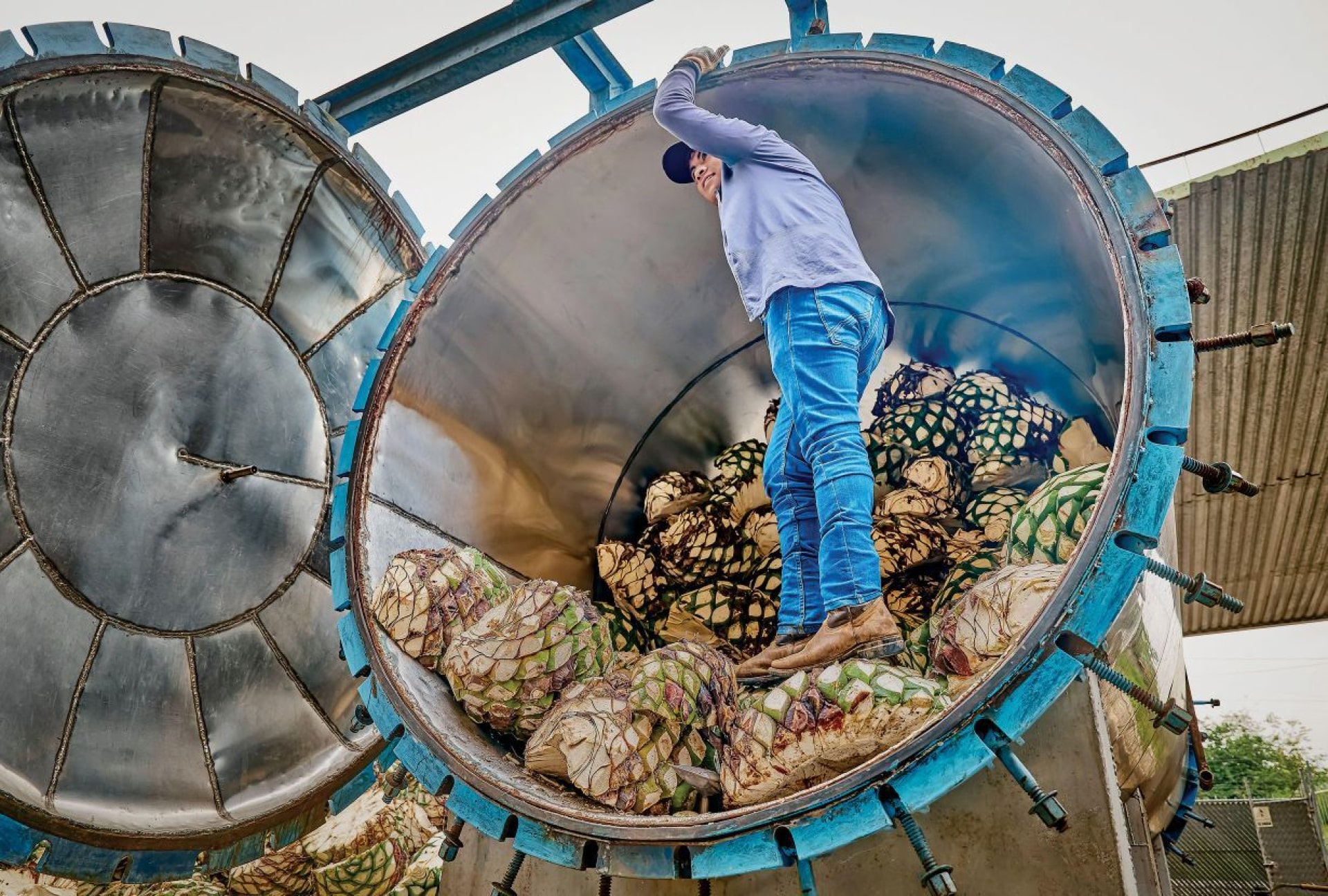
Autoclaves are used to steam agave. These large pressure cookers reduce the cooking time. CAVAN IMAGES / ALAMY STOCK PHOTO

How Cooking Agave Impacts a Tequila's Flavor
Several different methods can be used in this crucial step before fermentation
June 10, 2026 –––––– Jake Emen
One of the biggest points of differentiation in tequila production occurs even before fermentation begins: cooking the agave. The method of cooking has an enormous impact on a tequila’s flavor characteristics—and its price point—due to the efficiency of more-modern processes versus slower and more traditional methods. “The cooking phase is critical to defining a tequila’s character,” says Alex Coronado, master distiller for Jose Cuervo and its family of brands, including 1800 and Maestro Dobel.
Three main methods are used for cooking: brick ovens, autoclaves, and diffusers. “There are thousands of tequilas in the market right now, and all of them are different,” says Jenny Camarena, master distiller and CEO of El Tesoro and the La Alteña Distillery, who assumed that role from her brother Carlos this past spring. “It’s fascinating how every difference in the same process we all follow can deliver such a variety of profiles.”
Brick Ovens
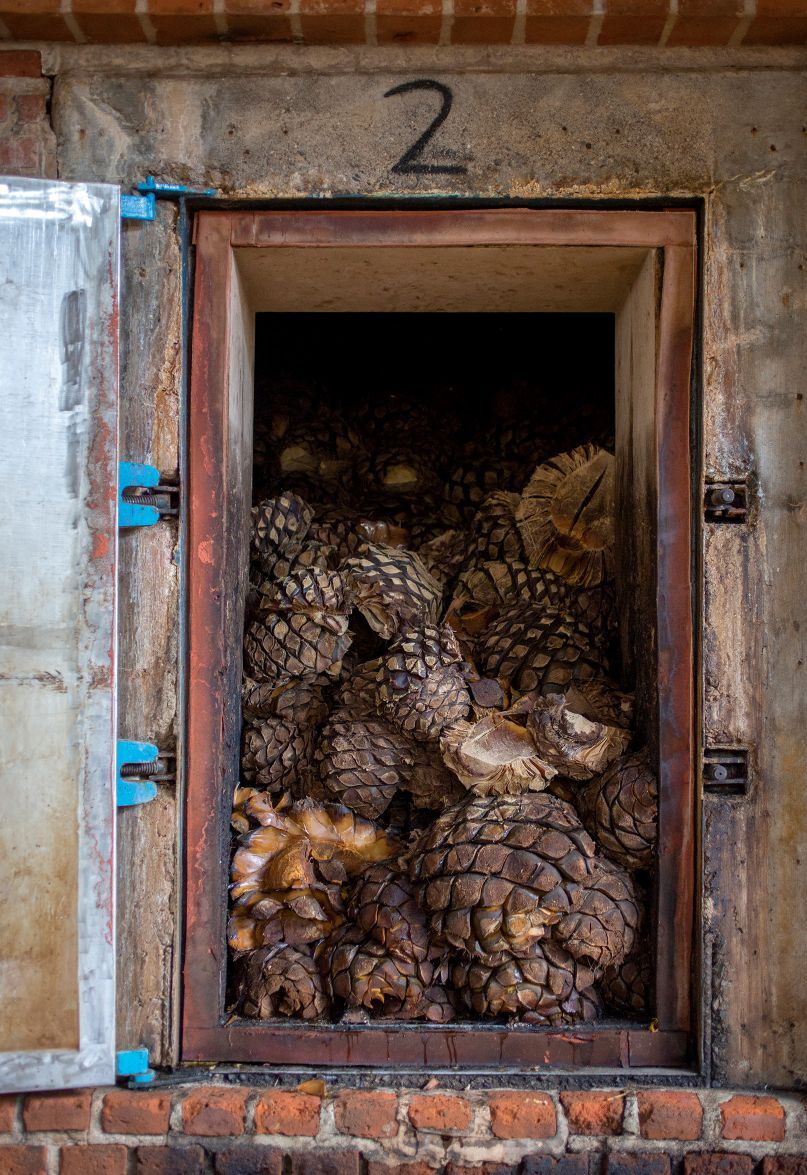
Brick ovens, known as hornos, are a traditional cornerstone of tequila making, functioning via steam injection to slow-roast agave over an extended period. It’s generally considered the method that produces the best quality.
By controlling the application of steam over time, the creation of rich, complex flavors is achieved via caramelization. Concrete and stone may also be used along with brick, and in addition to the caramelized flavors from brick, a stony, mineral-rich quality imparted from the oven materials themselves may be found.
Regardless of the cooking method, the agave is harvested and prepared the same way: Jimadors harvest agave using coas, razor-sharp, circular-bladed tools, to remove the outer layers of leaves, and younger portions of the plant known as cogollo, revealing the piña, or heart. For brick ovens, whole piñas may be chopped into uniformly sized pieces to ensure consistent cooking time before they’re loaded into the ovens by hand.
Coronado uses brick ovens for brands like Cuervo, Reserva de la Familia, Gran Centenario, Maestro Dobel, and 1800, but uses diffusers (see below) for others such as Cuervo Especial, Jose Cuervo Authentic Margaritas, and flavored 1800. He says that their ovens process between 15 to 25 tons of piñas—think room-sized ovens—with 36 to 48 hours of cooking leading to an additional 12 to 24 hours of cooling ahead of the milling process that follows.
At La Alteña, Camerena breaks up the cooking process into an initial five to six-hour period wherein the liquid known as “bitter honey”—condensed steam that is mostly water, soil, and natural wax removed from the plant—is discarded, keeping only the “sweet honey” liquid of more pure agave extracts that’s produced in the following 24 hours. The agave cools for up to 36 more hours in several steps, making it a three-day process.
The earthen ovens used for mezcal provide its signature smoky characteristics, and were once used for tequila as well. However, the method isn’t common in modern tequila, having been phased out for more consistent and controllable techniques.
Autoclaves
Autoclaves are about 10 to 15 feet tall and are larger, more modern takes on old-school brick ovens. They are fast and efficient, with Camarena claiming the cooking process takes 8-10 hours with near 100% efficiency in terms of usable sugar extraction, versus the approximately 90% efficiency of brick ovens.
“The autoclaves work on steam injection and are designed to handle high temperature and pressure,” Camarena says. “Since they are made of stainless steel, they don’t influence the agave flavor at all.”
Cuervo doesn’t use autoclaves, but Coronado notes that 20 to 40 tons of piñas per batch is a common capacity. “Most often, you’ll find that autoclaves produce more straightforward tequilas than those using oven-cooked agave, but feature less of the raw agave intensity found in diffuser tequilas,” he says.
Diffusers
Diffusers were designed to further maximize efficiency. Production is increased to an industrial level, which in turn increases water and energy efficiency. Diffusers offer continuous processing—as opposed to batch cooking—capable of handling 200-300 tons of agave daily in a continuous four to six-hour cycle.
One key to the increased efficiency is the use of enzymes and/or acids to hydrolyze the starch into fermentable components. “An alternative to the use of any type of ovens are enzymatic acid processes that involve extracting all the juice from the raw agave first,” Camarena says. As opposed to cooking whole or chunked piñas, shredded raw piña fiber is used, which also makes it quicker to extract its sugars. “The extracted liquid is then cooked to further convert the starches to fermentable sugars,” Coronado says.
Camarena describes the resulting flavors from diffusers as being more neutral, while Coronado suggests that the lighter resulting profile also highlights herbal and floral notes. The final word, however, will fall to you, the tequila drinker.