PHOTOGRAPH BY JEFF HARRIS

Bourbon's New Age
Bourbon makers have gone far beyond the traditional limits of aging
June 9, 2026 –––––– Julia Higgins
American whiskey distillers long ago considered bourbon’s aging “sweet spot” to be between 4 and 8 years old, a range that was raised to between 6 and 12 years in more recent times. At Wild Turkey, master distiller Jimmy Russell has long been a staunch advocate of bottling bourbon at 8 years old, but his son Eddie famously disagrees, and once joked that if Jimmy had his way, Wild Turkey would produce nothing but 8 year old bourbon. This good-natured tug-of-war between father and son in many ways defines the evolving approach to aging bourbon over the years. Eddie’s preference has long been in the 10-15 year range, and sometimes goes even older. He took a big step up in 2015 with a 17 year old bourbon, launched as the distillery’s first Master’s Keep release, and there would be more to follow. And across today’s bourbon landscape, 12 year old expressions are increasingly popular and seen more than ever before.
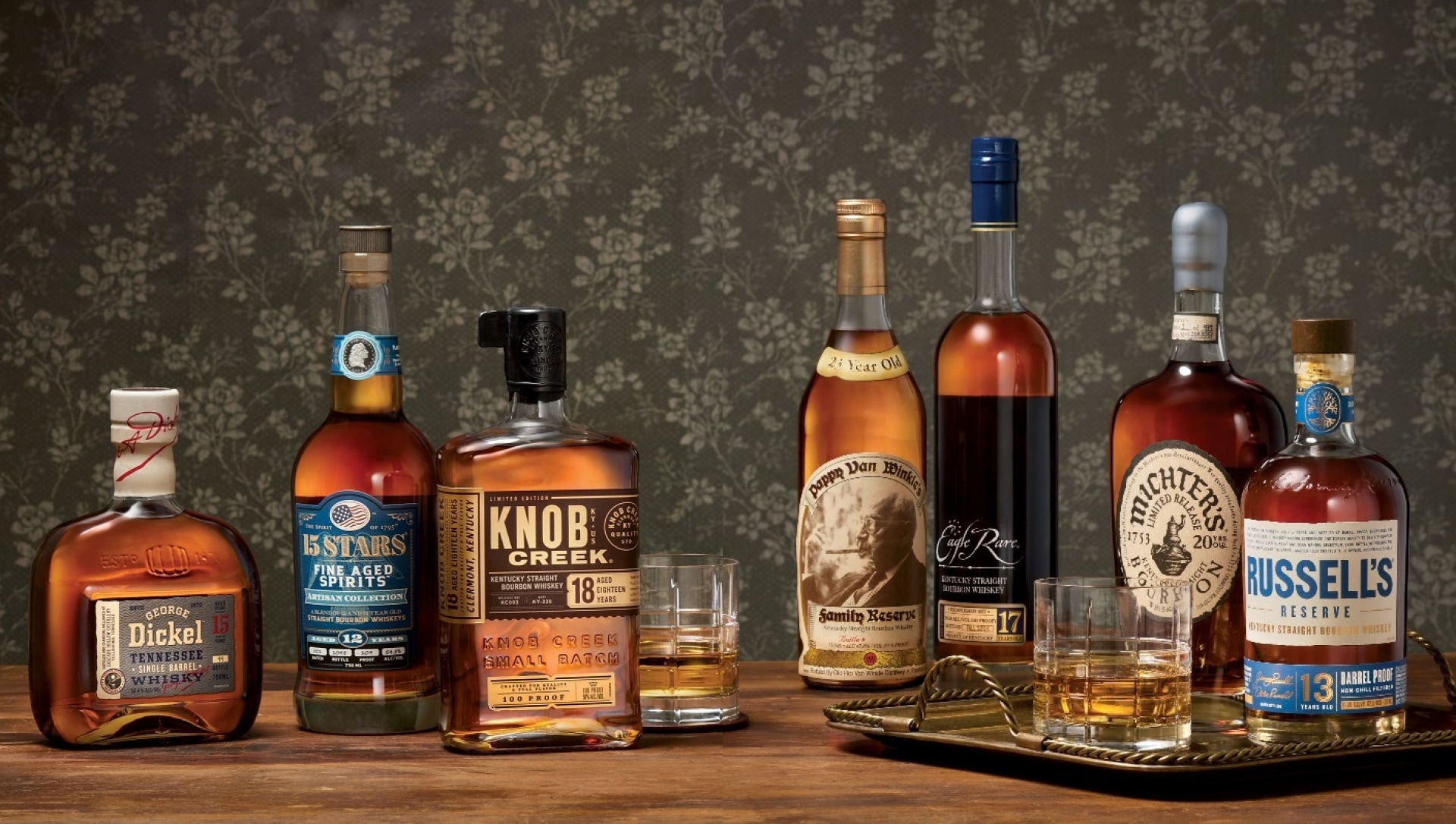
But the move toward ultra-aged bourbon really began with the famed Old Rip Van Winkle releases back in the 1990s, from Julian Van Winkle III, closely followed by another legendary pioneer of extended aging, Michter’s. When Van Winkle set about making a whiskey to honor his grandfather Pappy, he wasn’t aiming to bottle a bourbon with a big age just for the sake of a number. “The intention was not to set the industry on its ear or to create an entirely new category of ultra-premium or ultra-aged bourbon,” notes Julian’s son Preston. But the mid-90s doldrums that gripped American whiskey meant that plenty of old stocks became available, so the inaugural Pappy Van Winkle was a 20 year old bourbon—a whiskey whose age stood it apart from the pack at the time of its launch in 1994.
Not long after the arrival of Pappy Van Winkle came Michter’s. Owner Joseph Magliocco purchased the Michter’s trademark in 1997 for $245—a deal that included only the name, as the original Pennsylvania distillery that produced Michter’s had filed for bankruptcy in the late 1980s and was shuttered by 1990. Magliocco always knew that he wanted his Michter’s to be an older whiskey, and he acquired stocks of 10 year old bourbon and rye. From there, the Michter’s lineup eventually grew to include age-stated bourbons and ryes as old as 25 years, as well as Celebration, an American whiskey that has featured distillate aged up to 30 years.

As with Van Winkle, tracking down older stocks wasn’t a problem for Magliocco. “When people heard that we wanted whiskey that was at least 10 years old, they were thrilled, because there wasn’t much of a market for it,” he remarks. As enthusiasm for whiskey began moving toward a fever pitch after the millennium, suppliers had less aged stock to spare, just at a time when demand for ultra-aged bourbon from Pappy and Michter’s began to explode. It was time for other interested distillers to age their own bourbon accordingly.
Mastering Climate Control
Traditionally, bourbon production has stood in contrast to Scotland, where older age statements are the norm and typically show the flavor and complexity that comes from extended time in a barrel. Most scotch distilleries offer core ranges with whiskies as old as 30 years, and limited releases that soar even higher. In the U.S., a whiskey’s median age has historically been far lower, because as it matures in the higher heat of bourbon’s heartland of Kentucky, the whiskey evaporates more quickly, resulting in a high risk that the barrel will be nearly empty or the whiskey over-oaked.
To keep the hotter climate elements in control, whiskey makers have long matured extra-aged bourbon on the bottom floors of warehouses, where cooler, often more dimly lit conditions exist year-round. Others, including Michter’s, put their whiskey into the barrel at a lower entry proof (see page 68), which creates a richer, more complex liquid with softer, sweeter flavors that have more runway for maturation. There is also the anatomy of the warehouse to consider; concrete and brick structures tend to stay cooler than metal-clad rickhouses, easing the maturation process a bit. And then there are those who opt for radical experimentation in the warehouse; Buffalo Trace has been at the forefront, with its work in Warehouse P as a prime example.
“The Warehouse P space began as an experiment to see if we could extend the age and further improve the taste of bourbon, taking into account the realities of our environment,” says Buffalo Trace master distiller Harlen Wheatley. Warehouse P, one of two experimental warehouses built at Buffalo Trace in the mid-2010s, has within its walls a state-of-the-art container that is blasted with frigid air—a winter parka is recommended before entry. From these refrigerated walls, which are subject to fierce but controlled temperature swings, came one of Buffalo Trace’s oldest whiskeys to date: Eagle Rare 25 year old bourbon. Wheatley describes that whiskey as defying “the very limits of typical American whiskey aging,” a feat only made possible by virtue of these man-made conditions. Since Warehouse P is experimental, Buffalo Trace keeps details on any future releases a closely guarded secret. Another whiskey that has been released after a period of maturation in Warehouse P is The Last Drop Release No. 37: 27 year old straight bourbon, a marriage of whiskeys distilled at Buffalo Trace in 1995, 1996, and 1997. The whiskey debuted in April 2025 at an eye-popping price of $10,500.

Over at Maker’s Mark, the traditional practice has been to age whiskeys for 6-7 years. But Maker’s too has experimented with creating a cooler warehouse climate for its bourbon, with a limestone cellar it sculpted into a hill near its Loretto, Kentucky distillery in 2016. Even at the height of a humid Kentucky summer, the cellar remains dark and chilled, with temperatures around 50° or lower—helping to take Maker’s past its 6-8 year sweet spot and create an ultra-aged product. “In almost 70 years of Maker’s whiskey, doing a 10, 12, or 15 year old bourbon didn’t make sense—it went bitter,” says lead blender Beth Buckner. The cellar now contains barrels that are thus far up to 14 years in age, after having spent their first 5 to 7 years in traditional warehouses; that whiskey has appeared in Maker’s Cellar Aged bourbon, which debuted in 2023 as a blend of 11 and 12 year old whiskeys. While Buckner won’t put a limit on just how old these cellar-aged whiskeys can get, she’s certain that cap will come. “We think the same thing will happen in the cellar that happens in the warehouse, in that there’ll be a peak maturation time, we just haven’t reached it yet.”
Acquired Taste

But even with the changes in maturation regimens over the decades, there’s one final arbiter: flavor. “There are many expensive whiskeys with big age statements and a lot of hype out there, but honestly, they’ve been in the barrel too long—they’re too tannic, picking up way too much of that wood flavor and char,” says Heaven Hill master distiller Conor O’Driscoll. Before expressions like Parker’s Heritage 27 year old, Heaven Hill Heritage Collection 19 year old, or Elijah Craig 18 year old get bottled, O’Driscoll wants richness, complexity, and balance. Sure, it may be clear you’re tasting an aged whiskey with more dominant notes of oak, but tannic astringency—a pitfall that is all too possible the longer the whiskey waits in barrel—is minimal, if not nil.

Whiskey guru and entrepreneur Bill Thomas has tried many an ultra-aged bourbon over the course of his decades-long career in the industry, and he’s amassed a collection that includes bourbon as old as 27 years at his Washington, D.C.-based whisky mecca, Jack Rose Dining Saloon. When it comes to those older bourbons, he seeks certain flavor notes. “If you’re into a more oak-forward whiskey, ultra-aged bourbon is your cup of tea,” Thomas says. “There’s a lot more oak, and what I’d call burnt caramel and dark chocolate; you’re missing out on some of the lighter fruits, but maybe you’ll see lavender, peach, raspberry, or bright citrus peel.” As it stands now, Thomas sees ultra-aged bourbon releases as hit or miss—sometimes the whiskeys are divine, but they can also be tannic and over-oaked. But he thinks that as distillers come to better understand wood and warehouse management, we’ll see more bourbon at the 15-year mark, and it’ll be more consistently drinkable.
At Willett Distillery in Bardstown, Kentucky, master distiller Drew Kulsveen believes those oak notes can be balanced b y characteristics more common in younger whiskey, making for some remarkable older releases. “We understand that in balancing flavors, the whiskey will lose some of those fruity esters present at 6 or 7 years,” he says. “So, if those characteristics of younger whiskey are in balance with some of the more traditional caramel or leather notes, then we know we have something special— it’s a balancing act.” In its past, Willett has been known for some of the oldes t bourbons in the world (not distilled in-house), coming out with a 28 year old single barrel selection in 2008, and releasing 20-something iterations with some frequency throughout the years.
“There are many expensive whiskeys with big age statements and a lot of hype out there, but honestly, they’ve been in the barrel too long.”‑Heaven Hill master distiller Conor O’Driscoll
Why Ultra-Aged Bourbon?
If there are so many hoops to jump through in getting a bourbon to old age , why go there at all? Diageo’s American whiskey director Nicole Austin believes that sometimes the experience is just as important as the whiskey itself. “Someone who raves about a really old bourbon that they got to taste isn’t wrong somehow [even if the flavors are past their prime or it ’s too tannic]. They had a legitimately amazing experience that I myself have also had and valued, and think is worth it,” she says. “That’s part of how we enjoy whiskey.”
For those seeking a rarified American whiskey experience, an ultra-aged bourbon can deliver in spades. While we’re still at a stage in bourbon’s development when there are plenty of misses to go with the hits , older bottlings can be a genuinely exceptional expression of American distilling, which, for any whiskey lover, may be well worth the price of admission.
Notable Ultra-Aged Bourbons
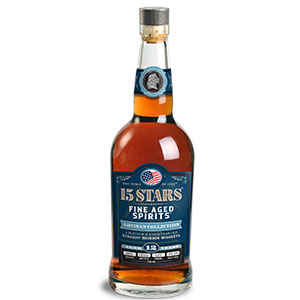 15 Stars Artisan Collection, 54.5%, $179
The father-son blending duo at 15 Stars regularly includes older whiskeys in its blends; the Artisan Collection marries straight bourbons from Kentucky and Indiana aged for 15 and 12 years.
 Barrell 21 year old Toasted Single Barrel, 62.28%, $200
Part of Barrell’s Grey Label series, which showcases the blending house’s oldest and rarest stocks, this single barrel is part of a lot of nine custom barrels that were toasted at low temperatures for an extended period. Barrell has seven barrels left, and its plan is to release the remainder annually with increasing age statements.
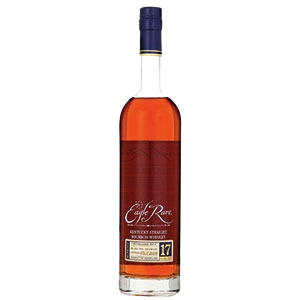 Eagle Rare 17 year old, 50.5%, $150
A fixture of the Buffalo Trace Antique Collection, Eagle Rare 17 is among the oldest regularly released whiskeys from the Frankfort, Kentucky distillery. Even older iterations of the whiskey have appeared over the years, among them 20 and 25 year olds.
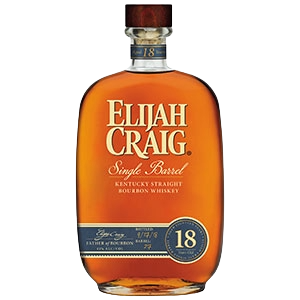 Elijah Craig 18 year old Single Barrel, 45%, $150
Heaven Hill took a gamble in 1994 when it first released this 18 year old, but it paid off big time, and opened the door for future ultra-aged bourbons from the distillery (including Elijah Craig 23 year old).
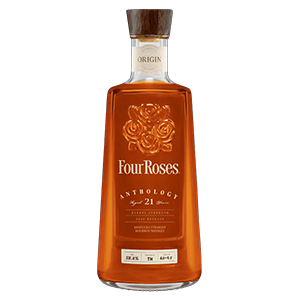 Four Roses Anthology Chapter 1: Origin, 50%, $500
This will be the first release in the Four Roses Anthology series, and the distillery’s oldest whiskey yet, distilled in 2001 and aged for a minimum of 21 years. (Coming summer 2026)
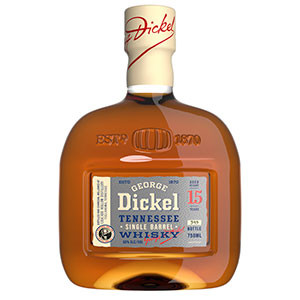 George Dickel Single Barrel 15 year old Tennessee whiskey, ABV varies, $65
You’d be hard-pressed to find another 15 year old whiskey at this price point. Cascade Hollow, where George Dickel is made, released an 18 year old bourbon in 2023.
 Knob Creek 18 year old, 50%, $180
Originally released in 2022, this whiskey is twice as old as the flagship Knob Creek. James B. Beam Distilling Co. has since introduced Knob Creek 21 year old, its oldest- ever release.
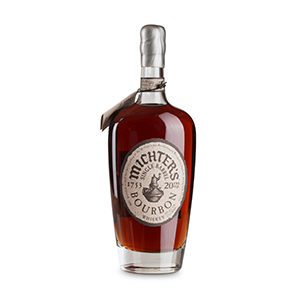 Michter’s 20 year old, 57.1%, $1,200
This coveted whiskey, and its 25 year old sibling, are matured in a climate-controlled warehouse and shepherded into old age by master of maturation Andrea Wilson.
 Pappy Van Winkle’s Family Reserve 23 year old, 47.8%, $450
Pappy Van Winkle launched its 20 year old bourbon in 1994, followed by the 23 year old in 1998. The 15 year old came in 2004, replacing the Old Rip Van Winkle 15 year.
_300.png) Russell’s Reserve 13 year old, ABV varies, $200
Russell’s Reserve 13 year old, ABV varies, $200
Among the most popular bourbons from Wild Turkey since its release in 2021, Russell’s Reserve 13 year old is proof positive that older Turkey is worth the hype.
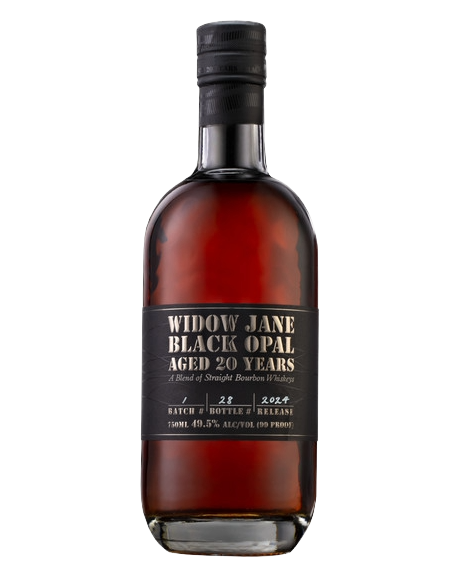 Widow Jane Black Opal blend of straights, 49.5%, $500
In making this whiskey, head distiller and blender Sienna Jevremov tasted over 100 barrels of Kentucky and Tennessee-sourced bourbon, all aged for a minimum of 20 years.