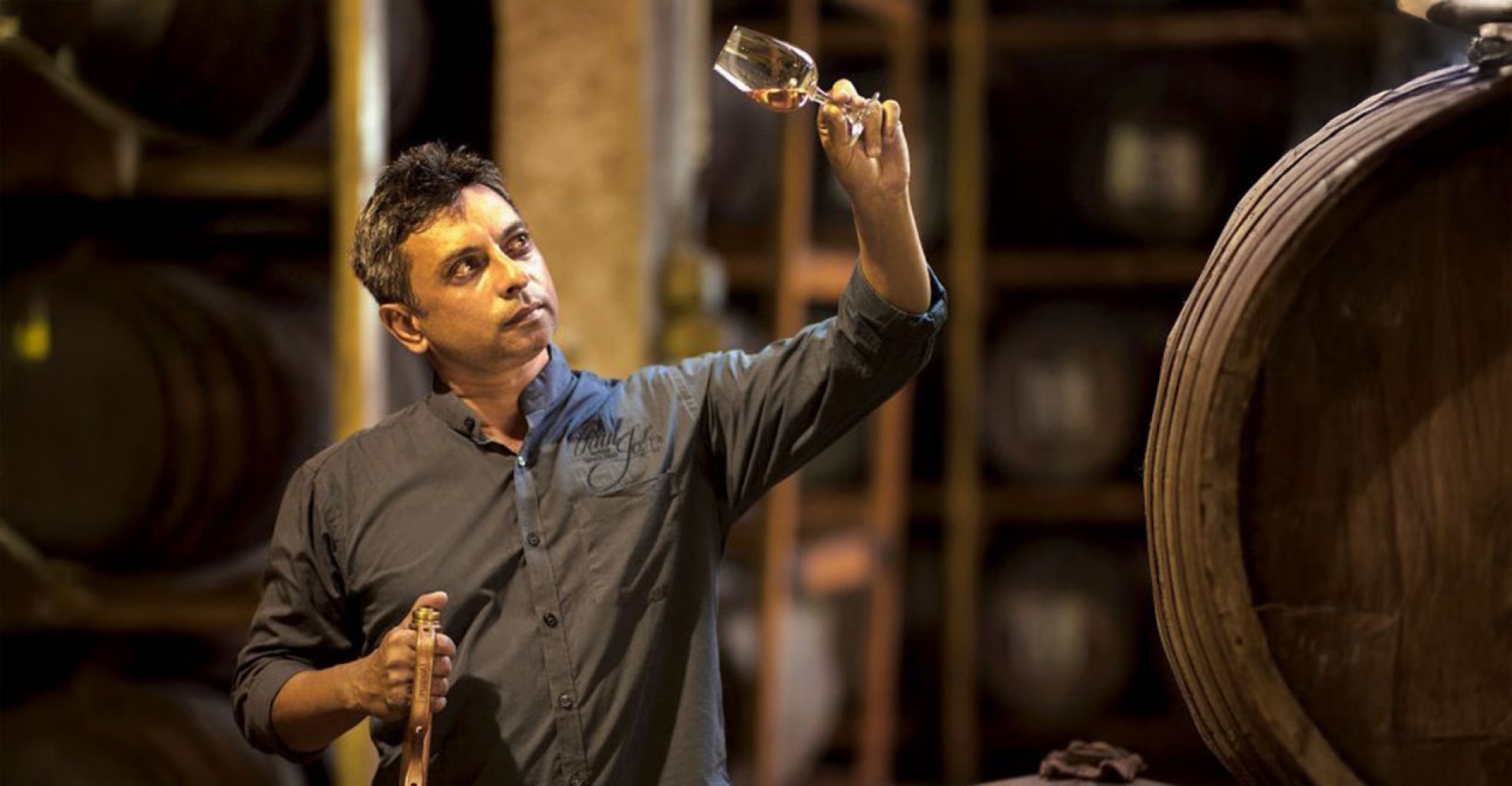
Michael D’Souza, master distiller at Paul John Distilleries in Goa, India. PHOTO BY ARUN MATHEW

India's Single Malt Masters
Although few in number, Indian single malts are consistent winners
May 7, 2026 –––––– Jonny McCormick
India's tropical climate isn’t at all well suited to whisky production, but the country’s single malt distillers have made the most of it, utilizing that heat to create whiskies of big, fruity intensity. As with scotch, India’s single malt production involves batch distillation in copper pot stills and a minimum of 3 years maturation in oak casks. The thick-husked six-row barley harvested in India produces lower alcohol yield than two-row barley, but it produces a rich, oily spirit. In maturation, the distillate works quickly to extract color and flavor from the oak, resulting in an angels’ share of around 12% annually.
The world first became acquainted with Indian single malt in 2004, when Amrut Distilleries began exporting. Before that, Indian whisky was a domestic market phenomenon, led by “whiskies” classified under the oddly paradoxical name of Indian Made Foreign Liquors (IMFL)—locally made versions of international spirits styles, often including whisky from Scotland, locally made malt whisky, grain spirit, or molasses-based spirit.
Since Amrut’s international debut, we’ve seen the arrival of an additional four main producers—Rampur, Paul John, Indri, and Godawan. All are owned by larger Indian spirits companies that made domestic spirits long before they turned to quality single malt production. Looking ahead, investment is set to enliven the Indian whisky scene, with Scotland- based Ian Macleod Distillers, known for its Glengoyne and Rosebank Distilleries, in the midst of building Una Distillery in Himachal Pradesh in India’s far north, while French multinational Pernod Ricard is investing $217 million in the construction of a single malt distillery with an annual capacity of 13 million liters per year in Nagpur, Maharashtra in the center of the country. Here is a look at the current key distillers.

Amrut
India’s single malt pioneer, Amrut, is made by Bangalore-based spirits giant Amrut Distilleries in south-central India, founded in 1948 as a low-end spirits producer. It began making single malt in the early 1980s for use in its domestic blends. In 2004, its single malt made its debut in the UK after it engaged whisky consultant Dr. Jim Swan to address the challenges of distilling and maturing whisky in a hot climate. Amrut’s range and ambition are expansive, and it has a strong track record of innovation. Barrels constructed from staves of five different types of wood from five different barrels led to the inaugural Amrut Spectrum release. It has featured whiskies that are peated, made from malted rye, triple-distilled, single grain, disgorged from sherry casks seasoned with wine and orange peel, and even matured on two continents. The distillery also became its own independent bottler to curate the Single Malts of India range. Those efforts laid the groundwork for other Indian whisky entrepreneurs to follow.
Godawan
Diageo India launched this artisanal whisky brand in 2022, naming it Godawan after the Great Indian bustard, a highly endangered bird whose habitat conservation the brand supports. It’s produced in Alwar, Rajasthan and uses finishing casks seasoned with ayurvedic botanicals. Ayurveda is an alternative medicine system popular in the Indian subcontinent, and the distillery uses aromatic herbs, including rasna and jatamansi, to season the casks. Godawan Series 01 Rich and Rounded is matured in PX sherry casks with a portion finished in the botanical-conditioned bourbon casks, while Series 02 Fruit and Spice is matured in a cherrywood cask and finished in botanical-seasoned bourbon casks. In 2025, Godawan 173: The Collector’s Edition was released in India, priced at about $5,500. The distinctive bottle designs were inspired by Jaipur blue pottery, and in a region of India where warehouse temperatures can often exceed 100°F, the whisky is aged for 9 years. Initially matured in bourbon, oloroso, and PX sherry casks, it was finished in Asha liqueur casks. These are Indian sal wood casks, used for this royal liqueur, that were seasoned with fresh fruits, spices, dried fruits, botanicals, honey, and milk. Only 173 bottles were released, marking the encouraging recovery of the fragile bustard population from 100 to 173 birds. The company also released Epitome Reserve, a rice whisky made in Goa, though it isn’t currently exported to the U.S.
Indri
Indri is owned by northern distiller Piccadily Agro Industries, established in 1994 as an operator of sugar mills and distilleries producing neutral alcohol, cane juice rum, and IMFL brands. The company opened its single malt distillery in 2012 in northern India, in the foothills of the Himalayas, equipping it with three pairs of 25,000-liter wash stills and 15,000-liter spirit stills. Its breakthrough whisky was Indri Trini, released in 2021. Named after the Indian word for “three wood,” this whisky was created by master blender Surrinder Kumar using distillate made from organic six-row malted barley matured in first-fill bourbon, French wine, and Pedro Ximénez sherry casks. While there have been only a few Indri releases to date, they rate highly and showcase complex flavors. Fans of Indri Trini should also check out Kamet single malt whisky, the product of a joint venture between Piccadily Agro and Peak Spirits for Madya Beverages. Released in 2021, its wine cask-forward profile is driven by the use of French oak red wine, PX sherry, and bourbon casks.

Paul John
Paul John, founded in 1996, is owned by John Distilleries Ltd., and is located in the center of the country. The company produces a range of domestically targeted wines and spirits in addition to the Paul John whisky range, launched in 2012. Led by master distiller Michael D’Souza, it has been distilling since 2009. Paul John produces peated and unpeated single malts at its Paul John Distillery in Goa on India’s west coast. Its unpeated malt is six-row Indian barley, though it also imports peated two-row malted barley from Scotland. The flagship range includes Paul John Brilliance, Edited, and Bold, varying from unpeated to smokiest. Its Christmas Editions comprise India’s longest-running annual release whisky series. Sazerac holds a 43% stake in the company, and in 2023 announced plans to double production. That goal was achieved in 2024 with annual production hitting 3 million liters of alcohol, and the company intends to build a new distillery after 2030.

Rampur
Rampur Distillery, owned by Radico Khaitan in Uttar Pradesh, in north-central India, was founded in 1943. The company began making single malts in the mid-1990s, and its use of three yeast strains and long fermentation times helps create floral, fruity, and tropical fruit notes in the spirit. Rampur Select got our attention when it was released in 2016, earning the No.- 5 place in Whisky Advocate’s Top 20. The range has expanded with wine-finished expressions including Asava and Barrel Blush, which also made our Top 20 of 2025. Rampur also created Sangam, a blended malt world whisky that combines single malts from European and New World distilleries with their own, an innovation that complements Indian whisky culture.
10 INDIAN WHISKIES TO TRY

AMRUT
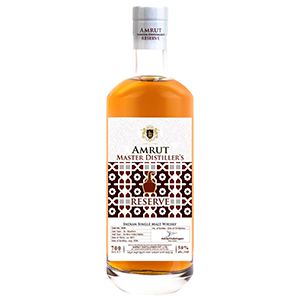 92 points - Amrut Master Distiller’s Reserve 3rd Release, 50%, $170
This was matured in bourbon casks for 7 years.
Black cherry, rowanberry, black tea, dried herbs, caramel, stone fruits, and tiramisu
90 points - Amrut Peated, 46%, $80
Made from malted barley peated to 24 phenol parts per million with Scottish peat.
Fragrant smoke, maple bacon, cumin, tangerine, pineapple juice, and aromatic spices
RAMPUR
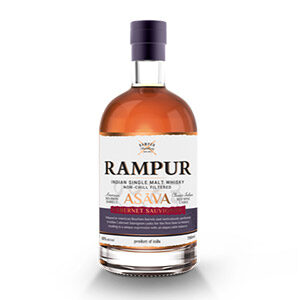 93 points - Rampur Asava, 45%, $80
Matured in bourbon barrels, then finished in Indian cabernet sauvignon casks.
Black cherry mousse, chocolate cigarillos, rolling tobacco, red fruits, savory notes, and peppercorn
 93 points - Rampur Barrel Blush, 45%, $105
Matured in American oak bourbon casks and finished in Australian shiraz casks.
Rose petals, black currant, graphite, vanilla, red velvet cake, and raspberry tart
PAUL JOHN
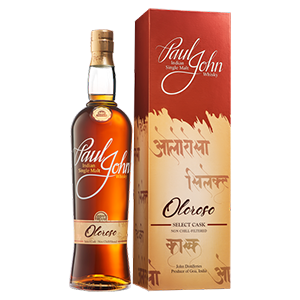 92 points - Paul John Oloroso Select Cask, 48%, $90
The oloroso sherry cask finish imbues this single malt with dried fruit and spice notes.
Milk chocolate, dried fig, blood orange, fruitcake, vanilla essence, and subtle spice
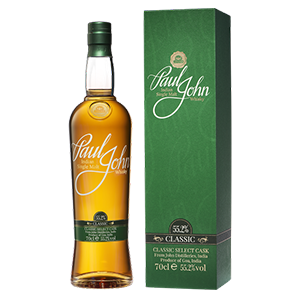 91 points - Paul John Classic Select Cask, 55.2%, $80
A cask strength unpeated single malt fully matured in bourbon casks.
Stewed fruits, bran muffins, apple peel, honey, cinnamon, and coffee
INDRI
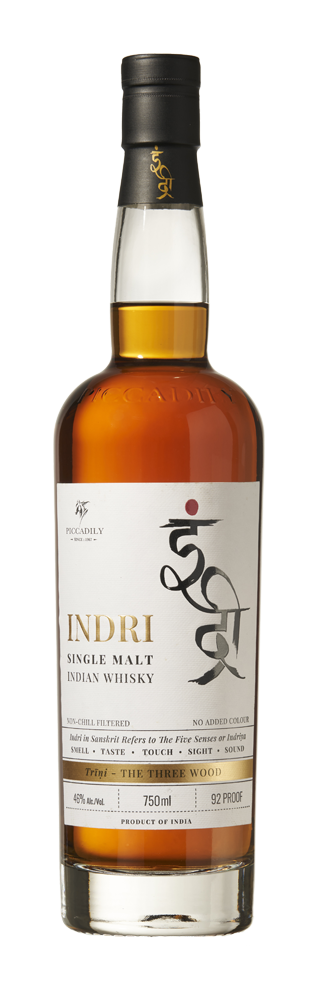 94 points - Indri Trini Three Wood, 46%, $55
A single malt from the Himalayan foothills, matured in bourbon, French wine, and PX sherry casks.
Chocolate ganache, damson, cassis, baked orange, Brazil nut, and dry spices
_300-0001.png) 93 points - Indri Agneya, 46%, $75
93 points - Indri Agneya, 46%, $75
Crafted from lightly peated Indian six-row malted barley, this is matured in first-fill bourbon, Pedro Ximénez, and oloroso sherry casks.
Sliced apple, nectarine, vanilla frosting, overripe banana, peat smoke, and chocolate-covered toffee
GODAWAN
-0001.png) 91 points - Godawan 02 Fruit and Spice, 46%, $75
91 points - Godawan 02 Fruit and Spice, 46%, $75
Matured in a cherrywood cask and finished in botanical-seasoned bourbon casks
Stone fruits, kumquat, nutmeg, watermelon, Love Hearts, and red gooseberry
-0001.png) 90 points - Godawan 01 Rich and Rounded, 46%, $75
90 points - Godawan 01 Rich and Rounded, 46%, $75
Matured in Pedro Ximénez sherry casks with a portion finished in casks seasoned with ayurvedic botanicals
Figs, currants, cola, Garibaldi biscuits, licorice, and leather